

Goat horns are one of the first things people notice about a goat, and one of the first decisions a new owner has to make. Do all goats have them, what are they made of, how fast do they grow, and should they come off? The answers decide when, and whether, you disbud or dehorn your goats. Get the timing wrong and the procedure becomes far more dangerous for the animal, as you will learn in this article.
Goat horns are permanent: a core of living bone that grows from the skull, covered by a keratin sheath, and they are never shed. Most goats of both sexes grow them, though some are born naturally hornless (polled). Horns grow fastest in the first years of life, so kids should be disbudded at 3 to 7 days old and no later than three weeks; after that, removing horns means surgical dehorning by a veterinarian.
What Are Goat Horns Made Of?
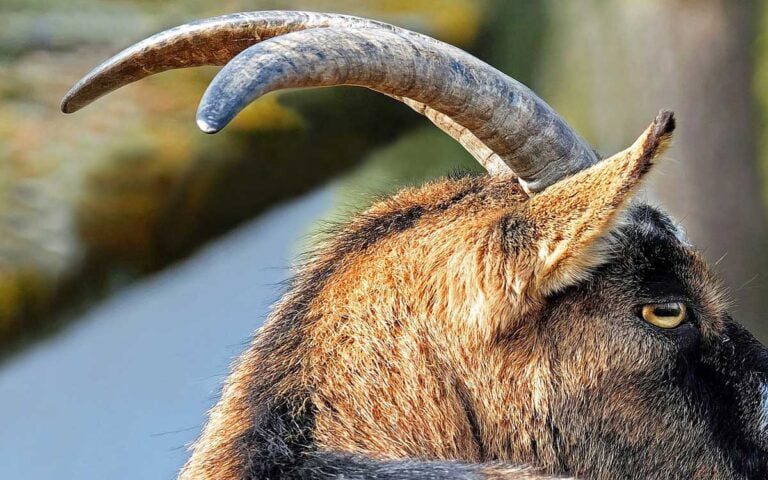
Goat horns are made of two layers: a core of living bone that grows out of the skull, covered by a sheath of keratin, the same tough protein found in hooves, hair and nails. Both layers are permanent. Unlike antlers, horns are never branched and neither the sheath nor the core is ever shed, according to the University of Michigan’s Animal Diversity Web.
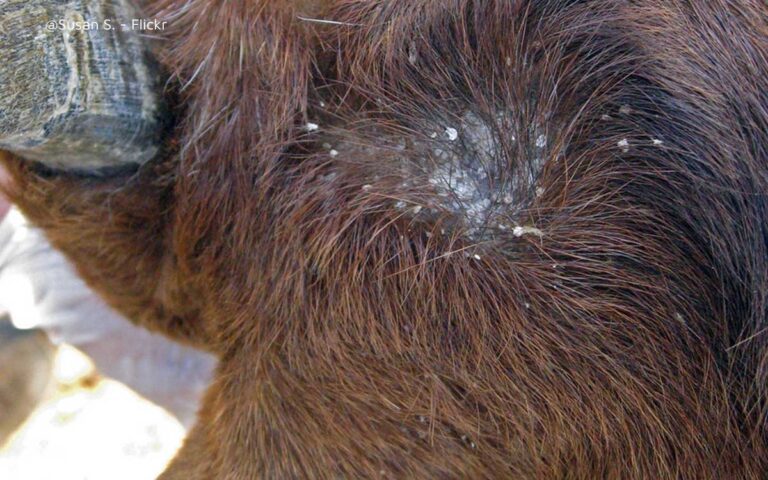
So goats do not have antlers, and they do not drop their horns each year the way deer drop antlers. Goat horns keep growing through the animal’s whole life, fast at first and slowly later on. If the outer layer of a horn flakes or comes off in strips, that is a sign of a problem, not normal shedding; see why goat horns peel.
Do All Goats Have Horns?
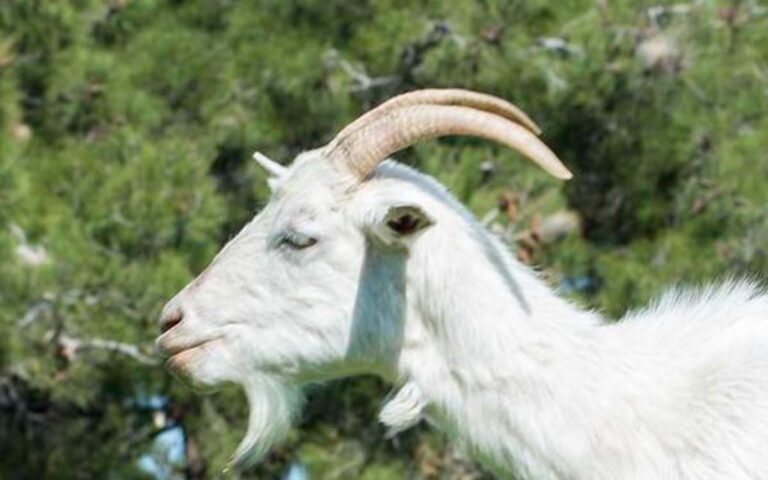
Most goats grow horns, and that includes females: in most breeds both bucks and does are born with horn buds. Horns occur in the males of every species in the goat and cattle family, and the females often carry them too (Animal Diversity Web). That is why a doe kid needs disbudding just as much as a buck kid if you want a hornless herd.
Some goats are born naturally hornless. These goats are called polled, and the trait is passed on as a dominant gene. In the European dairy breeds the polled gene is closely linked to an intersex condition that leaves some offspring unable to breed. The MSD Veterinary Manual explains that many breeders avoid it by never mating two polled goats with each other.
Why Do Goats Have Horns?
Goats use their horns to defend themselves and to settle rank in the herd. Among wild goats and their relatives, horns are used in fights and displays, above all in the breeding season. Research on domestic goats also found the horns are full of blood vessels and may help the animal lose body heat (Taylor, Physiological Zoology, 1966).
On a farm, horns are a mixed blessing. Among horned livestock, goats are the most curious and active by nature. Goats that graze in the open may need their horns for protection, while goats kept in pens and barns can get them caught in feeders and fences, according to the MSD Veterinary Manual. Horned goats also use their horns on other goats and, now and then, on people. For this reason, many owners have the horns removed for the safety of the animals and the people who handle them.
How Fast Do Goat Horns Grow?
Goat horns grow fastest in the first two to three years of life and slow down a lot after that, but they never stop growing completely and they are never shed. A review of dehorning in adult goats puts it plainly: goats grow horns much more rapidly than most owners realize (Hull, 1995).
The best long-term numbers come from a study of mountain goats. Researchers followed 135 marked mountain goats in Alberta for nine years and found that horn growth was rapid during the first years of life and no longer measurable after age five. The goats had completed 93 percent of their horn growth by three years of age. Males grew more horn than females in the first year and a half, while females grew more in their third year, and horn growth in does aged four and five slowed down in the years they were nursing kids (Côté et al., Journal of Mammalogy, 1998).
Mountain goats are a wild relative, not a domestic goat, so take those figures as a guide to the pattern rather than exact numbers for a dairy or meat goat. The pattern is what matters for owners: by the time a kid is a few weeks old, its horns are already growing into the skull, which is why the timing of disbudding is so important.
Goat horn growth stages
Goat horn growth stages from birth to adulthood. Ages for disbudding from Cornell University and the MSD Veterinary Manual; growth after the first weeks from the mountain goat study above.
When Should You Disbud a Goat Kid?
Disbud goat kids when they are 3 to 7 days old, and no later than three weeks. Disbudding destroys the horn buds, the cells that would grow into a horn, before they grow into the skull. Cornell University advises 3 to 7 days of age; kids can be done up to three weeks, but the iron has to stay on longer and incomplete horn regrowth, called scurs, becomes more likely. After that, the horns need dehorning instead.
At under three weeks old, the horn buds are still on the surface of the kid’s head and are just starting to attach to the bone. They have not yet grown through the skull bone and connected with the sinus, so removing them is safer and easier. The right age also depends on the breed:
- European dairy breeds: bucks by day 3 to 5, does by day 3 to 7.
- Nigerian Dwarf and Pygmy goats: by day 14. Their horns can grow more slowly.
Disbudding ages by breed and sex. Source: MSD Veterinary Manual, Breeding and Parturition of Goats.
Hot iron or caustic paste?
A hot disbudding iron is the method veterinarians recommend; caustic paste is used less and carries more risk. The MSD Veterinary Manual advises hot irons over caustic paste because the paste can run into a kid’s eyes or be rubbed onto the dam’s udder.
Hot iron vs caustic paste for disbudding goat kids. Sources: Cornell University, Alabama Cooperative Extension System and the MSD Veterinary Manual.
Both methods hurt, so pain management should be planned in advance. The Alabama Cooperative Extension System describes disbudding with the kid restrained and sedated and the area around the horns numbed with a local anaesthetic. If you have not disbudded kids before, work with a veterinarian. They will know which method to use, how to do it safely, and what to give for the pain.
Done well, disbudding leaves a clean, hornless head. Done incorrectly, it leaves scurs: small, misshapen partial horns that keep growing and can curl back toward the head.
After disbudding or dehorning, ask your vet how to care for the site while it heals. Repiderma, an easy-to-use spray that promotes healthy skin, can be part of that aftercare.
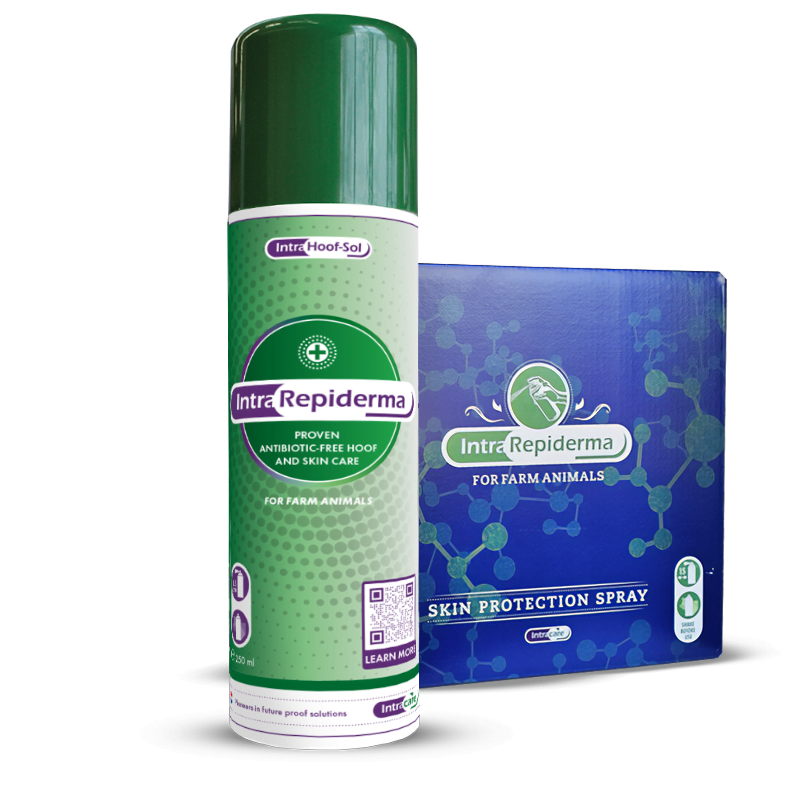
Repiderma is a topical skin care product that supports hoof health, prevents cracks, and protects against minor skin damage between trimmings.
Visit StoreWhat If a Goat Is Older Than Three Weeks?
A goat older than two to three weeks can only lose its horns by surgical dehorning, which a veterinarian must do. By then the horn cells have grown beyond the surface of the head and connected with the skull and sinus, so the horn has to be cut out rather than burned away. The same applies to goats with scurs.
Dehorning is a much bigger procedure than disbudding. Adult goats with large horns should be put under general anaesthesia, and the operation can leave an opening into the sinus that has to be bandaged for a while (Alabama Cooperative Extension System). Because the head is left open, the risk of infection is high, and you will need your vet’s advice on pain control and wound care. Rules on who may dehorn, and at what age, differ by province, state and country, so check the local rules first.
Fear of infection is why the procedure is often scheduled for late fall or winter. During this season, fewer flies are around to lay eggs in the open wounds on the goat’s head.
Should you dehorn an adult goat?
Unless your vet says it is necessary, do not dehorn adult goats. In grown goats the horn is fully joined to the skull, so dehorning them is harder than dehorning cattle and the wound takes longer to heal. If a horn is growing toward the head or eyes, or is simply too long, ask your vet whether tipping (cutting back the end of the horn) would solve the problem instead.
The same goes for horns that crack or grow abnormally: talk to a veterinarian before thinking of dehorning, because they can find the cause and fix it. For more on this, read my article on why goat horns can start cracking.
Final Thoughts
Goat horns are permanent, grow from the skull, and grow fastest while the animal is young. Most goats of both sexes have them, though some are born polled. If you want a hornless herd, disbud your kids in the first week, and before they are three weeks old, to avoid dehorning later. Disbudding hurts, but it is much safer and carries far less risk of infection than dehorning. Keep good records of which kids were disbudded and when; our free Record Keeping Worksheet makes that easy.
Goat Horns: Common Questions
Do female goats have horns?
Yes. In most goat breeds both does and bucks grow horns, so a doe kid needs disbudding as much as a buck kid if you want a hornless herd. Only goats born naturally hornless (polled) have no horn buds.
Are goat horns the same as antlers?
No. Goat horns have a bone core covered with a keratin sheath, are never branched, and are never shed. Antlers, as on deer, are solid bone, usually branched, and drop off and regrow every year.
Can horns grow back after disbudding?
Not when disbudding is done right. If some horn cells survive, usually because the iron was not hot enough or was not held on long enough, small partial horns called scurs can grow. Scurs often need a vet to remove them later.
- Horns and Antlers, Animal Diversity Web, University of Michigan Museum of Zoology.
- Breeding and Parturition of Goats, Balch S. G., MSD Veterinary Manual, updated 2024.
- Disbudding Goats, NYS 4-H Animal Science, Cornell University College of Agriculture and Life Sciences.
- Herd Health Management: Dairy Goats and Sheep, Alabama Cooperative Extension System, 2019.
- Horn Growth in Mountain Goats (Oreamnos americanus), Côté S. D., Festa-Bianchet M. and Smith K. G., Journal of Mammalogy 79(2), 1998.
- Dehorning the adult goat, Hull B. L., Veterinary Clinics of North America: Food Animal Practice 11(1), 1995.
- The Vascularity and Possible Thermoregulatory Function of the Horns in Goats, Taylor C. R., Physiological Zoology 39(2), 1966.
- Make disbudding less painful for everyone, Ontario Goat, Goat Gazette.