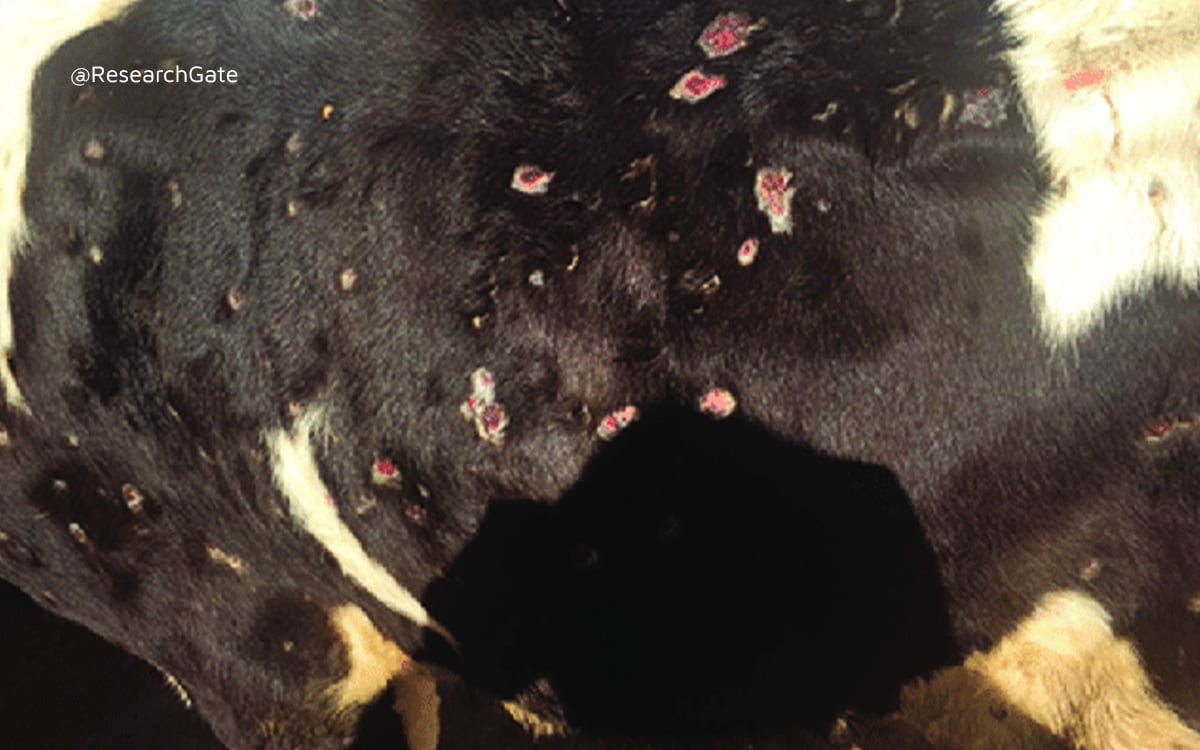

Scabs (skin crusts) can appear on many animals, including cows. As a professional hoof trimmer, I have been to many farms and seen all sorts of scabs. These don’t just come out of nowhere – they are usually a sign of parasites, diseases, or injury.
Parasites such as mites and lice often cause scabs in cows. The scabs may also be a symptom of a viral, bacterial, or fungal infection. You must treat the animal immediately according to the parasite or the condition causing the scabs. Further parasite infestation must also be prevented.
You have to identify the cause of your cows’ scabs to treat them effectively and prevent recurrences. Your veterinarian can assist you with the proper diagnosis and treatment.
Let me now guide you through the most common causes of scabs in cows and the ways to identify them.
Lice

Lice are among the most common cow parasites, and their presence often manifests in itching. That itch can lead to worse symptoms, including scab formation. Besides scabbing, other signs that your cattle have lice include:
- Rubbing against surfaces
- Lice eggs
- Hair loss
- Hide damage
- Raw spots
- Lameness/weakness
- Dermatitis
- Decreased milk production
- Anemia
- Weight loss
While lice infestation is a manageable issue, it can become a significant problem when left uncontrolled and when you have many cows with poor immune systems (e.g., calves). Lice spread through direct contact, so the more cows and the less space you have, the bigger your lice problem will be.
Precautionary measures should be employed, especially before winter, as infestations usually peak during this season. It is also good to know that more than one type of lice may be affecting your cows. Here are the lice species that feed on cattle:
- Biting or chewing lice (Bovicola bovis)
- Sucking lice (Haematopinus eurysternus, Linognathus vituli, Solenoptes capillatus, Haematopinus quadripertusus)
Lice are a concern for cattle farmers all over the world. Ask your local farm store or veterinarian for the best product to treat your cows.
Scab Mites

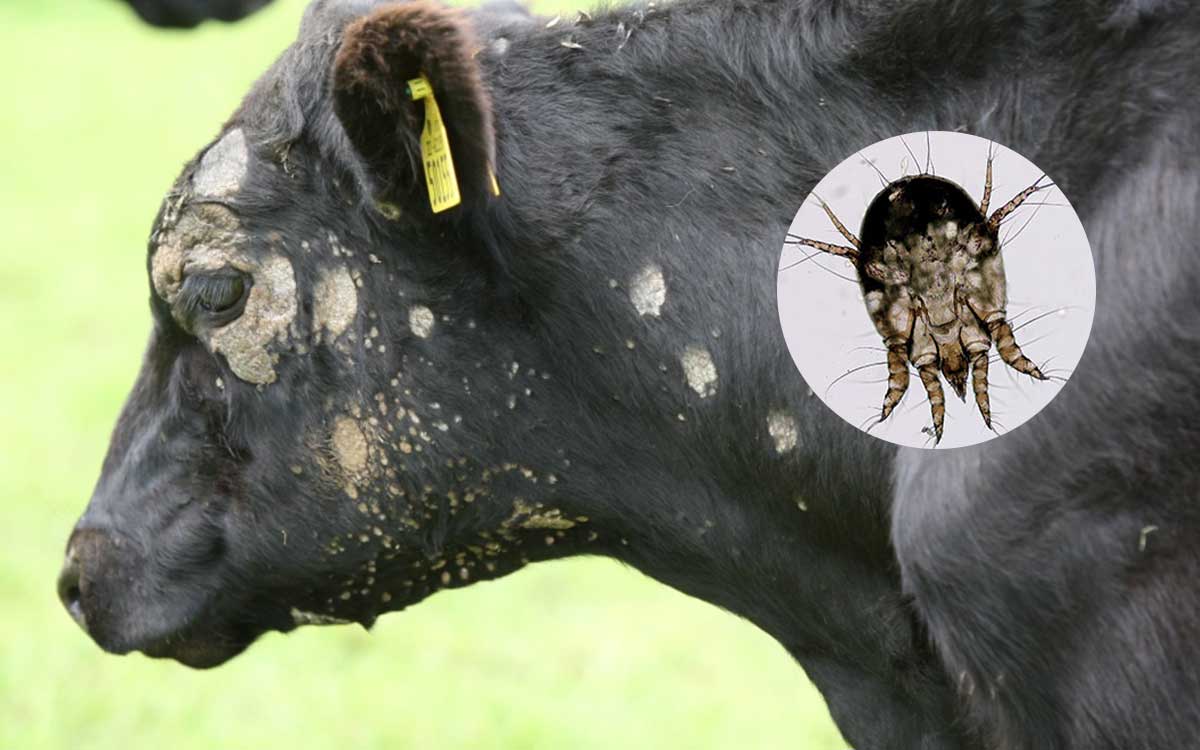
Mites are parasites common in many animals, including dogs, chickens, and cows. These creatures dig into the cow’s skin to feed and breed, eventually leading to the formation of large scabs.
A variety of mites infect cattle, and some of them can cause a specific type of mange (a skin disease). Common mite species include:
- Sarcoptes scabiei (scabies mites)
- Psoroptes ovis (psoroptic mites)
- Chorioptes bovis (chorioptic scab mites)
- Demodex bovis (cattle follicle mites)
Thousands to millions of mites can infest each cow, making these parasites a common problem on cattle farms. The infestations usually peak during the winter, the same as with lice. Mites can cause diseases that may lead to bacterial infections or death and should be controlled immediately.
Cattle Scab (Psoroptic Mange)

Cattle infected with Psoroptes bovis may suffer from cattle scab, or psoroptic mange. Besides scabbing, the condition can cause the following symptoms:
- Dermatitis
- Irritation/Itching
- Bleeding
- Weight loss
- Skin abrasion
- Swollen blood vessels
If left untreated, the cow may die from psoroptic mange. Therefore, immediately treat an animal when it shows symptoms to prevent further infestation in the herd. The parasite can be passed through direct contact and indirect vectors (e.g., infected surfaces).

Scabies

Scabies is a condition that affects many animals, not just cattle. The initial symptoms are usually skin scaling and mild hair loss. Scab formation is typically an indication of severe or worsening scabies.
Besides those symptoms, other signs of scabies include:
- Weight loss
- Appetite loss
- Difficulty hearing
- Blindness
- Stress and exhaustion
- Skin inflammation
The scabies mite, Sarcoptes scabiei, spreads through direct contact. Acting immediately is crucial to stop the infestation from becoming uncontrollable. Moreover, scabies can cause death when left untreated.
Regular herd health checks by your veterinarian will be essential to prevent scabs in your cattle.
Chorioptic Mange

Chorioptic mange, also known as chorioptic scab, is one of the most common cattle conditions in the United Kingdom. That’s mainly because the parasite responsible for it – Chorioptes bovis – is the widest-spread mite species in the country.
Its most prevalent symptom is scabbing, or crust formation on the skin. Besides scabs, the following symptoms may also appear:
- Pus-filled lesions
- Scaling
- Thickened skin patches
- Hair loss
- Stomping
- Rubbing
- Chewing
- Erythema (skin rash)
Chorioptic scab mites often reside on the cow’s legs and feet; hence, this condition is also known as foot or leg mange. It’s also possible for healthy cows to carry the mites but not display any symptoms. These cows can infect the ones with poor immune systems.
Dermatophilosis

During the wet or snow seasons, cattle are exposed to moist and cold conditions that weaken the natural protective layers of their skin. That leaves them more vulnerable to bacteria such as Dermatophilus congolensis. This specific bacteria (bovine streptothricosis) causes dermatophilosis, also known as rain scald.
Dermatophilosis can cause scabbing in cattle although that is considered a stage 2 lesion of said condition. The stage 1 symptom is hair matting, and severe cases of rain scald may manifest as warts and scabs.
Besides moist skin, what makes a cow more vulnerable to dermatophilosis is a poor immune system and prior skin injuries. Young calves and cows infested with flies, lice, mites, and other parasites are especially susceptible. The parasites may also spread the bacteria to other cows in the herd.
Lumpy Skin Disease

Lumpy skin disease (LSD), an illness caused by viruses, became a global concern after spreading out of Africa in 2000. Besides via direct contact, it can be transmitted through insects, such as mosquitos and ticks. The difficulty in containing the virus makes it a more pressing concern.
LSD can be fatal, so it’s essential to keep an eye out for its symptoms, which include scabbing as well as:
- Fever
- Skin lumps
- Skin ulcers
- Decreased milk production
- Swollen lymph nodes
Scabbing and skin ulcers are the most apparent signs. However, it’s also why many confuse LSD with other diseases, for example, pseudo-LSD and ringworm.
Ringworm

Unlike dermatophilosis and LSD, which are caused by bacteria and viruses, ringworm is a fungal disease usually caused by Trichophyton verrucosum. It can spread through direct contact, the environment, or infected surfaces.
Scabs can appear all over the affected animal’s body. In addition to the scabs, you may also notice persistent itching and rubbing against surfaces, which may lead to injuries and hair loss. The cow may also exhibit poor growth.
Fortunately, ringworm can resolve by itself over time. However, treatments and vaccines are available should you need or want them.
Conclusion
Skin disorders can impact the productivity of your herd. As a hoof trimmer, I have seen different varieties of scabs in dairy and beef herds. My advice is to get a professional opinion from your veterinarian once you notice some skin disorder.
Minor skin disorders will often heal on their own. Nevertheless, it’s a good idea to consider Intra Repiderma, which is commonly used to promote healthy skin.