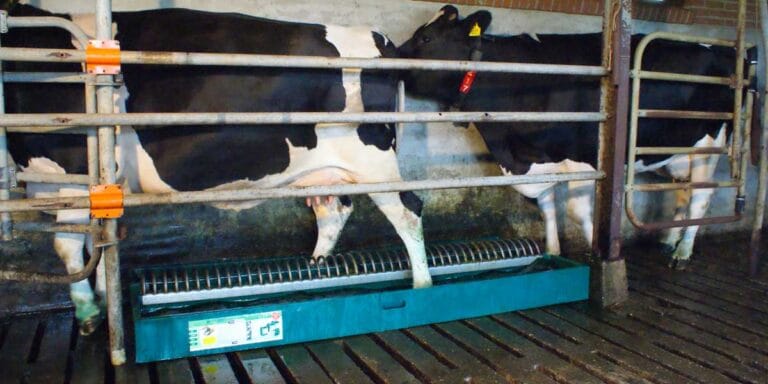
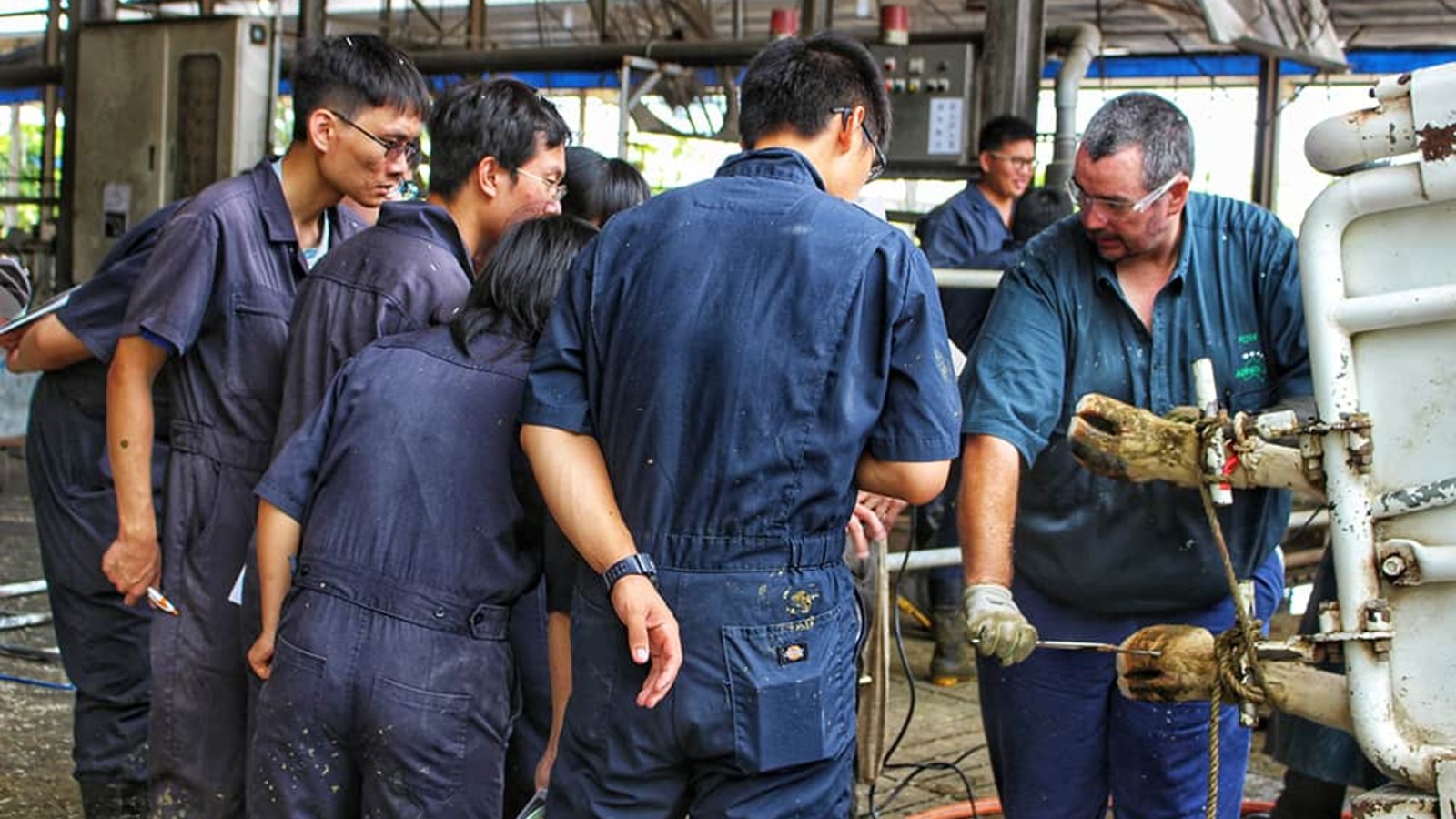

Lameness is a problem no dairy farmer can handle alone. Hoof health should be a collective industry effort, built on education, training and knowledge sharing, and Australian lameness expert Peter Best supports that view. In November 2017 Koos sat down with Peter, who favours a hands-on approach to lameness. Here is what he shared about setting up hoof health systems, finding the real cause of lameness, and why there is no way around lifting the foot.
Peter Best’s advice comes down to three points. Keep a hoof health system simple: few changes, little spending, and no reliance on one key person. Look at what is really happening on the farm before giving advice, because the cause of lameness is often not where the farmer thinks. And lift the feet in a chute: you cannot investigate lameness without seeing the claw.
Who Is Lameness Expert Peter Best?
Peter Best is an Australian lameness prevention and treatment specialist who helps dairy farms set up hoof health systems. He grew up on a dairy farm, which gave him a proactive, hands-on attitude to lameness, and he finds his work with farms very rewarding.
When Koos spoke with him in November 2017, Peter’s company, Innovative Farm Services, had spent three and a half years on a lameness study in Asia. The project ran a health education and training program for farm staff, focused on the key areas that affect lameness rates and on bringing in preventive measures.

What Makes a Good Hoof Health System on a Dairy Farm?
For Peter, a good hoof health system is one a farm can actually keep running: simple, cheap to set up and not dependent on one key person. He also looks hard at the farm before he gives any advice.
Q: Peter, what guides you when recommending a hoof health system to a farm?
Peter: My approach to setting up hoof health systems is to make them simple to implement. They shouldn’t require a lot of changes and capital expenditure, nor should they be key person-dependent.
The other thing I do is to really look at what’s happening on the farm before giving any advice. After they’ve told me what they think the cause of their problem is, I often find that their lameness is the result of something totally outside of their train of thought.
Can Lameness Be Behind a Farm’s Mastitis Problem?
Peter thinks it can: the stress of lameness affects a cow’s immunity, and that shows up in milk quality. His example also shows why the obvious culprit is not always the real one.
Q: Can you give us an example?
Peter: A company recently approached me on behalf of a very large farm regarding milk quality. They think the source of a lot of their mastitis is the farm’s lameness problem. If they end up engaging me for the project, it will be an interesting investigation. I agree with them that the stress factor will be impacting the cows’ immunity levels, which in turn will affect their milk quality.
However, they are blaming digital dermatitis (DD) and an inefficient foot bathing program. All the changes they’ve made to this program have had no effect on the DD. According to my experience and observations in Asia, DD has usually been the secondary lesion developing after a severe sole ulcer or white line lesion that has gone untreated because the cows’ stress level is elevated and their immune systems affected by the initial lesion.
What research says since. A 2025 study on two Slovak dairy farms found that cows lame from claw disease were more likely to have mastitis than sound cows. The authors point to lying time: lame cows lie down longer, so the udder spends more time on bedding with environmental bacteria (Hisira et al., 2025). The link Peter describes from his own work is real. What he says about DD following untreated sole ulcers and white line lesions is his field observation in Asia. The Merck Veterinary Manual describes DD as an infection, with Treponema bacteria always involved, that gets in where the skin of the foot is already damaged. Either way, his point stands: when a foot bath change does nothing for DD, look at the rest of the foot. Our post on foot bathing and digital dermatitis explains what a foot bath can and cannot do.

Keep track of your herd’s records with ease and precision. Web and print-ready options included!
DownloadWhy Do You Have to Lift the Foot to Find the Cause of Lameness?
You cannot see what is wrong inside a claw while the cow stands on it, so a lameness investigation means picking up the feet. Peter calls this the biggest challenge he sees on farms.
Q: In your experience, what major challenges do farmers usually face when dealing with lameness?
Peter: The biggest challenge I see in most farms is that they want a treatment that doesn’t involve looking at the foot in a chute. You have to pick up the feet to fully understand the problem. If only a lameness investigation were as easy as a milk quality investigation! It’s not like standing next to a cow being milked. Then you score the teat ends without having to restrain the cow.
Locomotion scoring is the part you can do from the alley: it tells you which cows are lame and how many. Only lifting the foot tells you why, and which lesion you are dealing with.
Where Can You Read More From Peter Best?
Peter shared the main lessons from his Asian lameness study in his article Hoof Health is easy if you keep it simple (LinkedIn, October 2017). It is well worth a read if you are setting up a hoof health program. You can also follow him on LinkedIn.
As we at Diamond Hoof Care keep saying, lameness is a problem no dairy farmer can handle alone. Hoof health works best as an industry effort built on education, training and sharing what works. For the bigger picture on prevention, read our post on lameness control strategies.
- Claw diseases are the dominant cause of lameness in dairy cows and a risk factor for mastitis, Hisira V. et al., Veterinarni Medicina, 2025.
- Lameness Originating in the Hoof in Cattle, Cramer G., Merck Veterinary Manual (section on digital dermatitis).
- Hoof Health is easy if you keep it simple, Best P., LinkedIn, 2017.