
We can split our approaches to lameness control into two categories: Preventative care and Curative care. In this overview, I take a look at these two approaches and make some comments about both. Let’s start with the one that seems to be the easiest and gives us the best return.
I have created an easily downloadable hoof disease chart which contains the common hoof disease in cattle. This reference sheet can assist you with the diagnosis of hoof problems.
Lameness control has two sides. Preventative care is the herd-level work that keeps the odds of lameness low: proper trimming, regular foot bathing, clean floors, a good ration and cow comfort. Curative care is what you do for the cow that is already lame: find the cause and treat her as soon as you can, with a trim, a block or, for an active digital dermatitis lesion, a registered treatment and your veterinarian’s diagnosis. A good program runs both at the same time.
Preventative Hoof Care
Preventative hoof care is defined as “Methods to avoid the occurrence of disease (lameness).” What this means is that there are no problems present. This scenario occurs in a perfect world, but it’s not what you usually find in your dairy herd. Even in this perfect world, there can still be factors that could, over time, develop into a lameness challenge.
Let’s compare this to milking and mastitis prevention: you provide dry bedding and pre- and post-dipping to the animals to prevent mastitis from occurring. Still, the factors that lead to mastitis are often present: possible genetic predisposition, bacteria in the barn and on the udder, etc. With these factors present, you use all the means available to minimize the chances of problems developing.
In today’s dairy industry, we’ve come to a practical definition of the word “prevention”. This definition is as follows: “Methods to treat an existent problem in its early stages before it causes significant morbidity.” Morbidity refers to the lameness ‘state’ of the cow or the incidence of lameness in the herd setting. This practical definition tends to become a standard, although on a slippery slope. If we want to get the best results and return on our investment, it’s important that we have a proper definition. Let’s draw the comparison again between mastitis treatment and lameness: “once a cow gets mastitis, she receives treatment to cure the problem and get the milk back in the tank ASAP.” Lameness is really no different, is it?
As a herd manager, it’s important that you know your herd’s challenges and weak links and manage your operation accordingly. Examples of areas of Preventative care are:
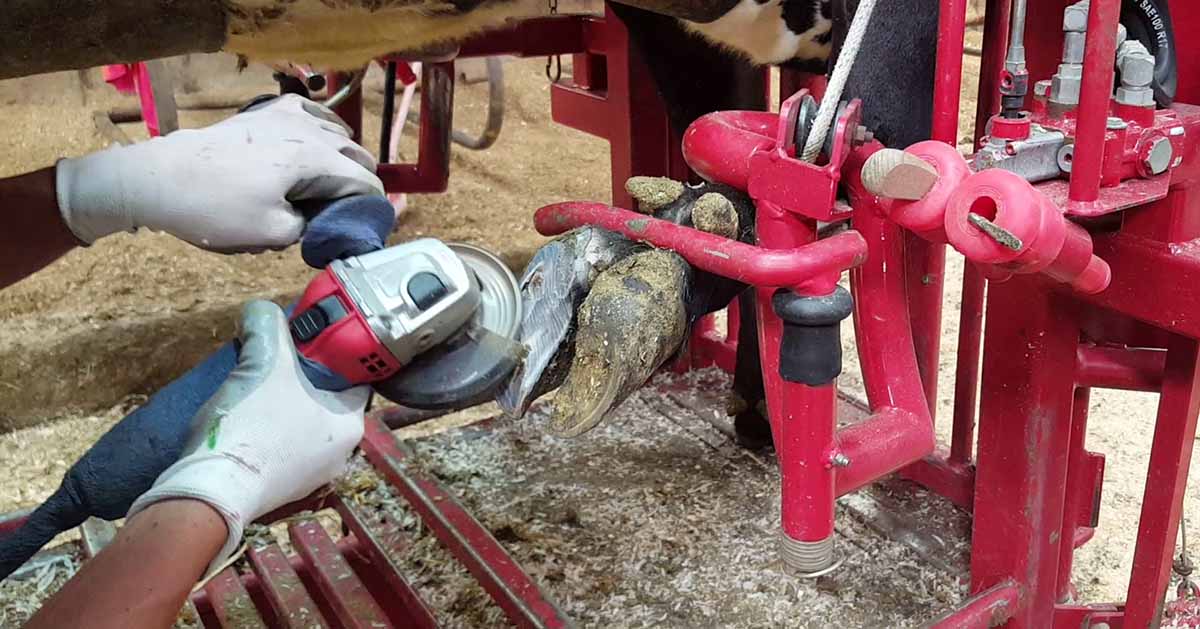
- Proper hoof trimming
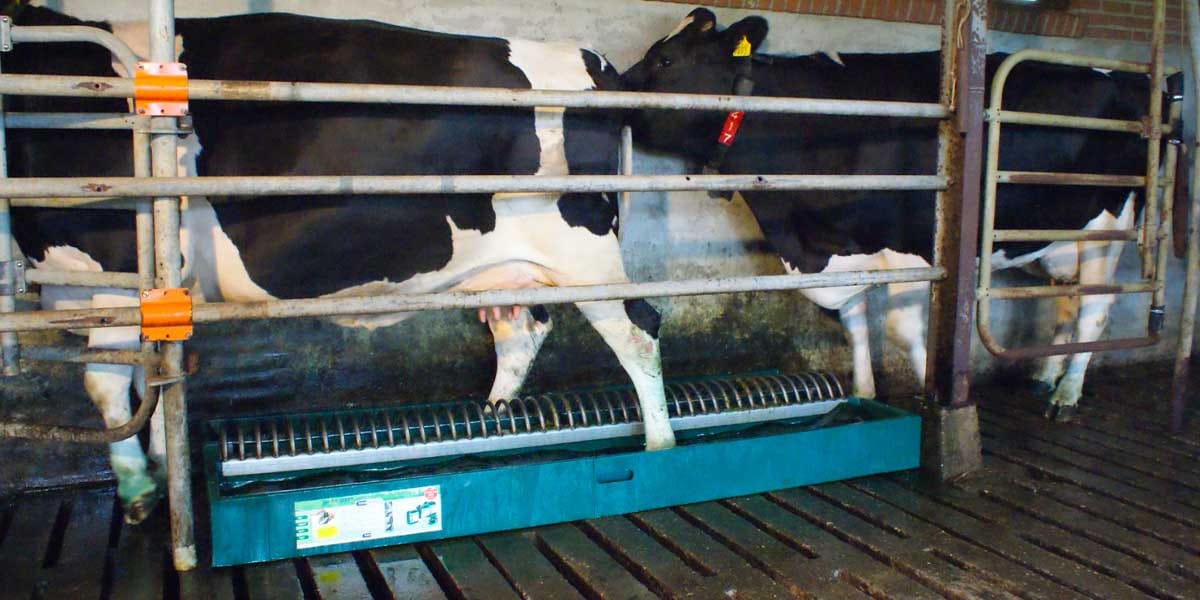
- Regular foot bathing
- Timely cleaning of the barn floors
- Proper ration and forage management
- Cow comfort: stalls, bedding packs, ventilation, etc.
Curative Hoof Care
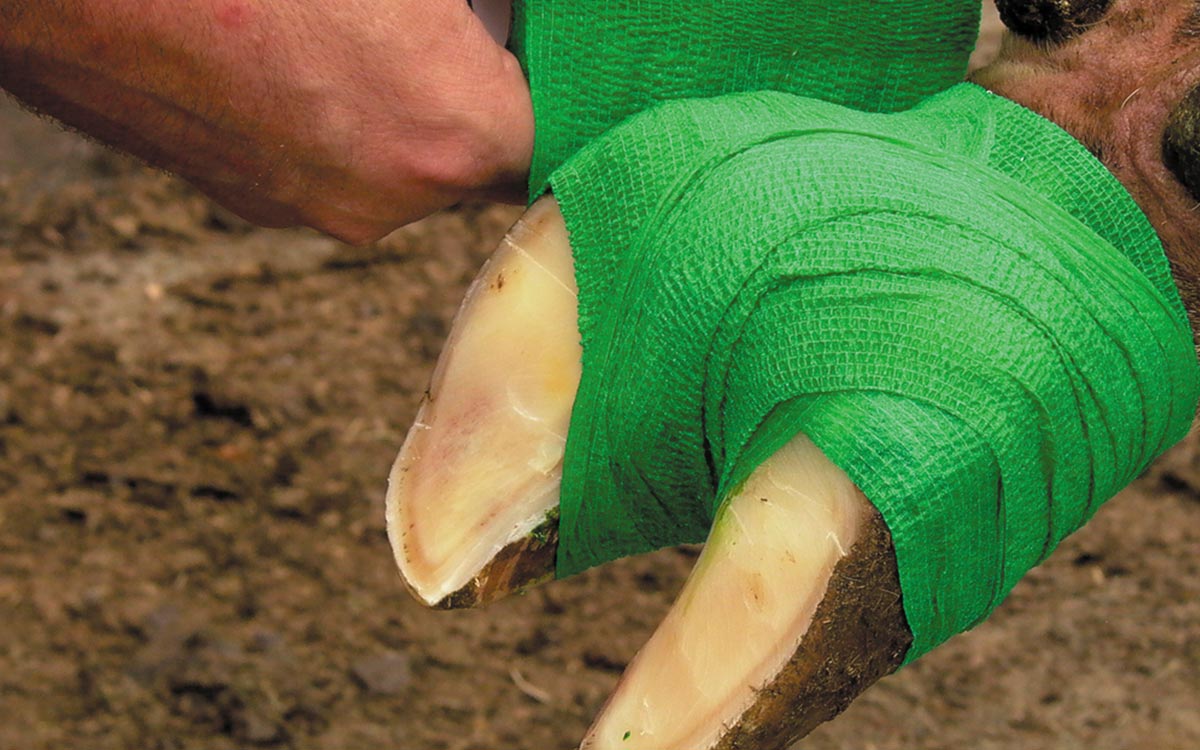
Curative hoof care, the second category to our approach to lameness, is defined as: ‘seeking a cure for an existent disease or “condition.” Here, our cow shows signs of a hoof defect: she is either slightly uncomfortable in her gait or moderately lame, or even has a severe limp: all these animals fall into our curative care category. Is it not fair to say, when we notice ‘other-than-normal’ walking behavior, that our preventive care plan has failed or is lacking? At this stage, it’s important to understand and confirm the cause and nature of the improper gait. First, the affected animal should be examined and treated ASAP (just like we do for mastitis), to get the best rate of successful healing. Depending on the hoof problem, of course, a few examples of curative care are:
- A simple hoof trim to balance the claws and apply some trimming techniques to shift weight from the sore claw to the healthy claw.
- Placing a wrap for an infectious problem using the Intra Hoof-fit Gel.
- Gluing a block.

Record Keeping Worksheet
Keep track of your herd's records with ease and precision. Web and print-ready options included!
DownloadHoof Spray, Footbath, or Gel? Matching the Tool to the Job
Most of the confusion I see comes from hoping one tool will do everything.
A gel is built for a different problem. When a cow has an active digital dermatitis lesion, one of those raw M2 sores, she needs treatment applied straight to the tissue. That is a job for Intra Hoof-fit Gel, our registered, non-antibiotic treatment for active DD, and for your own eyes on that cow. When a cow is lame, pull her aside, look at the foot, and bring in your veterinarian for the diagnosis and the plan.
I explain it to farmers the same way we handle mastitis. When a cow gets mastitis, you treat that cow, and you keep teat-dipping the rest of the herd so their udders stay healthy. Hoof care works the same way. Intra Hoof-fit Gel is the treatment for the cow with the lesion, and the spray is the teat dip for everyone else: it maintains, supports, and promotes healthy hooves and dermis across the group.
Bridging the Gap: A Weekly Spray Session
One question you might ask is: “Why bother to spray during milking and what are the real benefits?”
Excellent question! Here are a few benefits:
- Cleaning all hooves is so beneficial in contrast with the footbath method, where the last cow gets the dirtiest solution (she is usually your lame cow).
- A weekly focus allows for finding and detecting new lameness cases promptly; a footbath protocol often lacks this focused approach.
Some herds use a 5-liter Matabi applicator or utilize the teat-dip system for hoof care spraying. We recently met producers who purchased the Intra Spray-fit pump to bridge the gap between preventative and curative care. During the spraying sessions, they compile a list of animals to work on in the hoof-trimming chute. Why should we spray only the rear hooves? Concentrating on them will often suffice because hoof problems are more common in the hind legs.
The most common mistake I see is simply not using the spray consistently. What counts is the consistency of spraying all back hooves and back legs, once a week. The pushback I often hear is, “What if I only spray the cows that have a problem?” I answer with a question of my own. You could save a lot of money if you only teat-dipped the cows that get mastitis, because most of the cows in your herd never get mastitis, so why are you dipping those? I say it with a smile, and nobody should take it as advice, but it makes a farmer think.
So, what does a protocol look like? Here’s one example:
- Monday and Tuesday: foot-bathing method
- Wednesday: spraying session and make a list of cows to work on.
- Thursday and Friday: treatment and trimming days (trimming, blocking, gel wrapping, rechecks, etc.) using Hoof-fit Gel.
- Monday morning: removal of all wraps.
- Repeat.
Final Note
As a final note, thank you to the dairy friend who suggested this topic of lameness control strategies. I would like to say that it’s rather difficult to find the right words and overall coverage for this topic. I apologize if I missed anything; perhaps your operation has different challenges. If you want to forward any ideas or suggestions, please send me a message through the Contact page.
Frequently Asked Questions
What is the difference between preventative and curative hoof care?
Preventative hoof care is the work that keeps lameness from developing when no problem is present yet: proper trimming, regular foot bathing, clean floors, a good ration and cow comfort. Curative hoof care starts when a cow already walks other than normal, and means finding the cause and treating her as soon as you can.
What are examples of curative hoof care for a lame cow?
Depending on the problem: a trim to balance the claws and shift weight from the sore claw to the healthy one, a wrap with Intra Hoof-fit Gel for an infectious problem, or gluing a block. Have the cow examined first, and bring in your veterinarian for the diagnosis.
What does a weekly hoof care protocol look like?
One example: foot bathing on Monday and Tuesday, a spraying session on Wednesday where you make a list of cows to work on, treatment and trimming on Thursday and Friday, and removing all wraps on Monday morning. Then repeat.
Does a hoof spray treat digital dermatitis or heel warts?
No. What many people call heel warts is digital dermatitis, an active bacterial infection, and a spray for healthy skin is not the tool for it. An active lesion needs the registered treatment, Intra Hoof-fit Gel, applied directly, along with your veterinarian’s eyes on the diagnosis and the plan.