Table of Contents
I have stood at a lot of foot baths over the years. And there is one pattern that keeps coming up.
When a herd has an active digital dermatitis problem, the first instinct is to run the foot bath harder. More often, stronger solution, two baths in a row. I understand the impulse. You want to do something. But that is not what a foot bath is for.
A foot bath is a prevention tool. Using it as a treatment for already-lame cows does not help them, and in many cases makes things worse.

The Purpose Is Herd-Level Infection Control
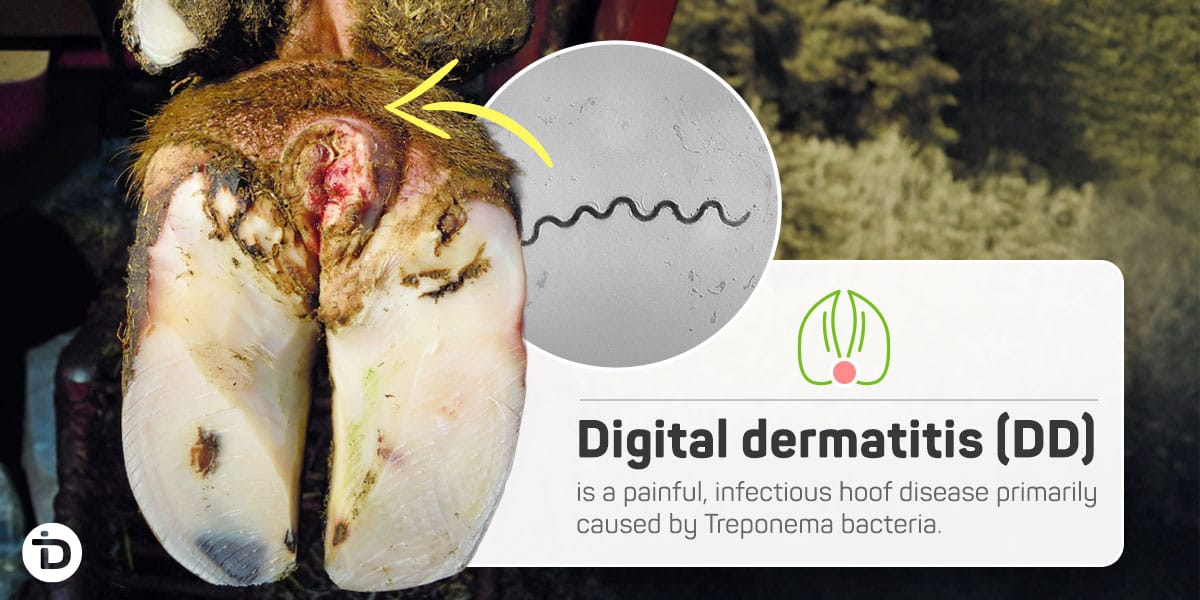
Digital dermatitis (DD) is a bacterial infection. Treponema species spread from cow to cow through contact with contaminated surfaces. The foot bath targets that transmission route.
When a cow walks through a properly maintained bath, the solution reduces the bacterial load on the skin of the hoof. Done consistently across the herd, this gives healthy cows a better chance of staying healthy. That is the work a foot bath does well.
What the Research Actually Says
A University of Calgary doctoral study published in 2019 is the most thorough review of footbath protocols we have in the scientific literature. Dr. Casey Jacobs conducted a systematic review and network meta-analysis comparing different footbath protocols for both treatment and prevention of DD.
For treating existing DD lesions: copper sulfate at 5% or higher, used four or more times per week, showed superiority over no treatment at all. That is the strongest finding in the data. Running a foot bath at that frequency is also a significant commitment in product, water, and labor, something worth factoring into any treatment plan.
For preventing new DD lesions: no single protocol emerged as clearly superior to others in the available data. The authors note that the analysis was limited to studies measuring new lesion incidence specifically, and that some prevalence-based evidence supporting foot bathing could not be included. This is not a verdict that foot bathing does not work. It means the research is still catching up to practice.
What it does confirm: the foot bath is not a substitute for treating cows that already have active M2 lesions. (Jacobs et al., Preventive Veterinary Medicine, 164: 56-71, 2019)
If you are looking for a practical prevention program, the DHC foot bath protocol runs at one to two days per week, a frequency that fits most farm routines.

What to Know About Copper Sulfate in the Foot Bath
Copper sulfate is the most widely used footbath product on Canadian dairy farms.
Many commercial footbath solutions are acidified. An acid is added to lower the pH sharply, and we are sometimes talking about an extreme pH.
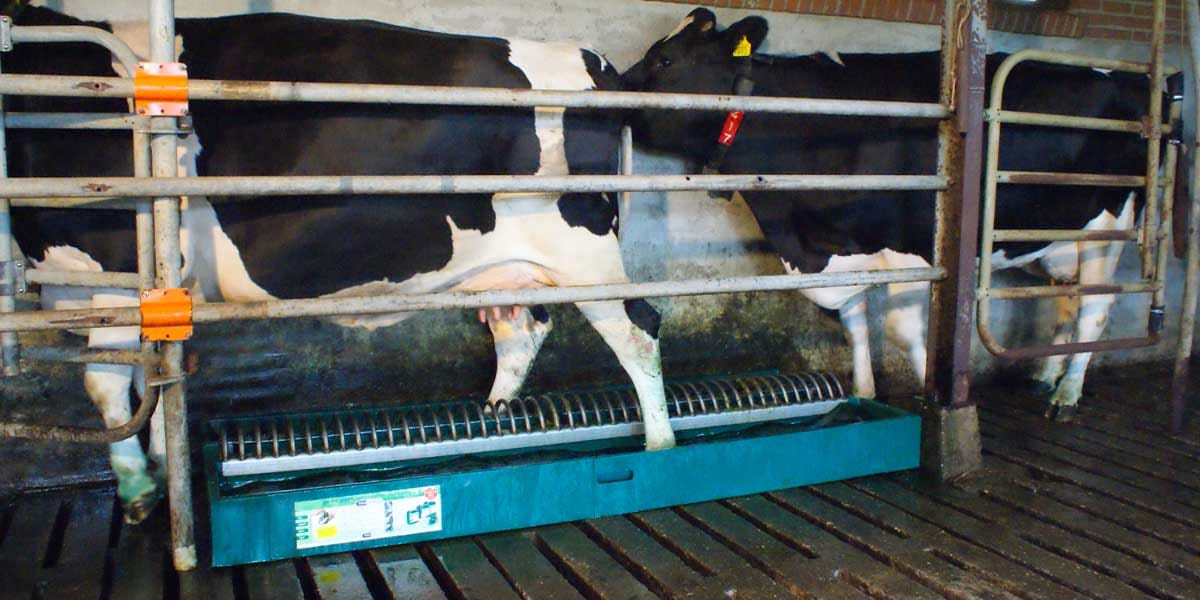
I have seen what that does at the parlor exit. A cow with active DD lesions approaches the bath, feels that burn on her already-raw tissue, and rushes through. She barely wets her hooves. You cannot blame her. It hurts.
That rush defeats the purpose entirely. The cow that most needs hoof contact time in the bath is the one least likely to slow down in it. On farms with milking robots, cows that associate the bath route with discomfort will start avoiding it, which directly reduces robot visits and lowers the effective frequency for those animals.
When evaluating any footbath product, it is worth asking what the pH of the working solution actually is, and what that means for a cow with an open lesion. This is not a copper sulfate problem specifically. Any product brought to market with a low pH creates the same situation at the parlor exit.

Hoof-fit Gel
Intra Hoof-fit Gel is the first and only non-antibiotic topical medication for digital dermatitis treatment in Canada
Visit StoreRunning an Effective Foot Bath Program
Based on the available evidence, here is what actually matters:
Start before you have a problem. Foot bathing as a reactive measure, after DD is already spreading, is not when it is most effective. It is a prevention tool and should be used that way.
Treat active cases separately. Cows with any DD lesion, and specifically the M2 lesion, get individual treatment. The foot bath is not their solution.
Frequency matters. Consistency over time is what builds protection at the herd level. A program that runs reliably at a sustainable frequency does more than an intensive schedule that gets skipped. For the recommended schedule, see the DHC foot bath protocol.
Cow passes matter. Manure contamination breaks down any footbath solution. Change the bath before it becomes manure soup with a trace of active ingredient in it. Every product has a pass limit before the solution loses effectiveness. For Hoof Sol Bath that is between 250 and 300 cow passes. Follow the specific guidelines for whatever you are using.
Hoof cleanliness matters. A cow entering the bath with heavy manure packed around her hoof is not getting the hoof-to-solution contact the protocol depends on. This is a barn-level issue as much as a bath issue. Scraper management in the alleys and passageways is a key part of it. Regular scraping prevents manure from building up on hooves before they ever reach the bath.
For more on setup and product selection, see Mastering Dairy Foot Baths for Herd Success and The Ultimate Guide to Choosing the Perfect Foot Bath for Your Dairy.

Frequently Asked Questions
Does foot bathing treat digital dermatitis?
No. A foot bath reduces bacterial load on the hoof surface to help prevent new infections at the herd level. It cannot treat a cow that already has an active M2 lesion. Those cows need topical treatment applied directly to the affected tissue. Intra Hoof-fit Gel is what we use for active M2 lesions.
How often should dairy cows go through a foot bath?
Research on copper sulfate found four or more passes per week as the threshold for meaningful effect on active lesions. At that frequency, the cost in product, water, and labor adds up fast. Product chemistry makes a difference here. Chelated formulations work differently and can run effectively at a lower frequency, even in herds with active DD pressure. For the schedule that applies to Hoof Sol Bath, see the DHC foot bath protocol.

Can a foot bath treat sole ulcers?
No. Sole ulcers are a non-infectious condition caused by biomechanical pressure, nutrition, and management factors. A foot bath targets bacterial contamination on the hoof surface. It has no effect on sole ulcers or other non-infectious lameness conditions.
What should I know about the pH of my footbath product?
Many commercial solutions are acidified to a low pH. That acidity causes discomfort when a cow with an active lesion walks through. Cows in pain rush through or avoid the bath altogether, which defeats the purpose. When evaluating products, ask what the working pH is and what that does to cow behavior.
What is the difference between preventing and treating digital dermatitis?
Prevention means reducing the chance that healthy cows develop new infections, done consistently at the herd level. Treatment means addressing active lesions in individual cows. A foot bath is a prevention tool. Individual topical treatment is a treatment tool. Confusing the two leads to underserved lame cows and an overworked foot bath that is not solving the problem.
Do dairy farms always need to run a foot bath?
No. Spraying with Hoof Sol Spray in the milking parlor is a practical alternative, either manually or with automatic sprayers. This works well for dry cows, heifers, and farms where running a bath through the full herd is not practical. Spraying is especially cost-effective: each cow receives a consistent dose of fresh product with significantly less waste than a shared bath.
Is foot bathing enough to control digital dermatitis in my herd?
Not on its own. DD control requires consistent prevention through foot bathing, prompt identification and individual treatment of active cases, and attention to hygiene and environment. A foot bath that runs regularly while active cases go untreated will not stop the spread.
Want a quick reference for which hoof conditions a foot bath prevents and which require individual treatment? Download the DHC Disease Chart.

Hoof Disease Reference Chart
This simple chart provides an overview of the different cattle diseases and will help you diagnose hoof problems.
Free Download