


External parasites can quickly wreak havoc on a flock, and ticks on sheep are among the most costly. In a survey of farms across Great Britain published in Parasites & Vectors, about 13 percent of sheep farms reported ticks, and 44 percent of those farms also reported tick-borne disease. Tick-borne illnesses are less studied in sheep than in cattle or pets, but we do know that ticks harm sheep health and cost farmers money. This article covers the signs of ticks on sheep, the main tick-borne diseases with their diagnosis and treatment, the secondary problems tick bites cause, and how to prevent them.
Yes, sheep can get sick from tick bites. Ticks spread tick-borne fever, louping ill, babesiosis, theileriosis, heartwater, anaplasmosis and Nairobi sheep disease, and some ticks cause tick paralysis. Bites also lead to tick pyaemia in lambs, skin and wool damage, ear damage and anemia. Which diseases your flock faces depends on where you farm.
Do Sheep Get Ticks?
Yes, sheep get ticks, and in some regions they are the main host that keeps tick numbers up. The tick most often found on sheep in Europe is Ixodes ricinus, which is commonly called the sheep tick or castor bean tick. A survey of farms in Great Britain found that sheep farms reported ticks about twice as often as cattle farms (13% against 6%), with far higher rates in upland “hot spots” in north Wales, northwest England and western Scotland.
Not every “sheep tick” is a tick. The sheep ked (Melophagus ovinus) is often called a sheep tick, but it is a wingless fly that lives in the fleece. The common external parasites of sheep are ticks, lice, mites and keds; fleas are rarely a problem on sheep.
Signs of Ticks on Sheep
The first sign of ticks on sheep is usually the ticks themselves, attached where the wool is thin: the face, ears, lower legs, armpits, groin and udder. A fed tick swells to the size of a pea and is easy to feel when you run your hand over those areas.
Heavy tick burdens and tick-borne diseases show up as:
- Rubbing, scratching and biting at the skin, with damaged or lost wool
- Sores and scabs where ticks have fed
- A sudden high fever, dullness and going off feed
- Trembling, an unsteady walk or paralysis
- Lame lambs with swollen joints
- Pale or yellow gums from anemia
- Abortion in ewes and sudden deaths in lambs
Any of these signs in a flock grazing tick country calls for your vet. The sections below cover the diseases behind them.
Tick-Borne Diseases in Sheep
Ticks spread many diseases to sheep, and some matter more than others because of the losses they cause. A review of tick-borne diseases of sheep and goats worldwide covers the full range. This section covers eight of the most important, where they occur, their symptoms, diagnosis and treatment, and ends with Lyme disease.
Tick-Borne Fever in Sheep
Tick-borne fever is a bacterial infection of the white blood cells caused by Anaplasma phagocytophilum and spread by Ixodes ricinus, the sheep tick. It is also called pasture fever, and it was the most common tick-borne disease farmers reported in the Great Britain survey.
According to the Merck Veterinary Manual, infected sheep get a sudden fever of 40.5 to 42°C (105 to 108°F) that lasts 4 to 10 days, with dullness, weight loss, faster breathing and a cough. The bigger danger is what follows. The infection weakens the immune system, which opens the door to tick pyaemia, pneumonia, louping ill and listeriosis. Ewes new to tick pasture can abort if they are infected late in pregnancy, and infected rams can have much poorer semen.
Tick-borne fever occurs in the temperate parts of Europe, including the UK, Ireland, Norway, Finland, the Netherlands, Austria and Spain.
Diagnosis is by the clinical signs, a blood smear that shows the bacteria inside white blood cells, or a PCR test.
Treatment is with antibiotics; Merck names short-acting oxytetracycline as the most effective. Your vet will prescribe the product and set the meat and milk withdrawal times.
Tick-borne fever is not the same as relapsing fever. Relapsing fever is a different illness of people, caused by Borrelia bacteria.
Louping Ill
Louping ill is a viral brain infection (encephalitis) caused by a flavivirus and spread to sheep and other mammals by the bite of an infected Ixodes ricinus tick. It is found mainly in the upland areas of the UK and Ireland, and diseases that look the same have been reported in Norway, Spain, Turkey and Greece.
Sheep infected with louping ill often show these symptoms:
- Fever and loss of appetite
- Depression and weakness
- Fine muscle tremors and nervous nibbling or chewing
- An unsteady, leaping walk, mainly in the hind legs
- Paralysis, collapse, seizures and coma
In severe cases, death can follow within one to three days of the first signs. The Merck Veterinary Manual puts losses at 5 to 10% in sheep raised on tick pasture and up to 60% in sheep newly brought onto it.
Diagnosis usually starts from the symptoms and is confirmed with blood tests such as the haemagglutination inhibition test or PCR. In many cases it is confirmed after death, from the brain.
There is no specific treatment for louping ill; nursing care and hand feeding can help. A vaccine was used for many years, but Merck reports it is no longer available, so ask your vet what protection is available where you farm.
Tick Paralysis
Tick paralysis is exactly what it sounds like: a progressive paralysis that starts in the hind legs and moves forward over time. Symptoms usually begin with poor muscle control and lameness, then breathing problems, before full paralysis sets in.
Tick paralysis is caused by a nerve toxin in the saliva of certain ticks, including Dermacentor variabilis (American dog tick) and Dermacentor andersoni (Rocky Mountain wood tick). It is not an infection: the toxin acts while the tick is feeding.
Cases occur worldwide. In North America, most happen in and around the Rocky Mountains and the Pacific Northwest, though some are found in the American south.
Diagnosis is based on finding a tick on a sheep with these symptoms. Some animals get worse fast, so severe cases need a vet right away.
Treatment is removing every tick from the sheep, which often brings a marked improvement.
Babesiosis
Babesiosis is a blood parasite infection that destroys red blood cells. Sheep can be infected by several species of Babesia, but two matter most.
Babesia motasi is spread by ticks of the Haemaphysalis genus, including Haemaphysalis punctata, the red sheep tick. Babesia ovis is spread by Rhipicephalus bursa, a multi-host tick, and is generally the more serious of the two.
Babesiosis in sheep is seen worldwide but is most common in tropical and subtropical regions: the Middle East, southern Europe, and some African and Asian countries.
Diagnosis usually involves looking at blood smears under a microscope, and PCR or blood tests.
Treatment options for sheep babesiosis include imidocarb or diminazene aceturate, prescribed by your vet.
Theileriosis
Theileriosis is a blood parasite infection of sheep caused by several Theileria species, including:
- T. lestoquardi (spread by ticks of the genus Hyalomma)
- T. luwenshuni (spread by ticks of the genus Haemaphysalis)
- T. uilenbergi (spread by ticks of the genus Haemaphysalis)
In China, theileriosis is highly pathogenic and causes considerable disease in sheep flocks. T. uilenbergi, in particular, causes significant mortality in sheep. Sheep infected with theileriosis show a range of symptoms, including:
- Persistent fever
- High heart rate
- Cough
- Fast breathing
- Loss of appetite
- Slow rumen movement (ruminal hypomotility)
- Enlarged lymph nodes
Most cases occur across southern Europe, northern Africa and parts of Asia, and rarely outside tropical and subtropical regions.
Diagnosis involves looking at blood and lymph node smears under a microscope.
Treatment options include the drugs parvaquone, buparvaquone and imidocarb. However, they rarely clear the parasite completely. Treated sheep often stay carriers: they keep the parasite at a controlled level for life.
Heartwater (Cowdriosis)
Heartwater is a tick-borne bacterial disease of sheep, goats, cattle and wild ruminants, caused by Ehrlichia ruminantium. It is not contagious between animals; it is spread only by ticks of the genus Amblyomma.
Signs of heartwater tend to show up in sheep a week to a month after an infected tick bite. They include:
- Extreme tiredness
- Foaming at the mouth
- A sudden high fever, above 41.5°C (107°F)
- Depression and loss of appetite
- Repeated chewing movements
- Breathing difficulties
- A high-stepping walk
Most cases of heartwater are acute and many end in death.
Heartwater is widespread in sub-Saharan Africa and occurs on several Caribbean islands, which is why it is seen as a threat to livestock on the American mainland, where it has not become established.
Diagnosis starts from the symptoms and recent tick exposure, and is confirmed in a lab.
Treatment is a tetracycline antibiotic such as oxytetracycline, given by your vet as early as possible, as soon as symptoms appear.
Anaplasmosis
Anaplasmosis in sheep is a red blood cell infection caused by Anaplasma ovis. It is a different bacterium from the Anaplasma phagocytophilum that causes tick-borne fever. According to the Merck Veterinary Manual, it can cause mild to severe disease in sheep and goats.
As the infected red blood cells are destroyed, sheep can show:
- Progressive anemia, with pale and then yellow gums (jaundice)
- A short fever
- Rapid loss of condition and weight
- Loss of appetite
- Weakness and breathlessness when moved
- Brown urine
Ticks are the main carriers, but biting flies and shared needles or instruments can also spread it. Anaplasmosis occurs in tropical and subtropical regions worldwide, including parts of the United States, southern Europe, Africa, Asia and Australia.
Diagnosis involves looking at blood smears under a microscope and blood tests.
Treatment is with tetracycline antibiotics or imidocarb from your vet. Early treatment is vital.
Nairobi Sheep Disease
Nairobi sheep disease (NSD) is one of the most deadly tick-borne viruses of sheep and goats. In Africa, it kills 70 to 90% of infected local sheep, and about 30% of exotic and crossbred sheep.
The virus is spread mainly by the brown ear tick (Rhipicephalus appendiculatus). Sheep with NSD may show:
- A high fever of 41 to 42°C (106 to 108°F) for one to seven days
- Depression and loss of appetite
- Nasal discharge, sometimes bloody
- Foul-smelling, bloody diarrhea with straining
- A low white blood cell count
- Abortion in pregnant ewes
NSD occurs mainly in eastern and central Africa. A variant called Ganjam virus occurs in parts of Asia, including India, Sri Lanka and China.
Diagnosis is confirmed in a lab, by finding the virus, its genetic material (PCR) or antibodies in blood or tissue samples.
There is no specific treatment for NSD; good shelter and feed help sick animals. Tick control on the rest of the flock limits the spread.
Do Sheep Get Lyme Disease?
Sheep can be infected with the Lyme disease bacteria, but they rarely get sick from them. What matters more is the part sheep play in keeping Lyme disease going. A two-year study in the uplands of northwest England found that sheep fed up to 80% of the local ticks, and that Lyme disease cycles were kept going via sheep through “co-feeding”: infected and uninfected ticks feeding close together on the same sheep pass the bacteria between them.
So do sheep ticks carry Lyme disease? Yes. Ixodes ricinus, the sheep tick, can pass Lyme disease to people, dogs and horses, which is one more reason to control ticks in your flock.
Other Problems Caused by Tick Bites
Disease is only one problem ticks cause; tick bites also lead to several secondary problems in a flock.
- Tick pyaemia: Young lambs between two and 12 weeks old can get a blood infection through tick bites, tick pyaemia, often on top of tick-borne fever. It causes lameness and paralysis, and abscesses can form in the joints and internal organs. Lambs can die from it.
- Skin problems and wool damage: Tick infestations are very itchy, so sheep bite, scratch and rub against the ground, fences, barn walls, bushes and each other. The rubbing can pass ticks from one sheep to another and leads to skin irritation, open sores, wool damage and bacterial skin infections such as dermatophilosis (lumpy wool). Intra Repiderma promotes healthy skin in sheep and lambs.
- Ear damage: Heavy tick infestations often cause infections where ticks feed, including the ears. “Gotch ear” is a common result of heavy tick feeding: it weakens the ear and its cartilage until the ear droops. It is painful, can lead to repeated ear infections, and lowers the value of the sheep.
- Anemia: Blood parasites spread by ticks (babesiosis, anaplasmosis and theileriosis) and heavy tick burdens can cause anemia, with pale gums, weakness and extreme tiredness. In severe cases, it can be fatal.
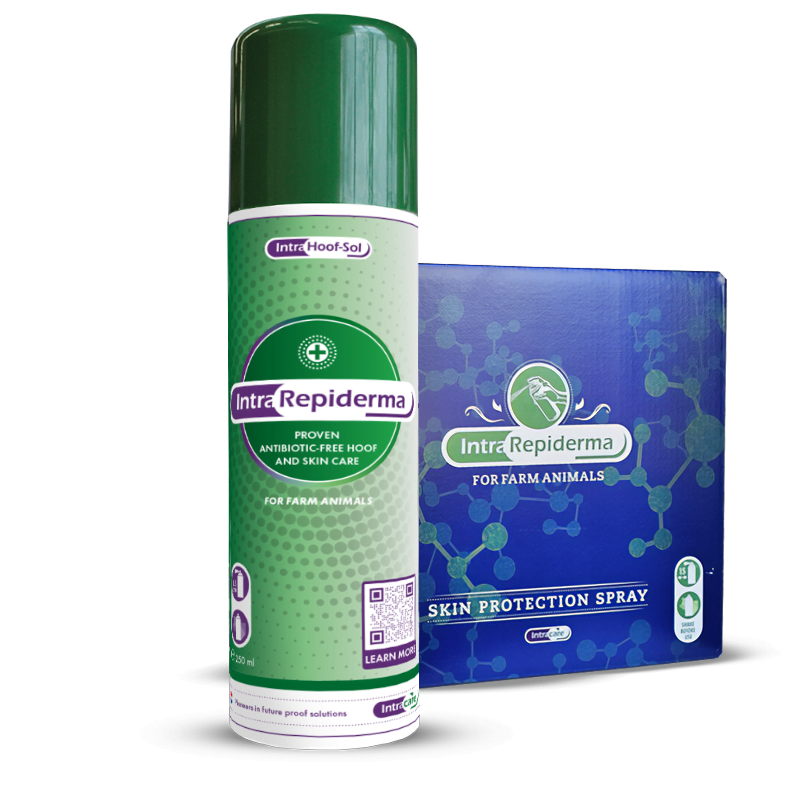
Repiderma is a topical skin care product that supports hoof health, prevents cracks, and protects against minor skin damage between trimmings.
Visit StoreHow to Prevent and Treat Ticks on Sheep
Preventing ticks on sheep comes down to knowing when and where your flock meets ticks, and protecting them at those times with a plan made with your vet. SCOPS and the Merck Veterinary Manual give the same core advice:
- Know your risk. Ticks are most active in spring and again in late summer and autumn. Hill flocks are most at risk, because ticks favour dense vegetation and warm, humid conditions, but ticks also live in rough grazing and field boundaries on lower ground.
- Check your sheep. In tick season, look and feel for ticks on the face, ears, legs, armpits and belly, above all in lambs and newly bought sheep.
- Remove ticks the right way. Grip the tick close to the skin with fine-tipped tweezers or a tick hook and pull it out steadily. Don’t squeeze, burn or smother it.
- Treat at-risk sheep with an acaricide. Pour-on products and dips kill ticks and protect sheep for a set time. Ask your vet which product to use and when, follow the label, and keep to the meat and milk withdrawal times.
- Protect new sheep. Sheep brought in from a tick-free area have no immunity. Bring them in well ahead of breeding and protect them with an acaricide before they go onto tick pasture.
- Time your grazing. Lambs grazed on tick pasture while they still have their mother’s colostrum antibodies build immunity to louping ill with less risk. Handle and gather sheep when tick activity is low.
- Manage the habitat. Controlling bracken and fencing off the worst rough ground reduce tick numbers over time.
If a sheep is already sick, the treatment depends on the disease: antibiotics for tick-borne fever, heartwater and anaplasmosis, drugs against the parasite for babesiosis and theileriosis, and nursing care for louping ill. Your vet needs to confirm which one it is.
Sheep Tick FAQs
Are sheep ticks dangerous to people?
They can be. The sheep tick, Ixodes ricinus, also bites people and can carry Lyme disease. Check yourself and your dogs for ticks after working with sheep in tick country, and remove any tick promptly.
Do sheep get fleas and ticks?
Sheep get ticks, lice, mites and keds. Fleas are rarely a problem on sheep. The “sheep tick” many farmers find in the fleece is often a ked, a wingless fly that a pour-on or dip from your vet can also control.
What is the treatment for ticks on sheep?
Remove single ticks with fine-tipped tweezers or a tick hook. For the flock, your vet can recommend an acaricide pour-on or dip and the right time to use it. Follow the label and the meat and milk withdrawal times.
Is tick-borne fever the same as relapsing fever?
No. Tick-borne fever in sheep is caused by the bacterium Anaplasma phagocytophilum, spread by the sheep tick. Relapsing fever is a different illness of people, caused by Borrelia bacteria.
- Distribution and Prevalence of Ticks and Tick-Borne Disease on Sheep and Cattle Farms in Great Britain, K. Lihou, H. Rose Vineer and R. Wall, Parasites & Vectors, 2020.
- General Review of Tick-Borne Diseases of Sheep and Goats Worldwide, Parassitologia, 1997 (PubMed).
- Tickborne Fever in Ruminants, Merck Veterinary Manual (Z. Woldehiwet), reviewed 2024.
- Louping Ill in Animals, Merck Veterinary Manual (P. Gibbons), reviewed 2025.
- Tick Paralysis in Animals, Merck Veterinary Manual.
- Sheep Ticks and Tick Bites, Norwegian Institute of Public Health.
- Babesiosis in Animals, Merck Veterinary Manual (P. D. Carter and P. Rolls), reviewed 2022, updated 2026.
- Has the Red Sheep Tick, Haemaphysalis punctata, Recently Expanded Its Range in England?, PubMed, 2018.
- Theileriosis in Animals, Merck Veterinary Manual.
- Clinical and Cytological Characteristics and Prognostic Implications on Sheep and Goat Theileria Infection in North of Iran, PubMed Central, 2015.
- Experimental Infection of North American Sheep with Ehrlichia ruminantium, PubMed, 2021.
- Heartwater, Merck Veterinary Manual.
- Anaplasmosis in Ruminants, Merck Veterinary Manual (A. E. Tabor), reviewed 2022.
- Nairobi Sheep Disease, Merck Veterinary Manual (A. R. Spickler), reviewed 2022, updated 2025.
- Natural Lyme Disease Cycles Maintained via Sheep by Co-Feeding Ticks, N. H. Ogden, P. A. Nuttall and S. E. Randolph, Parasitology, 1997.
- Tick Pyemia in Lambs, Merck Veterinary Manual.
- Sheep and Goat Tick Management, PubMed, 1997.
- Sheep Keds, Merck Veterinary Manual.
- Ticks, SCOPS (Sustainable Control of Parasites in Sheep).