
A cloven hoof is a hoof split into two claws instead of one solid hoof, the kind of foot cows, sheep and goats stand on. It has long caught the attention and curiosity of farmers, scientists and animal lovers alike. In this post I explain what the term means, which animals have cloven hooves, what is inside the hoof, and how we measure a cow’s claw at the trimming chute.
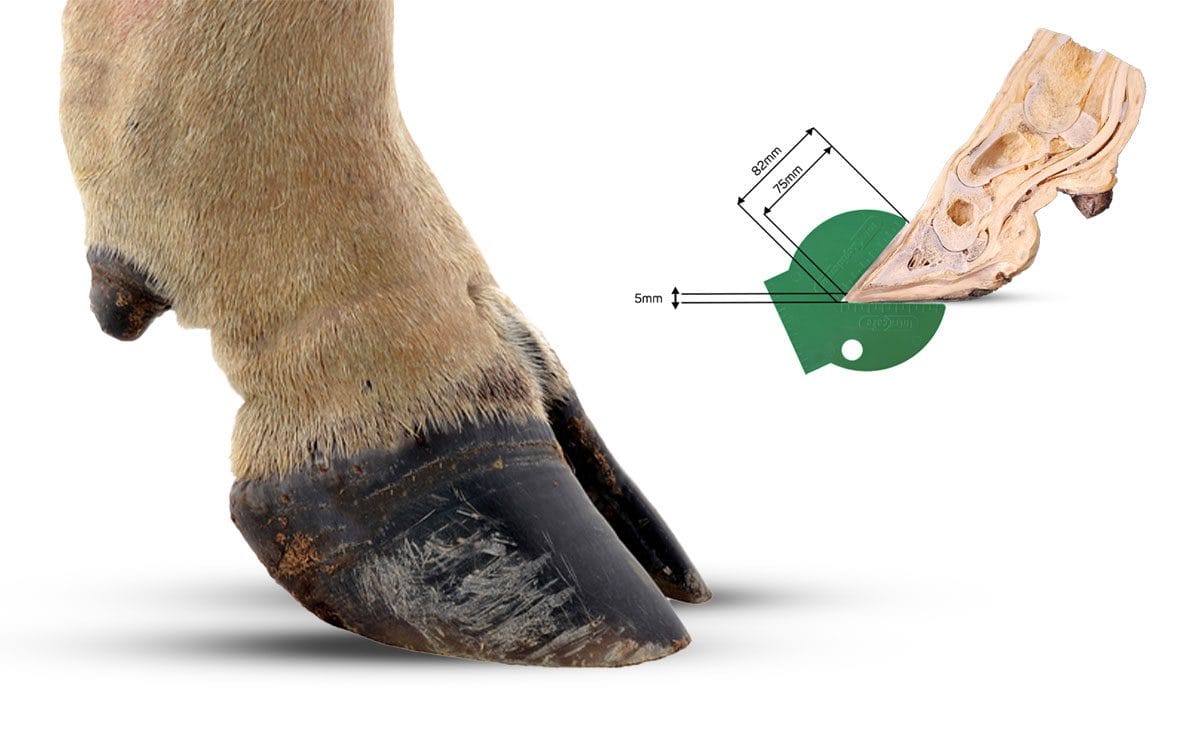
A cloven hoof is a hoof divided into two separate claws, also called a split hoof. Cattle, sheep, goats, pigs, deer and the other even-toed ungulates have cloven hooves; horses have one solid hoof. On a dairy cow, each claw is measured for front wall length (about 75 mm on a Holstein), sole thickness at the toe (about 5 mm), balance between the two claws and a toe angle of 45 to 50 degrees.
What Is a Cloven Hoof?
A cloven hoof is a hoof that is divided into two separate sections, or toes, instead of one solid hoof. Merriam-Webster defines it as a foot divided into two parts at its tip, as on a sheep. The split runs down the middle of the foot and gives the distinct “two-toed” look you see on cows, goats, sheep and many other species.
The two halves are usually called claws. Each claw has its own horn capsule, its own sole and its own bones inside, and the gap between them is the interdigital space.
What does “cloven” mean?
“Cloven” is an old past participle of “cleave”, the Old English word for split or divided. That is precisely what a cloven hoof is: a hoof split into two distinct sections. So a cloven hoof and a split hoof are the same thing, and “cloven-footed” or “cloven-hoofed” simply describes an animal that has them.
The phrase also has a figurative meaning. From the old picture of the devil with cloven hooves, “showing the cloven hoof” means showing a devilish character, according to Merriam-Webster. On the farm, it only ever means the foot.
As a hoof trimmer, I often get asked whether a cow has two claws, hooves or toes. The answer to all of them is “Yes, probably”. I’ve learned that farmers’ descriptive vocabulary changes depending on the geographic location.
Which Animals Have Cloven Hooves?
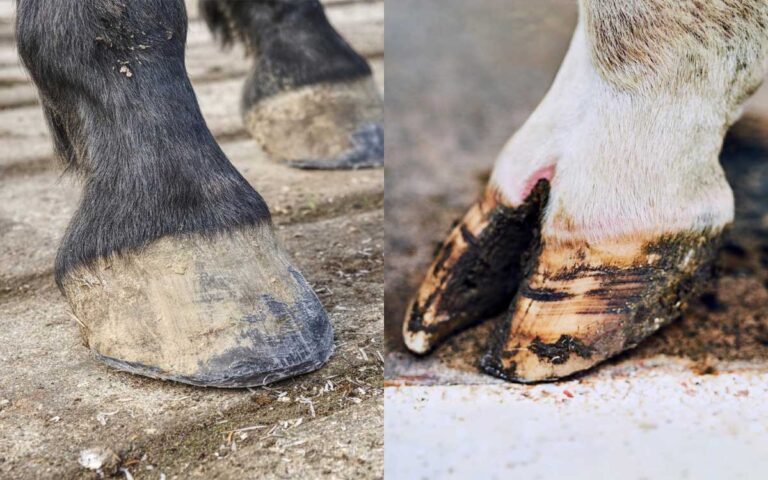
Animals with cloven hooves are the even-toed ungulates (artiodactyls): cattle, sheep, goats, pigs, deer, antelopes, giraffes and their relatives. In these animals the main weight of the leg passes through the third and fourth toes, which form the two claws, as Encyclopaedia Britannica explains. Horses are the best-known animal without one: a horse stands on a single, solid hoof, which we compare in horse hoof vs cow hoof.
Many species have cloven or split hooves, but I would like to mention only three, because I have been asked to check their hooves at some point during my trimming career.

Cows
When picturing a cloven hoof, the image of a cow often springs to mind. Cows are a perfect example of this quality; obviously, I’m biased, because I sometimes dream about hooves after a busy day of trimming. Our bovine friends have each foot divided into two separate claws. These hooves let cows graze on all kinds of terrain, from grassy, sometimes muddy fields to rugged pastures.
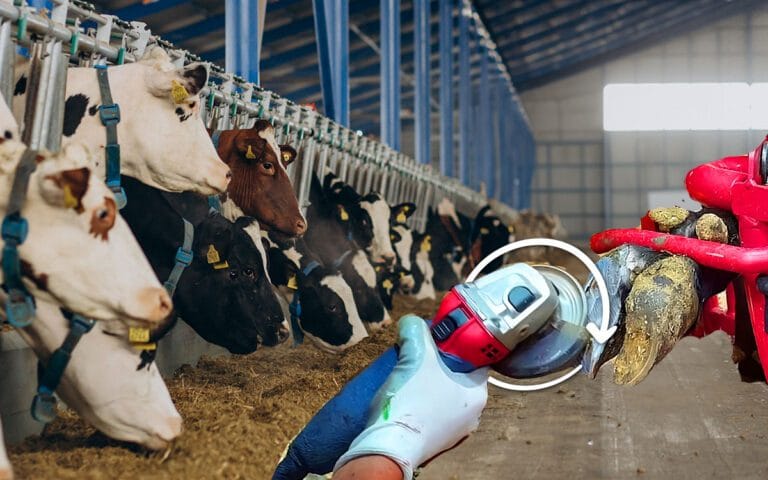
In modern dairy farming, cows are kept on hard surfaces like concrete. This affects how their hooves grow and wear, so the art of hoof trimming is important in maintaining healthy cows and preventing overgrown hooves.
Sheep
Joining cows in the “cloven hoof club”, sheep use their split hooves to manoeuvre over steep mountainsides and uneven landscapes, seeking the choicest patches of vegetation.
The sheep I have worked with were housed on the farm with access to pasture or a straw pack. The horn of the hooves grows differently on a straw pack than in rugged terrain. Specifically, we see more infectious hoof problems in controlled environments, which affects horn production.
Goats
Known for their adventurous and agile nature, goats are another prominent member of the cloven-hoofed community. With their two-toed hooves, goats climb steep cliffs, seemingly defying gravity, and reach places where they can graze on foliage other animals cannot get to.
In a barn setting, you can see the “true nature of the beast”, because these goats climb on everything. Their hooves seem like magnets that get attached to anything on the farm. I am just about convinced that their split hoof affects how they behave.
The farmers who own sheep and goats contact me about hoof tools and care products. The trimming tools we use on cows are also used on these animals, and Repiderma is a great product for these types of livestock.
What Is Inside a Cloven Hoof?
Inside each claw of a cloven hoof are bones, soft tissues and ligaments, wrapped in a hard horn capsule. The anatomy of the different hooves is a subject that could fill an entire book, and as a bovine hoof trimmer, I don’t claim to be an expert on anatomy. It is awe-inspiring, though, how God created the animals with different shapes of hooves, and I’m still working with these hooves today.
- Hoof wall: the hard outer layer, a protective shield for the structures inside.
- Sensitive laminae and corium: the living tissue under the wall that produces the horn. When it becomes inflamed, the result is laminitis.
- Digital cushion: the soft pad under the bone, which helps the foot absorb shock.
- Phalanges: the toe bones, which give the claw its structure and let the animal carry its weight efficiently, crucial for walking and overall well-being.

In the cow hoof, for example, the bone that fits into the horn shoe is called the pedal bone or coffin bone. It is referred to as P3 because of its location: the last one in a series of three. As professional hoof trimmers, we see how this bone affects the sole of the hoof, because pressure from P3 is where many sole problems start.

Why Do Animals Have Cloven Hooves?
A cloven hoof gives an animal more stability and grip than a solid hoof. The two claws can move slightly apart, so the foot acts as a natural grip on rugged surfaces, and the two halves give a wider base that spreads the weight more evenly.
These adaptations help cloven-hoofed animals survive in very different environments. They use their split hooves to move around and get over obstacles in nature. Just think of the gazelle on the African savanna or the mountain goat in the Rocky Mountains.
If I may make the link to our modern dairy cow: the natural environment has changed, but hoof formation has not. You will see different growth and traction on a concrete floor than on an animal that lives on pasture (range cows, for example).
How Do You Measure a Cow’s Hoof?
You measure a cow’s hoof by checking four things on the claw: the length of the front wall, the sole thickness at the toe, the balance between the two claws, and the angle of the toe. I measure according to the Dutch method. There are certainly other ways to trim a cow effectively, but I was trained on this method in 1994 by Mr. Pieter Kloosterman, and it makes the steps of trimming a cow easy to communicate. The full trim is in our cow hoof trimming guide.

Tools you need
Before you begin measuring, you need the right tools for trimming:
- A solid and safe hoof trimming chute to hold the animal.
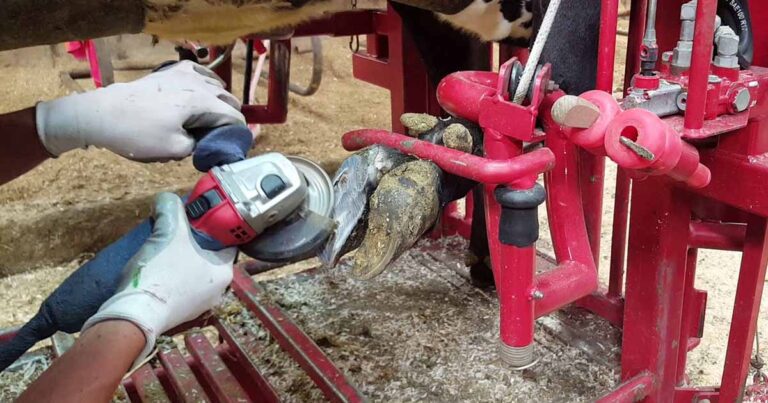
- A nipper or electric grinder to shorten the toes.
- A trimmer for the sole of the hoof.
- A sharp hoof knife. A sharp knife is half the job, so make sure you have one!
For convenience, our Hoof Care Essentials Kit has the most important tools you’ll need.
My friend and fellow trimmer Vic Daniel, who runs Vic’s Hoof Trimming Course in Ontario, Canada, shared his insight on the five steps and clarified their explanation using the Intra Claw Check.
How to use the Intra Claw Check
The Intra Claw Check is a measuring guide with the standard values of a normally grown claw built into it. It simplifies the work of anyone doing hoof care and gives a complete check of the claw’s dimensions. Use it only as a tool or guide: it should not be applied rigidly to overgrown or abnormal hooves. The Claw Check tool questions post answers what trimmers ask us most about it.
- Claw length. On an average-size Holstein-Friesian cow, start with the length of the front wall on the inner claw of the hind leg, or the outer claw on the front leg. Measure from where the hard horn begins to the tip of the toe. Use the Intra Claw Check to mark the front wall at 75 mm and make a vertical cut at the toe to the sole surface. This is the Dutch method I describe in the 5 steps to trim a cow barn sheet.
- Toe thickness. Once the toe is cut to length, reduce the sole thickness to match. The Intra Claw Check is 5 mm thick, which is the measure for the sole at the toe. With a 75 mm claw length and a 5 mm sole, the distance from the coronary band to the tip of the claw comes to around 82 mm.
- Sole against the floor. Trim the second claw to match the first in length and heel height. Place the Intra Claw Check under the bottom of the hoof (the solar surface): a mismatch in length or heel height shows straight away. Both soles should rest flat, so the two claws share the weight evenly and the cow stands comfortably and naturally.
- Toe angle. Check the angle between the sole and the front wall. The Intra Claw Check is set at 50°, so you can see at a glance whether the claw is within the acceptable range of 45 to 50°.


Two warnings from the trimming chute
Avoid over-trimming. It can happen when you trim a rear foot and the inner claw is short or low on the heel. In that case it’s impossible to match up the outer claw, because it would end up too thin.
Keep the inner heel high. In my experience, keeping the heel of the inner claw on the rear legs as high as possible is vital. Lowering that heel puts more pressure on the outer claw and can cause problems such as laminitis in cattle. The outer hind claw is the one that typically overgrows and carries too much weight, and balancing the load between the inner and outer claw is one of the two main aims of trimming, according to the University of Wisconsin’s Dairyland Initiative.

This handy hoof care and skin care starter kit is designed for livestock owners who need to ensure their animals' hooves are properly trimmed and cared for.
Get Started NowFinal Thoughts
Cloven-hoofed animals, especially the cow, have remarkable anatomy. Understanding what a cloven hoof is and how to measure one gives us deeper insight into this awe-inspiring creation. (Yes, I am biased again, after trimming cows for over 30 years.)
At Diamond Hoof Care, we understand the importance of staying informed and equipped with the best practices in bovine hoof care. Our Hoof Clips newsletter brings you practical advice, the latest trends and success stories from the hoof care trade. Whether you’re tending to cows, sheep, goats or horses, sign up to get Hoof Clips in your inbox, free of charge.
Frequently Asked Questions
Do cloven hoof and split hoof mean the same thing?
Yes. “Cloven hoof” and “split hoof” are used interchangeably, and both mean a hoof divided into two separate sections, or claws. “Divided hoof” and “cloven foot” mean the same.
What is another name for a cloven-hoofed animal?
Cloven-hoofed animals are even-toed ungulates, or artiodactyls: hoofed mammals with an even number of toes, such as cows, sheep, goats, pigs and deer, which all share the cloven hoof.
What is the opposite of a cloven hoof?
The opposite is a solid, or uncloven, hoof: one single hoof on each foot, as on a horse. A cow’s foot has two claws that can move apart, while a horse’s hoof is one piece.
- Cloven hoof, Merriam-Webster Dictionary.
- Artiodactyl, Encyclopaedia Britannica, updated 2026.
- Hoof Trimming Assessment, The Dairyland Initiative, University of Wisconsin-Madison School of Veterinary Medicine, updated 2026.