
I have been trimming cows since 1994, and if there is one thing that work has taught me, it is that healthy hooves are the foundation a cow stands on, quite literally. A lame cow eats less, milks less, and has a harder time getting bred back. Most of that trouble is preventable, and good hoof care for cows starts with trimming properly and on time.
Here is how hoof trimming a cow works, from the tools and setup, through the Dutch five-step method, to how often you should trim and how to get started in the trade yourself.
Why Hoof Trimming Matters for Your Dairy Cows
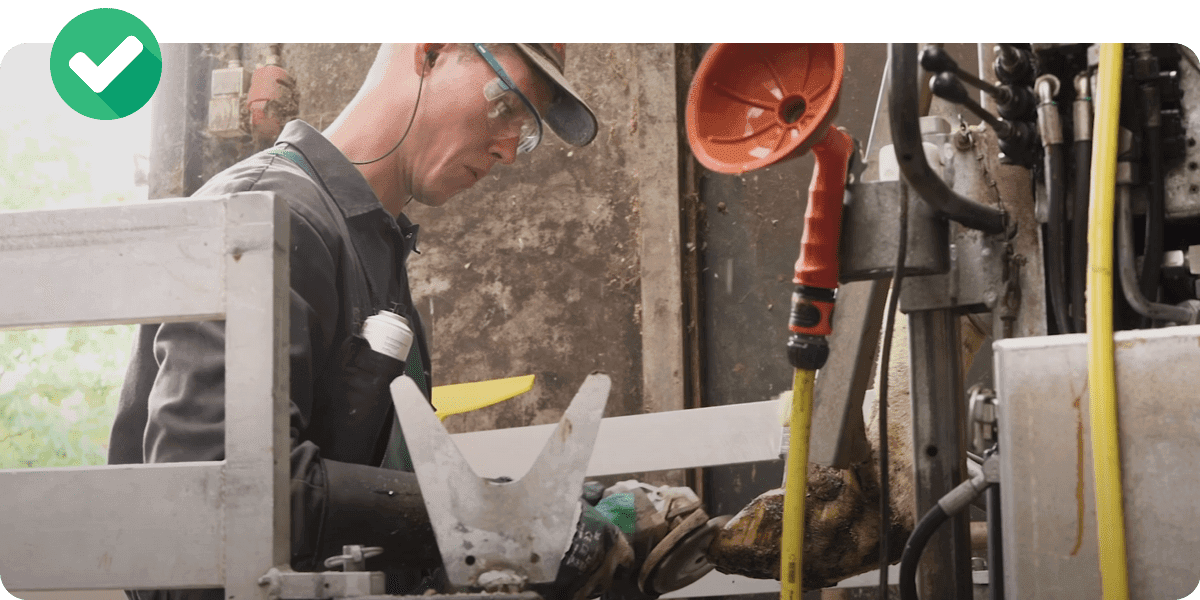
Proper hoof trimming at the right time is the base of a healthy herd. When I trim a cow, I am doing a few things at once: balancing the weight across both claws, taking off excess horn, and easing pressure on the spots that tend to give trouble. That balance is what keeps her moving comfortably.
The biggest reason to stay on top of it is lameness. Lameness is painful for the cow and expensive for you. It drags down milk production, hurts fertility, and can cost you a cow you would rather have kept. Regular trimming heads off a lot of that by dealing with overgrowth, cracks, and early infection before they turn into a real problem. I have said it to farmers for years: it pays to trim.

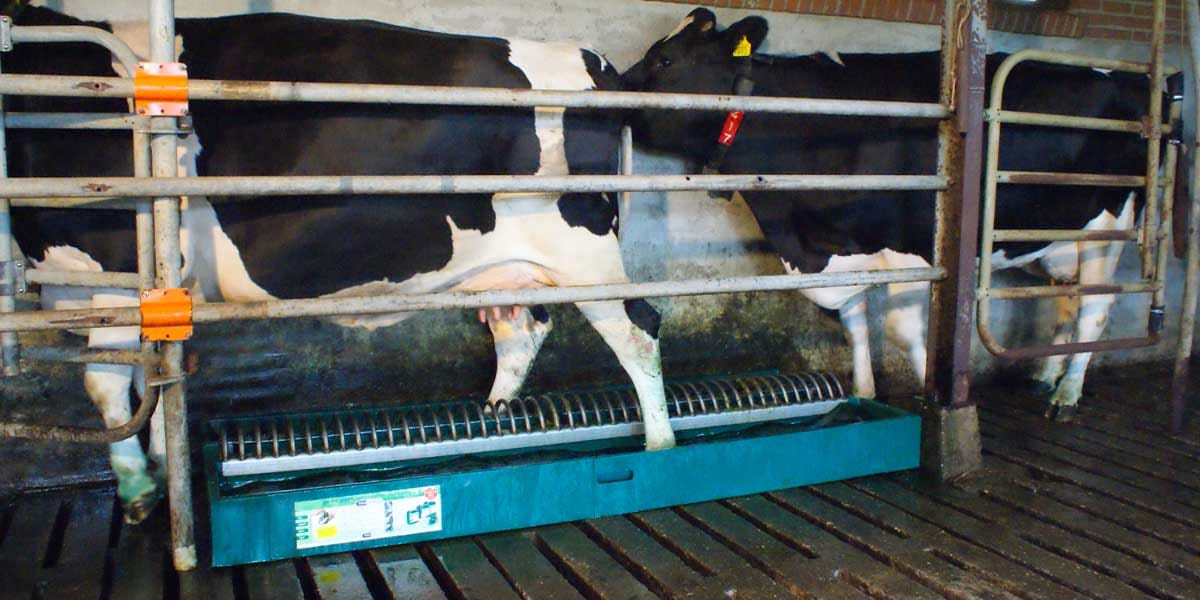
There is a herd side to this too. One cow with an infectious hoof disease can pass it to others through shared alleys and standing areas. And a cow with an unbalanced, overgrown claw is the one most likely to run a sole ulcer. Keeping everyone on a regular schedule lowers that risk across the whole barn. Between trims, herd hygiene helps too. A regular spray program with Hoof Sol Spray holds the bacteria down in the barn, so infection has less chance to travel from one cow to the next.
Trimming also gives you a set moment to look the animal over. While she is in the chute, you can check for infection, injury, or anything else starting, and deal with it while it is still small. If you want to get sharper at spotting these things early, that is a lot of what we share in our free Hoof Clips newsletter.
Tools and Equipment for Cow Hoof Trimming
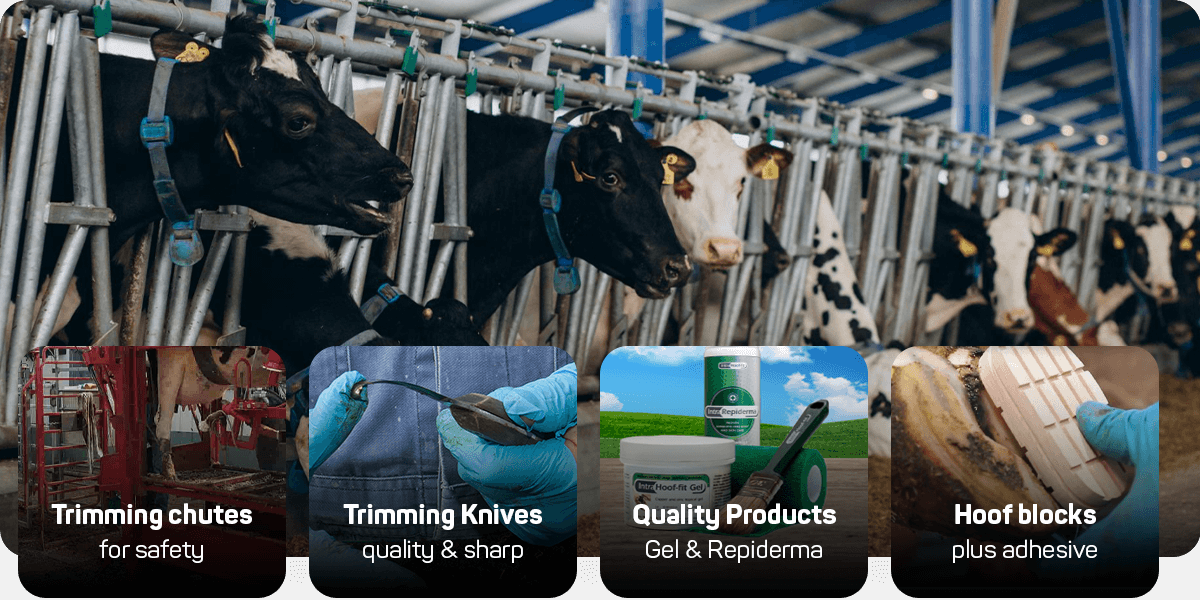
Good tools make this a safer and cleaner job. Before you start, get your kit together. You will want:
- A solid, safe hoof trimming chute to hold the cow
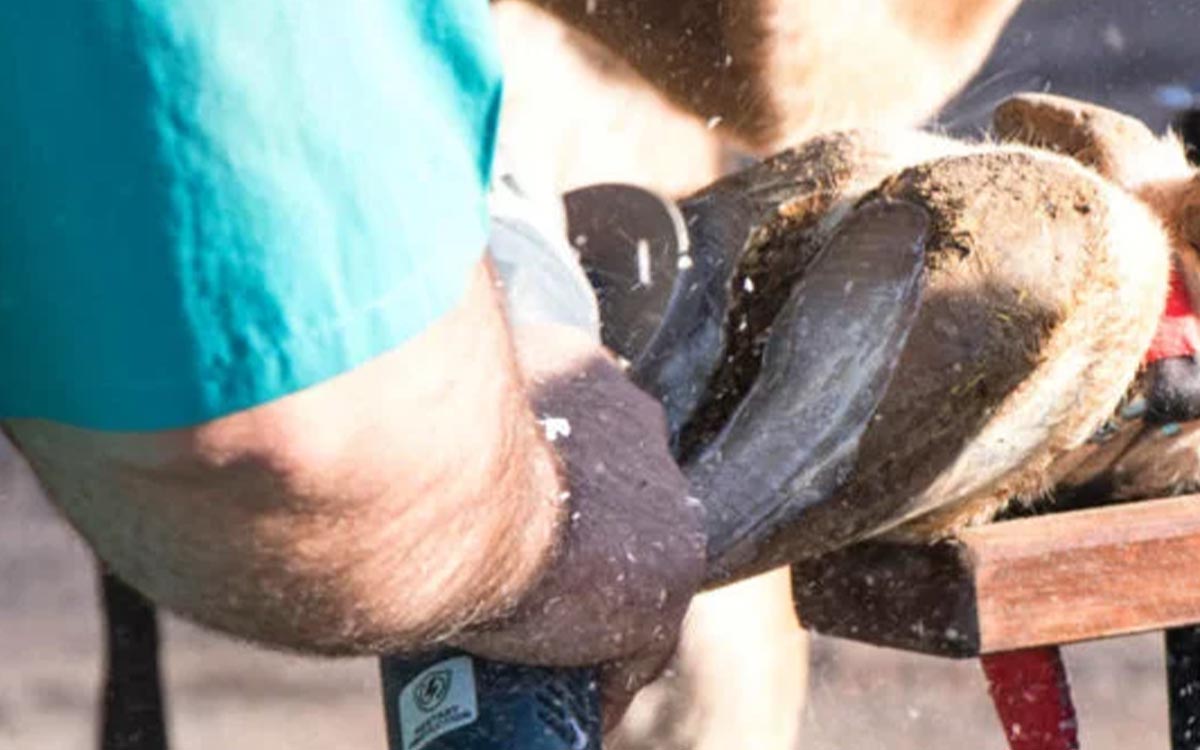
- A nipper or an electric grinder for taking the toe back
- A sharp hoof knife for the sole and heel (a sharp knife really is half the job)
- A hoof tester for finding sore spots
- Hoof blocks and adhesive, for taking weight off a sore claw
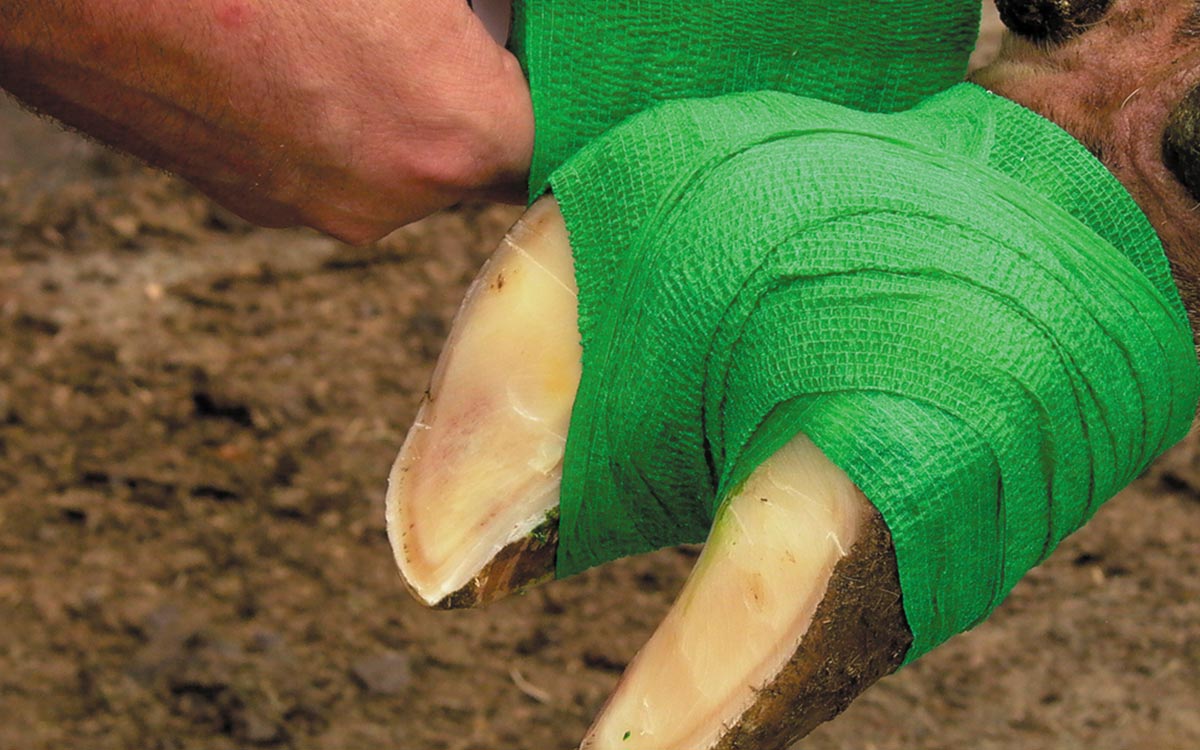
- A topical and wraps for treating what you find, like our Hoof-fit Gel
- Gloves
If you are putting a set together from scratch, our Hoof Care Essentials Kit gathers the main tools in one place, including the Claw Check gauge you use for the measurements in the Dutch method below. Get comfortable with each tool before you start, because knowing how they work is half of doing the job safely. I go deeper on choosing and using each tool in Tools That Make Hoof Trimming Easier.
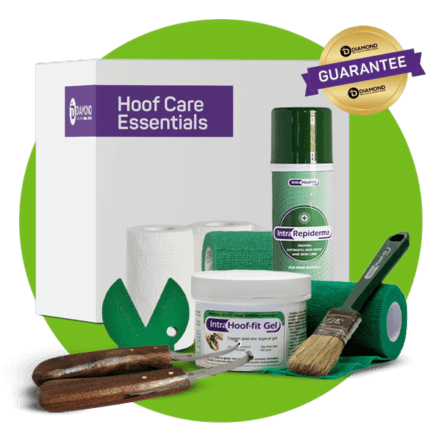
Hoof Care Starter Kit
This handy hoof care and skin care starter kit is designed for livestock owners who need to ensure their animals' hooves are properly trimmed and cared for.
Get Started NowHow to Restrain a Cow for Hoof Trimming
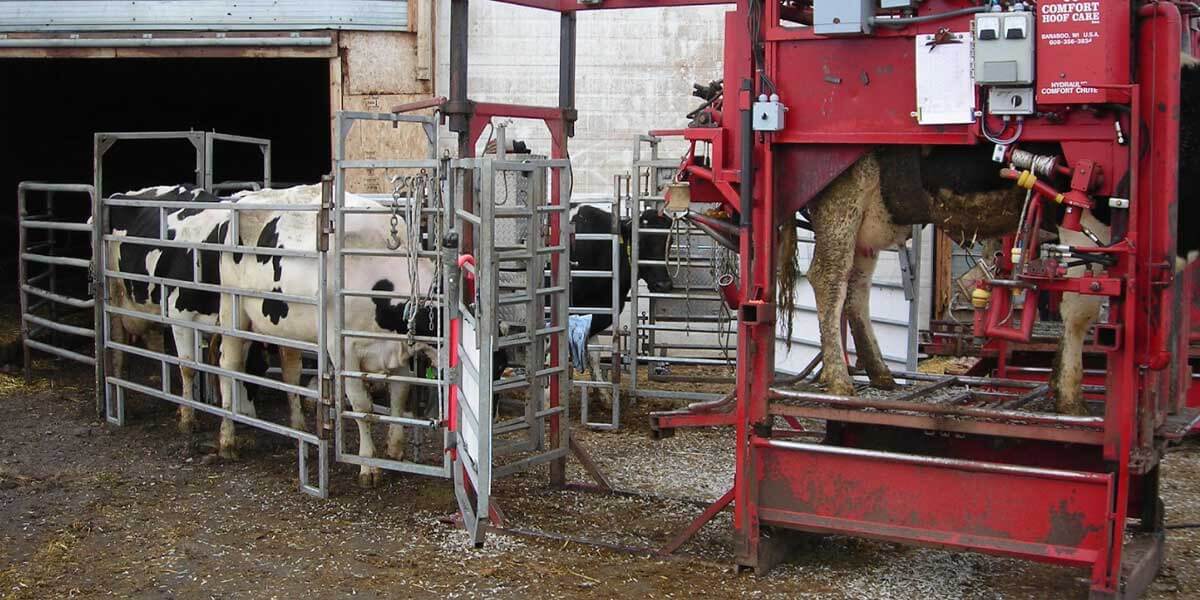
Before any trimming happens, the cow has to be held safely. I use an upright chute myself, but years ago at a hoof trimmers’ conference they told us about half the cows in North America are trimmed on a tilt table, and that works just as well. The type of chute matters less than people think. What matters is that the job is safe, for the cow and for the person doing it.
Here is what I have seen make the real difference: a good paneling system on the yard, so one person can move and sort cows without it turning into a rodeo. The moment catching a cow becomes a fight, the lame one tends to get left for another day, and that is usually the exact cow you wanted to get to. When a cow starts walking off, the goal is to look at her within a day, say twelve to twenty-four hours. When the setup makes that easy, it is a bit of a gold mine. You catch the problem early, you fix it, and you save yourself weeks of a cow milking poorly and draining money. There is real satisfaction in getting to her in time.
The other side of it is honest too: none of us can work miracles on a cow that has been lame for two or three weeks. The longer it goes, the harder she is to turn around.
None of the setup needs to be fancy. A solid chute, plenty of light over the work area, and your tools laid out within arm’s reach. A little know-how helps as well. You do not need to trim like a professional, but being able to prep a claw for a block, put on a wrap, or open up an abscess is not rocket science, and those few skills let you help a cow while she is still easy to help.
The Dutch 5-Step Method: A Complete Walkthrough
The Dutch method was laid out by Professor E. Toussaint Raven, and it is what I was trained on in 1994 by Mr. Pieter Kloosterman. I keep coming back to it for one simple reason: it is easy to teach and easy to pass on to the next person. Below are the five steps to trim a rear hoof. The measurements come from the Intra Claw Check, which we use as a guide for a normally grown claw, not a rigid rule for an overgrown or abnormal one.
- Trim the inner claw of the rear foot first. On a front foot, you start with the outer claw instead. Begin where the hard horn starts and measure to the tip of the toe. Mark the front wall at 75 mm and make a vertical cut at the toe down to the sole. Then bring the sole down to about 5 mm thick. On an average Holstein-Friesian, the distance from the coronary band to the tip of the claw lands around 82 mm once the length and sole thickness are right.
- Match the outer claw and balance the heels. Trim the outer claw to the same length and heel height so both claws share the weight evenly and the cow stands flat and comfortable. Never over-trim here. If you are on a rear foot and the inner claw is already short or low on the heel, you cannot match the outer claw to it without leaving it too thin. When in doubt, take less.
- Model the sole. Dish out a little of the inner sole near the spot where sole ulcers usually show up. This takes the pressure off that weak point.
- Check and treat any lesions. If you find a problem, lower the heel of the affected claw or add a block to the healthy claw so the sore one can rest. Keep an eye on the angle between the sole and the front wall too. It should sit between 45 and 50 degrees. I keep the heel of the inner claw on the rear legs as high as I can, because dropping it throws more weight onto the outer claw, and that is where laminitis and other trouble start.
- Remove all loose horn from the heel area. Clean off any loose or undermined horn so bacteria have nowhere to sit.
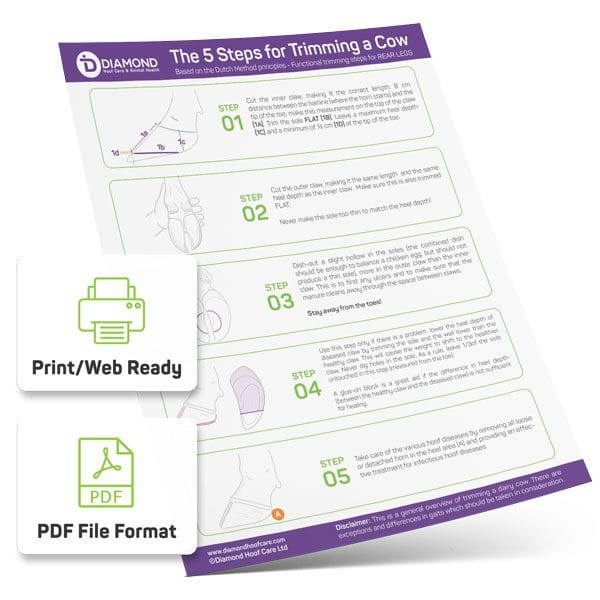
5 Steps to Trim Cheat Sheet
"How to trim" Barn Sheet: Learn how to Trim a Cow in 5 steps. Includes helpful diagrams!
DownloadHow Often Should You Trim Cattle Hooves?
As a baseline, most dairy cows should go through the chute twice a year. One trim around dry-off and one in mid-lactation fits the calendar well. Higher-producing herds, wet or heavily concreted housing, and cows with a history of lameness all push that number up. If your lameness rate climbs above about 2% a month, that is a sign to trim more often.
The word I keep coming back to is check. Twice a year you are not trying to trim every cow hard, you are looking. If the hoof is in good shape, she is set for another six months. If something is starting, you caught it early. I go deeper on this in How Often Should You Trim Cattle Hooves?
How to Become a Professional Hoof Trimmer
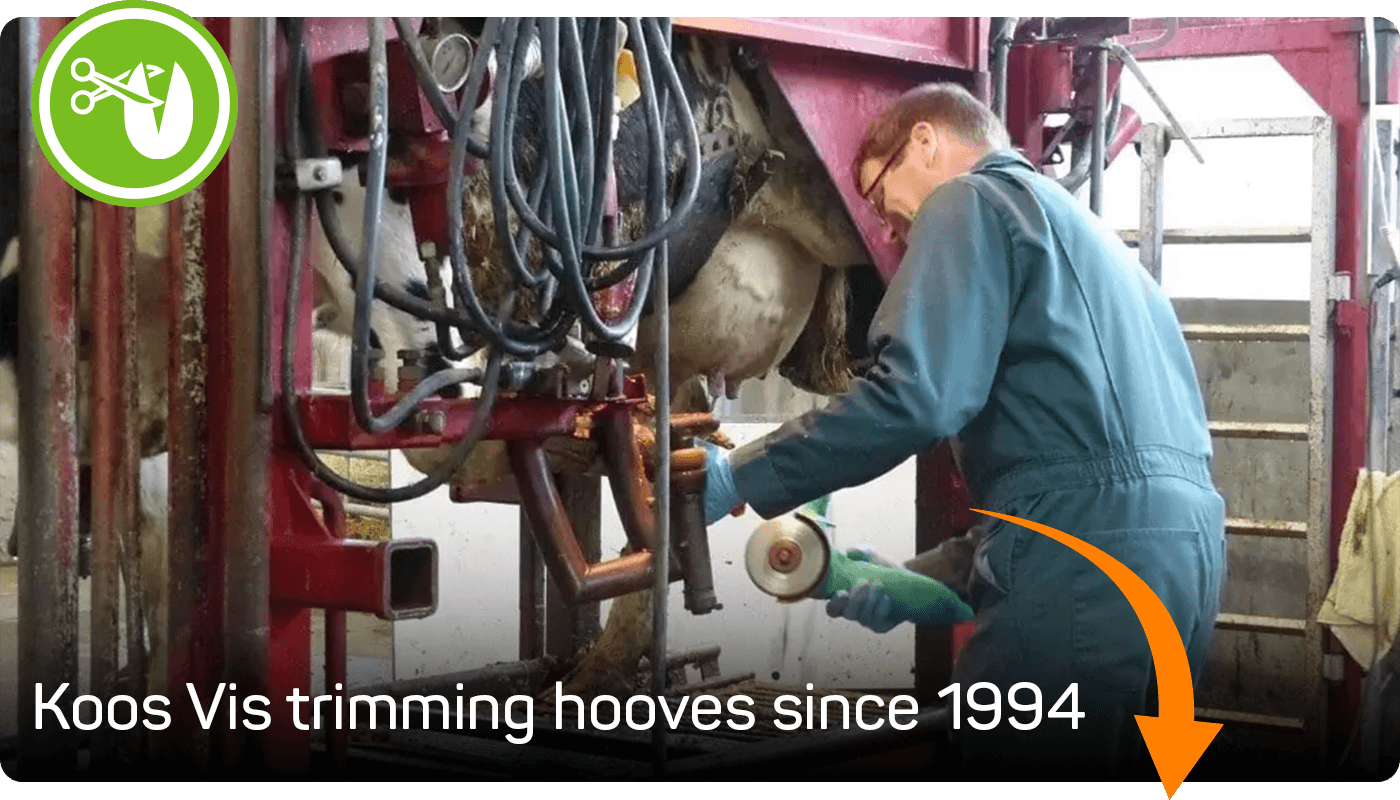
I did not set out to become a hoof trimmer. I was milking cows in the early 1990s, and the hoof of a cow always had my interest. When the farm’s trimmer told me he wanted to quit, he asked if it was something for me to take on. I took it, and I have never looked back.
It is a fantastic profession. The work is hard, no way around that, but there is real reward in helping a farmer understand and get on top of lameness, and in knowing the animals walk comfortably again because of what you did that day. Hoof health does not happen on its own. It takes planning, and it takes every professional on the farm pulling the same direction.
I would tell any young woman or man thinking about it to give it a serious look. It has been a privilege to spend my working life in this trade.
If you want to get started, here is where I would point you.
Canada
- Vic’s Hoof Trimming Course, run by Vic Daniel, a founding member of the Ontario Hoof Trimmers Guild.
- The Western Canadian Certified Hoof Trimmers Association, for trimmers working in Western Canada.
United States
- The Hoof Trimmers Association is a good place to start, with a member database you can use to find and network with trimmers near you.
- Kinder Hoof Care, which runs a solid training course.
I have written more about finding and connecting with trimmers in Where Can I Find a Hoof Trimmer?
Frequently Asked Questions
Does hoof trimming hurt cows?
No. Done correctly, trimming does not hurt a cow. The hoof horn we remove has no feeling in it, much like your own fingernail. If anything, a good trim relieves pain by taking pressure off an overgrown or unbalanced claw. A calm cow in a proper chute usually stands quietly through the whole thing.
How often should cattle hooves be trimmed?
Most dairy cows should be trimmed twice a year as a baseline, usually once around dry-off and once in mid-lactation. High-production herds, difficult housing, and cows prone to lameness may need more. If your lameness rate runs above about 2% a month, trim more often.
What is the Dutch 5-step hoof trimming method?
The Dutch method, developed by Professor Toussaint Raven, is a five-step way to trim that balances the claws and protects the weak spots. You trim the inner claw to length, match the outer claw, model the sole, check and treat any lesions, and clear loose horn from the heel.
How do you restrain a cow for hoof trimming?
You hold her in a hoof trimming chute, either an upright chute or a tilt table. Both work well. What matters most is that the cow and the handler are safe, and that catching and sorting cows is easy, so a lame one gets seen sooner rather than later.
What tools do you need for cow hoof trimming?
At a minimum: a safe chute, a nipper or electric grinder for the toe, a sharp hoof knife for the sole and heel, and a hoof tester. Add hoof blocks, adhesive, a topical, and wraps for treating what you find. A sharp knife makes the biggest difference of anything on that list.
Are there professional hoof trimming courses available?
Yes. In Canada, Vic’s Hoof Trimming Course in Ontario and the Western Canadian Certified Hoof Trimmers Association both train new trimmers. In the United States, the Hoof Trimmers Association and Kinder Hoof Care are good places to start. Each one also helps you connect with trimmers already working in your area.
What is the difference between functional and corrective hoof trimming?
Functional trimming is routine maintenance: balancing the claws and keeping a sound cow sound. Corrective trimming deals with a hoof that already has a problem, like a sole ulcer or a badly overgrown claw, and often means adding a block or lowering a heel so the sore claw can heal.
Conclusion
Hoof trimming a cow is not complicated once you understand what you are trying to do: keep both claws balanced, take the weight off the sore spots, and catch small problems before they become lame cows. Do it on time, twice a year for most cows, and you save yourself a lot of trouble down the road.
If you want to keep learning, our free Hoof Clips newsletter sends practical hoof health tips every couple of weeks, drawn from real barns and real cows. And when you are ready to trim, keep the 5 Steps to Trim a Cow sheet by the chute.

Hoof Clips:
Your Hoof Care Insights
We deliver essential insights, learnings, and observations on hoof care straight from our community of farmers, owners, and trimmers.
Join Hoof Clips