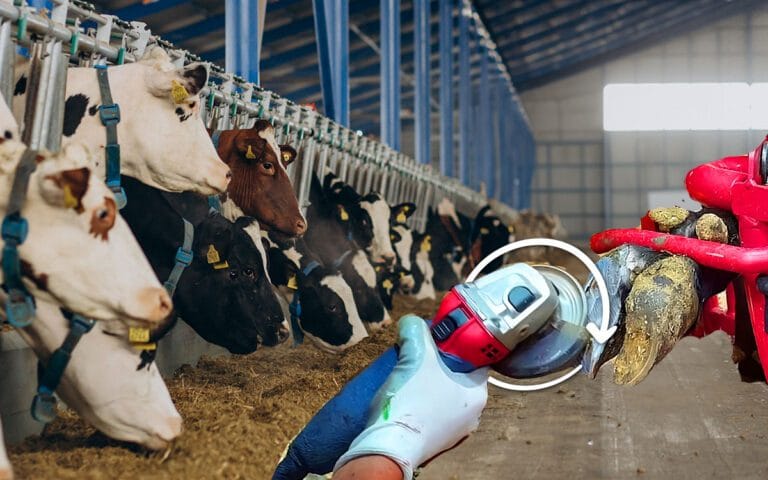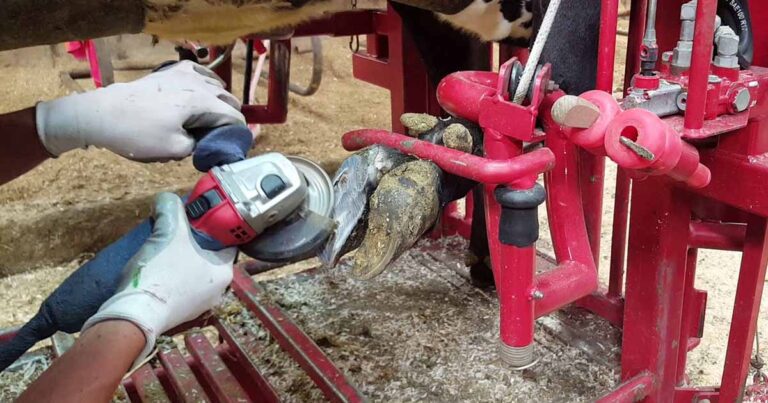


Your best cow limps toward the feed bunk, favouring one leg as her overgrown cow hooves curl at the edges, throwing off her balance with every painful step. What began as a minor trimming delay has escalated into a serious mobility issue, affecting her feed intake, milk production, and your finances. This post covers how to spot, treat and prevent overgrown hooves, with insights from Koos Vis, a professional hoof trimmer from Alberta.
To treat overgrown cow hooves, trim them back to a normal length and shape, then fix the cause so they do not grow back. A trim follows four steps: assess the hoof, remove the excess horn, shape and balance the two claws, and treat any lesions you find. Most herds need a trim every four to six months, and a routine professional trim costs about $15 to $40 per cow.
Why Do Overgrown Cow Hooves Cost So Much?
Overgrown cow hooves cost more than the trimming bill because they lead to lameness, and a lame cow eats less, milks less and gets back in calf later. Overgrown hooves are more common than farmers realize, but with proper care, the transformation can be remarkable. With a little attention and the right techniques, those uncomfortable hooves can become strong, healthy foundations for your cows, helping them move and feel better.
Researchers put a number on it. A Cornell study calculated the average cost of one case at US$216 for a sole ulcer, US$133 for digital dermatitis and US$121 for foot rot (Cha et al., 2010), and the University of Wisconsin-Madison Extension cites a range of US$90 to US$300 per lameness case. Multiply that across your herd, and prevention becomes your most profitable strategy.
Koos shares a reality check from the field: “I’ve seen farmers lose $500 to $800 per cow in reduced milk production when overgrown hooves go untreated for just a few months. That doesn’t count treatment costs or replacement expenses if the cow becomes chronically lame.”
These costs compound quickly. Secondary hoof infections develop, milk production drops 5 to 15%, feed intake decreases, and breeding gets delayed. The financial impact spreads throughout your operation.
Maintaining hoof health is essential for dairy farmers, whether managing 50 or 500 cows. The good news is that overgrown hooves respond well to trimming.
How Do You Spot Overgrown Hooves?
You spot overgrown hooves first in the way a cow walks: she shifts her weight, rocks back on her heels and takes shorter steps. “I’ve learned to watch for subtle changes in a cow’s gait,” Koos explains. “You might notice her shifting weight unusually, rocking back on her heels more than normal. Sometimes they’ll take shorter steps, trying to avoid pressure points.”

Behavioural changes in your cows
Koos emphasizes the importance of regular pen walks. He says, “Don’t wait for severe lameness. I tell farmers to walk their pens weekly and watch for subtle changes. A cow that used to stride confidently but now takes careful steps is your early warning.”
Watch for these behavioural shifts:
- Is a cow slower to come to the feed bunk?
- Is she skipping a milking in the robot?
- Is she lying down longer than normal?
Making these observations part of your morning routine takes minutes but can save significant recovery time.
What overgrown hooves look like
On the hoof itself, look for long toes that curl upward or cross over each other, claws of uneven length, and a flat claw angle that puts the weight on the heel.
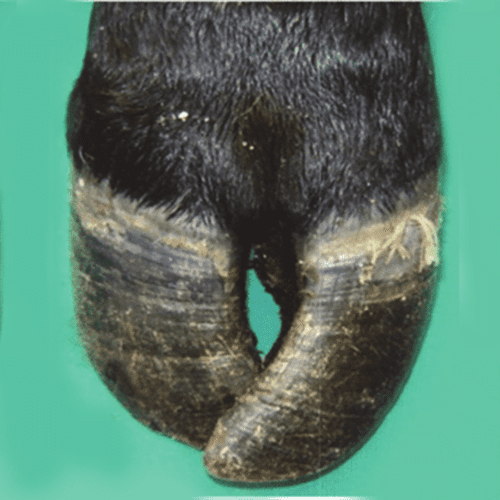

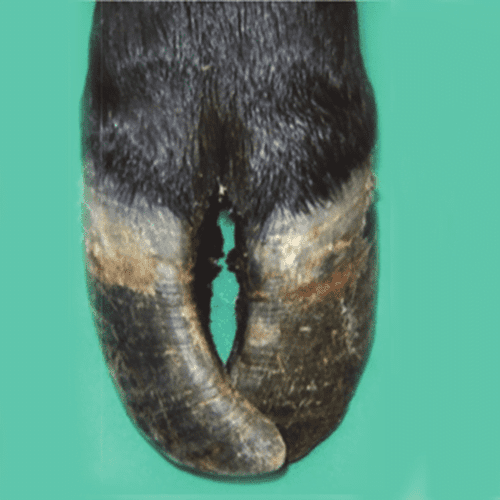
We provide a measurement cheat sheet to help farmers new to hoof assessment understand normal hoof proportions versus problematic overgrowth.
What Causes Overgrown Hooves?
Hooves become overgrown when the horn grows faster than the floor wears it down. Healthy hoof horn grows about 5 mm (3/16 inch) a month, according to the University of Wisconsin’s Dairyland Initiative, so any setup that slows wear soon shows up as long toes.
“I’ve seen consistent patterns throughout my career,” says Koos. “The biggest culprit is the imbalance between hoof growth and wear. Different flooring surfaces play a significant role.”
Flooring and bedding
Koos elaborates, “Soft flooring, like straw packs or rubber mats, doesn’t provide the same abrasion as concrete. This leads to hoof growth outpacing natural wear, resulting in overgrown hooves.”
He continues, “On the other hand, concrete flooring can cause excessive wear if cows spend too much time on it. The key is finding the right balance in your housing setup to match hoof growth with appropriate wear.”
Nutrition
Nutrition influences hoof growth. Biotin deficiency leads to poor-quality, uneven horn growth, while high-energy diets can accelerate it beyond normal rates. Work with your nutritionist to ensure balanced rations that support strong, consistent development. When you next review rations, ask about biotin levels. This simple conversation can prevent major hoof issues down the road.
Koos shares a striking case: “I once treated a cow that could barely walk due to years of neglected hoof care. After trimming, her transformation was remarkable. This case highlighted how a single lame animal can cost a farm tens of thousands of dollars in lost productivity.” Read Koos’s full story to understand the true cost of neglecting hoof care.
Rumen acidosis, corkscrew claw, obesity, genetics and laminitis can also make hooves grow too long. We explain each one in 8 reasons why a cow may grow long hooves.
How Do You Prepare to Trim Overgrown Hooves?
You prepare by learning the basics of hoof anatomy, restraining the cow safely in a chute and laying out sharp, professional tools before the first cut. “The difference between a good trim and a disaster is preparation,” Koos emphasizes. “I’ve seen farmers rush into trimming without proper setup and end up with injured cows or people.”
Knowledge
- Understanding hoof anatomy and angles.
- Recognizing when to trim versus when to treat a problem.
- Following proven methods, such as our 5 Steps to Trim a Cow guide.
Safety
- Proper restraint systems for cow and trimmer safety.
- Adequate lighting to see your work.
- A clean, organized workspace with easy-to-reach tools.
Koos’s advice for beginners: “Start with your calmest cows and take your time. It’s better to do five properly than rush through twenty and create problems. Every hoof teaches you something.”
A secure and comfortable setting
Trimming can stress the cow, so a comfortable and secure environment is essential. Use a hoof trimming chute to keep the cow in place and make sure the lighting is good. The area should be free from sharp objects or obstacles that could injure the cow.
Restraining the cow
Before starting, restrain the cow in a chute to minimize injury to the cow and the person trimming. If you don’t have a proper trimming chute, you can use a headgate and halter combination with ropes to lift the leg. However, the physical strain of manually lifting and holding a cow’s leg makes this method exhausting and unsustainable for regular hoof care.
Hoof trimming professionals use specialized equipment to keep cows safe and secure their legs during the trim. Some of these chutes are designed as elevators, raising the cow to the right working height and simplifying the job.
Good preparation makes the job smoother and safer. An arranged set of gates and panels is critical to managing the herd solo. Proper restraint helps prevent kicks and keeps your cow at ease. Your goal is a quick, careful trim that avoids stress or injury for both of you.
Tools for trimming overgrown hooves
The quality of your tools directly affects the result. The most important ones are:
- Hoof trimming knife: a professional-grade hoof trimming knife is essential. Learn to keep it sharp for clean, efficient cuts.
- WrapAway: the WrapAway safely removes old bandages and comes with a wooden or extendable pole.
- Hoof Care Essentials Starter Kit: the starter kit holds what a farmer needs to start hoof care, from professional-grade trimming tools to treatment solutions.
See our full guide to hoof trimming tools, or browse our hoof care supplies and tools.
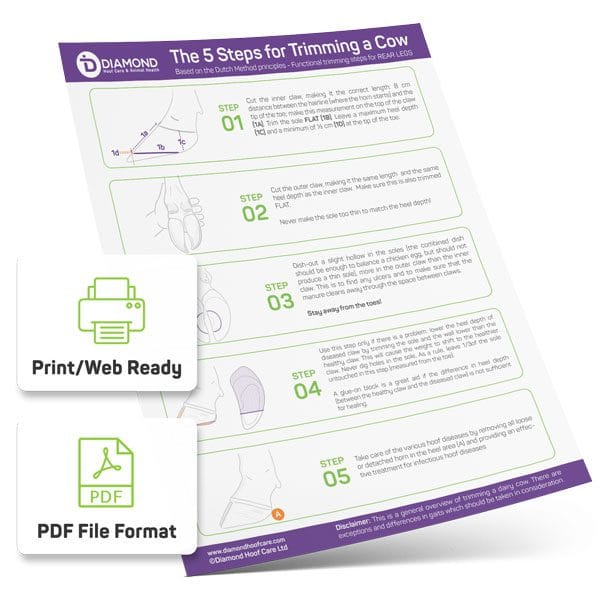
“How to trim” Barn Sheet: Learn how to Trim a Cow in 5 steps. Includes helpful diagrams!
DownloadHow Do You Treat Overgrown Cow Hooves?
You treat overgrown cow hooves by trimming them back to a normal length and shape in four steps:
- Assess the hoof condition.
- Remove the excess growth.
- Shape and balance the two claws.
- Treat any lesions or infections you find.
Trimming cow hooves this way restores proper shape and function and improves cow comfort and mobility, which leads to better health and productivity. Most farms need a regular trim every four to six months. Inadequate hoof trimming can cause lameness, with real animal welfare problems and economic losses.
Video: The Hoof GP works on a huge, overgrown and curly cow’s hoof.
Step 1: Assess the hoof condition
First, inspect the hooves for early signs of limping or abnormal growth. Then examine each hoof for cracks, lesions or punctures.
Before you trim, check the hoof wall length and the thickness of the sole. Thin or short hooves are more prone to injuries, so accurate measurements matter.
Over-trimming hooves can cause avoidable lameness due to human error. New barns with freshly poured concrete floors may contribute to excessive wear, leading to thinner hooves. Take care when removing horn, because once it’s gone, you can’t put it back.
Step 2: Remove the excess growth
Removing the excess growth restores the hoof’s shape and reestablishes correct balance and weight distribution. Cows rely on their hooves for support and balance, so it’s essential to trim them correctly. As a guide, the American Association of Bovine Practitioners gives a toe length of about 3 inches (7.5 cm) for an adult Holstein.
Our cheat sheet 5 Steps to Trim a Cow outlines the steps to trim a cow properly. Once you master the basics and have assessed the hooves, use a grinder or a hoof knife to carefully cut back the overgrown horn.

“The transformation photos I encourage farmers to take show the impact,” says Koos. “It is striking to see a cow that was struggling with overgrown, unbalanced hooves walking confidently after a proper trim back to normal proportions. The difference in their movement and comfort level is immediate.”
Step 3: Shape and balance the hoof
Balancing the hooves spreads the weight evenly over both claws, which helps prevent sole ulcers and improves the cow’s mobility. Before finishing the trim, consider some slight sole modelling to anticipate issues and identify problems early.
Step 4: Treat lesions and infections
If you notice lesions or signs of infection during the trim, deal with them right away. Use our hoof disease library, which has colour pictures of common diseases, to identify the problem.
Digital dermatitis is one of the most common and costly hoof diseases. We encourage anyone dealing with it to read our digital dermatitis treatment protocol.
Preventing infections is vital for the cow’s hoof health. Regular trimming and a proper foot bath or spraying protocol help prevent disease spread and keep your cows healthy.
How Much Does Hoof Trimming Cost per Cow?
Professional hoof trimming costs about $15 to $40 per cow for routine maintenance, in Koos’s experience. For a single cow that needs emergency care, expect around $100 in total: about $20 for the trim plus about $80 for the farm visit.
The price depends on how many cows the trimmer does per visit, the distance to your farm, the chute used and how much treatment the cows need. Ask a few trimmers in your area; our guide on how to find and choose a hoof trimmer lists what to ask.
“Here’s how I explain the economics to farmers,” Koos shares. “Investing $20 to $30 per cow for preventive trimming twice a year costs $40 to $60 annually. Compare that to potential losses of $300 to $400 from one lameness case, and the math is evident. Prevention pays for itself.”
How Do You Prevent Overgrown Hooves?
You prevent overgrown hooves with flooring that wears the claws evenly, a balanced ration and a regular trimming and monitoring routine. The quote “an ounce of prevention is worth a pound of cure” captures the essence of effective hoof care. Focus on three key areas to reduce corrective trimming needs.
Barn design for hoof health
Smart barn design can prevent hoof issues. Start with your flooring, and mix it up. Use concrete walkways for natural wear, and add rubber mats in high-traffic areas to give hooves a break. Don’t forget comfortable bedding areas for rest.
Keeping things dry is crucial. Slope your floors for easy water runoff and install drains in problem spots. Regular cleaning avoids wet areas that soften hooves and breed bacteria.
Give your cows room to stretch their legs. Wide alleys and plenty of space around feeders and waterers encourage movement. Make sure your stalls are inviting; if cows like using them, they’ll lie down more and take weight off their feet.
Good airflow is often overlooked, but it makes a significant difference. Proper ventilation keeps moisture levels down throughout the barn. Whether you use fans, curtains or open sides, the goal is fresh air everywhere.
Nutritional support
Nutrition is crucial for hoof health. Koos explains, “The right diet can make a difference for hooves. Key nutrients like biotin, zinc, copper and selenium are essential for strong development.” He emphasizes that every herd has unique needs: “Don’t guess at supplements. Work with a qualified nutritionist to develop a tailored feed program. It’s an investment that reduces lameness issues.”
Regular trimming and monitoring habits
Consistent routines are essential for effective hoof health management. The Dairyland Initiative advises trimming heifers one to two months before first calving, and cows at 60 to 150 days in milk and again at dry-off. Here are key habits to develop:
- Same-day treatment: make sure any lame cow gets attention in the trimming chute that same day. This keeps minor issues from becoming major problems.
- Scheduled prevention: set regular times for foot baths or spraying sessions each week. A fixed schedule helps make sure these tasks don’t get missed.
- Dry cow and heifer care: walk the dry cow and heifer pens weekly and follow a prevention protocol to catch and address issues early. Our guide on how often cows need their hooves trimmed covers the schedule in detail.
These routines are simple, but consistency makes them powerful. When these practices become habits, hoof health improves across the herd. Read how farmers like Linda have reduced lameness in their herds using these strategies, and subscribe to our free Hoof Clips newsletter for regular insights and tips.
Frequently Asked Questions About Overgrown Hooves
Can overgrown hooves cause lameness?
Yes, overgrown hooves cause lameness in cattle. They affect weight distribution, cause discomfort, and can lead to secondary issues like sole ulcers and infections if untreated.
Do overgrown hooves cause pain in cattle?
Yes, overgrown hooves cause significant discomfort and pain. The abnormal weight distribution strains joints and tendons, making walking difficult and painful for the cow.
What does it cost to trim cow hooves?
Professional hoof trimming costs about $15 to $40 per cow for routine maintenance. For a single cow needing emergency care, expect around $100 in total: about $20 for the trim plus about $80 for the farm visit.
How often should cow hooves be trimmed?
Most farms need a routine trim every four to six months. Many herds trim twice a year, for example at 60 to 150 days in milk and again at dry-off, and trim heifers one to two months before their first calving.
Your Next Step Toward Healthier Hooves
Koos leaves farmers with this thought: “After thirty years of trimming hooves, I’ve learned one truth: the best time to start proper hoof care was yesterday, but the second best time is today. That cow limping to the feed bunk doesn’t have to be your reality. I’ve seen herds transform when farmers commit to prevention. The satisfaction of watching your cows walk comfortably, knowing you’ve prevented pain and saved money, makes every effort worthwhile.”
Are you ready to transform your herd’s hoof health? Schedule your next hoof assessment with your local hoof trimmer. Looking for expert guidance on prevention protocols or professional-grade tools? We provide consulting services to help you build a sustainable hoof health program.
Contact our team or call (403) 388-4309 to keep your cows walking strong.
- The cost of different types of lameness in dairy cows calculated by dynamic programming, Cha E. et al., Preventive Veterinary Medicine 97(1), 2010.
- Economics of Dairy Cattle Hoof Health, University of Wisconsin-Madison Division of Extension.
- Hoof Trimming Assessment, The Dairyland Initiative, University of Wisconsin-Madison School of Veterinary Medicine, updated 2026.
- An Approach to Corkscrew Claw, AABP Lameness Committee fact sheet, American Association of Bovine Practitioners.