Not every lame cow needs cow bandages. Whether you call it a wrap, a cattlewrap, or a bandage, I have applied thousands of them during my 30 years of hoof trimming.
One of the biggest mistakes I see is bandaging a foot that should not be bandaged at all.
Applying the wrap is the easy part. Knowing when it is the right tool is where most of the value is.
The short answer: I only bandage a cow’s foot when treating digital dermatitis. For sole ulcers, white line disease, and foot rot, the treatment protocol is different. A bandage can actually make things worse.
To learn more about the different hoof diseases and how to treat them, visit our Hoof Disease Area.
Let me walk you through how to tell the difference, what tools you need, and how to get the wrap right when it is the correct choice.
Signs Your Cow Needs a Bandage
A bandage is part of a treatment protocol, not a response to lameness in general.
Before reaching for cow hoof bandages, you need to identify what is going on with the foot. Here are the signs that tell you a bandage is the right call.

Limping or Lameness
When a cow starts favouring one leg or shortening her stride, something is wrong in the foot.
Lameness is a signal to get the foot in the chute and find out what is going on, not a reason to reach for a bandage.
Lift the foot, clean it, and look between the claws. If you find the raw, red, or strawberry-like lesions of digital dermatitis, that is your signal.
If the problem is a sole ulcer or white line defect, the answer is proper trimming and blocking, not wrapping.
Swelling
Swelling between the claws or around the coronary band can point to foot rot.
Foot rot is one condition where you should not bandage. Wrapping a swollen foot restricts blood flow and traps the discharge that needs to drain.
If the entire foot is swollen and there is a foul smell, call your veterinarian. Foot rot requires antibiotics, not a wrap.
I wrote a detailed protocol on this: Foot Rot in Cattle: Causes, Treatment and Prevention.
Visible Wounds
Active digital dermatitis lesions between the claws are the primary reason I apply a bandage. These wounds need medication held in place for several days to heal properly.
If the wound is a sole ulcer or a white line abscess, trimming the foot and applying a block to the healthy claw is the correct protocol. No bandage needed.

Reluctance to Walk
A cow that is reluctant to move or stands with an arched back is telling you the pain is significant.
Get her in the chute, trim the foot, and diagnose. If the diagnosis is DD, a wrap with medication will start the healing. If it is a laminitis-related lesion, address it with trimming and a block.
When to Use a Bandage on a Lame Cow
Not every lame cow needs a wrap. The condition determines the protocol. Use this guide to make the right call at the chute.
Not sure what you are looking at? Download the free Intra Protocol for the full DD diagnosis and treatment guide.
Download Intra ProtocolTools and Materials You Will Need
Having the right materials ready before you start saves time in the chute and gives you a better result.
Here is what I keep on hand for every wrapping session. For a broader look at what makes trimming more efficient, see Tools That Make Hoof Trimming Easier.
- Intra Hoof-fit Gel: This is the treatment product. It is a registered drug (DIN 02441284) that treats digital dermatitis. It is the only non-antibiotic drug registered in Canada specifically for treating digital dermatitis, meaning it is the only product legally permitted to make this claim. Brush it between the claws and onto the pad before wrapping.
- Facial pads: I buy bundles of facial pads at Walmart. They make better padding than paper towel or Kleenex because the cotton cushions the wound and wicks moisture away. A small investment that is well worth it.
- Intra Hoof-fit Tape or Intra Eco Tape: This cohesive hoof wrap sticks to itself without adhesive, so it stays on without bonding to the skin or hair. It holds the medication and padding in place for the treatment period.
Video: Intra Eco Tape, the cohesive hoof wrap from Diamond Hoof Care.
- Dry hand towel or paper towel: For cleaning the foot before application. Not water.
- WrapAway: For removing the bandage after 3 to 4 days. This tool fits on a painters pole or broomstick and lets you remove wraps in the milking parlour or headlocks without lifting the foot.
Step-by-Step Guide: How to Bandage a Cow’s Foot for Digital Dermatitis
Once you have diagnosed digital dermatitis and gathered your materials, applying a wrap is straightforward.
These steps follow the Intra Protocol, a free download that walks you through the full DD treatment process.
Here is how I do it after trimming the hoof.
Video: proper wrapping of a cow hoof, from Diamond Hoof Care.
Step 1: Clean the Foot with a Dry Towel
Use a dry hand towel or paper towel to clean the area between the claws and around the lesion.
Do not wash the foot with water. Water fills the pores of the skin and limits how well the medication penetrates.
A dry wipe is all you need to clear mud and manure from the treatment area.

Step 2: Apply Intra Hoof-fit Gel Between the Claws
Brush Intra Hoof-fit Gel between the two claws.
Make sure the gel reaches the front and the rear of the hoof so all affected areas are covered.
Do not rush this step. Missing critical areas means the treatment will not reach the full lesion.

Step 3: Prepare the Padding
Take a facial pad and add a bit more Intra Hoof-fit Gel to it before placing it on the wound.
This extra layer makes sure the medication reaches the full lesion and stays in contact for the entire treatment period.
Step 4: Place the Pad and Wrap with Tape
Gently press the pad against the wound between the claws.
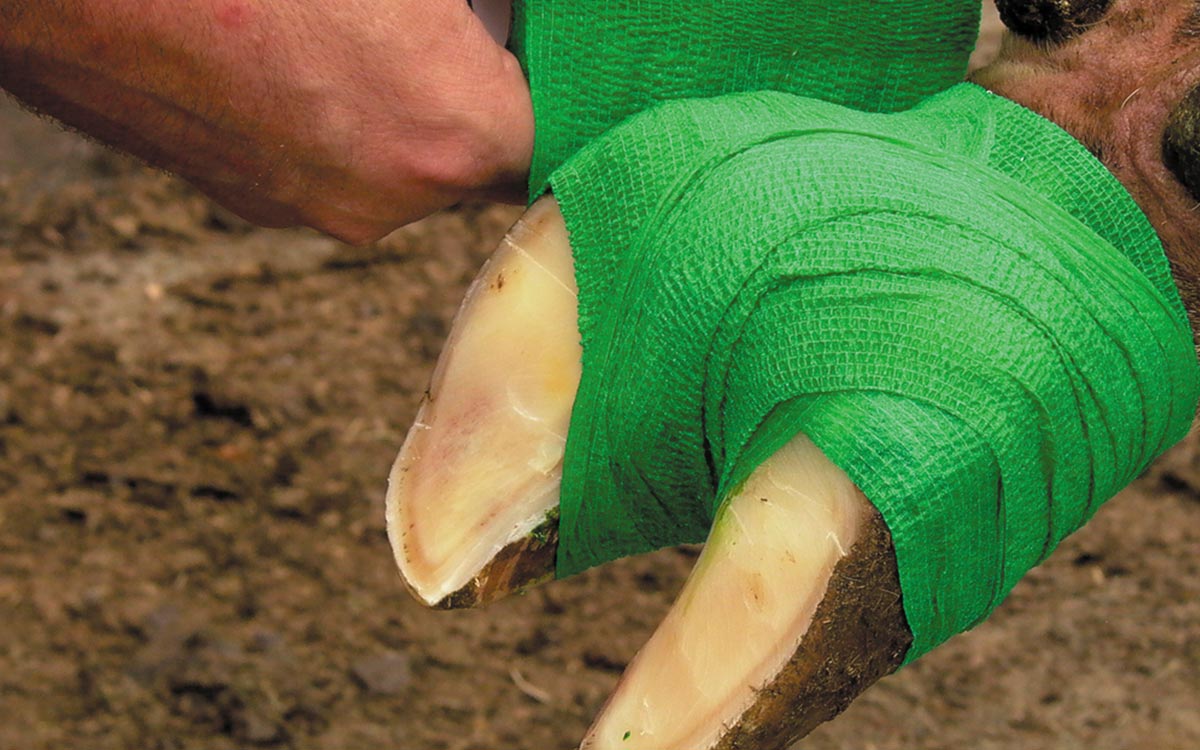
Then start wrapping with Intra Hoof-fit Tape or Intra Eco Tape. These cow bandaids are cohesive, meaning they stick to themselves and hold firmly without adhesive on the skin.

Step 5: Check the Tightness
The wrap should be firm enough to hold the pad and medication in place, but not so tight that it restricts blood flow.
In 2018, I interviewed four hoof experts from Canada and Sweden. The general takeaway was clear: “you should be able to get two fingers between the wrap and the skin. It’s important to have the wrap half on the skin and half on the hoof to reduce its tightness.”
I have seen wraps that were too tight cause more damage than the original problem.
Unforeseen swelling can occur after the bandage is applied, so the farmer needs to monitor the cow in the days after trimming. A wrap is a tool for treatment. It should never become the source of a new problem.

Hoof-fit Gel
Intra Hoof-fit Gel is the first and only non-antibiotic topical medication for digital dermatitis treatment in Canada
Visit StoreAftercare and Monitoring
The bandage is on. Now the work shifts to making sure it does its job and comes off on time.
How Long to Leave the Bandage On
The standard recommendation for treating digital dermatitis with Intra Hoof-fit Gel is to remove the bandage after 3 to 4 days.
This timeline has proven effective across many herds and gives the medication enough contact time to treat the lesion.
One important point: do not wrap a cow that is leaving the herd.
If a cow is being dried off and will be away from the milking group for two months, do not apply a bandage. There is a real chance it stays on far too long. A forgotten cattlewrap does more damage than the DD it was meant to treat.
When to Change the Bandage
After removing the first bandage at 3 to 4 days, inspect the hoof.
If the lesion is healing well, a second wrap is not needed.
If the DD is still active, reapply the treatment protocol, this time without a bandage. The goal is to keep the treatment period short and controlled.
The full decision tree for when to retreat is in the Intra Protocol.
Signs of Healing vs. Complication
A healing DD lesion will show new skin forming where the raw tissue was. The redness fades, and the cow moves more comfortably.
If you see increased swelling, a foul odour, or the lesion looks worse than before the wrap, something went wrong.
The bandage may have been too tight, or the condition may have been misdiagnosed. Get the cow back in the chute, reassess, and consult your veterinarian if needed.

Frequently Asked Questions
How long should a cow hoof bandage stay on?
Remove the bandage after 3 to 4 days. That window gives the medication enough contact time to treat digital dermatitis without leaving the wrap on so long it causes problems. After you pull it, inspect the lesion. If it is healing, a second wrap is not needed.
What materials do you need to bandage a cow’s hoof?
You need four things: Intra Hoof-fit Gel for treatment, facial pads for cushioning, cohesive hoof wrap tape to hold everything in place, and a dry towel to clean the foot first. Skip the water. A WrapAway tool makes removal easier without lifting the foot.
How tight should a cow hoof bandage be?
Firm enough to keep the pad and medication in place, loose enough that you can fit two fingers between the wrap and the skin. Half of the tape should sit on the skin and half on the hoof wall. Too tight restricts blood flow and causes more damage than the original lesion.
Can you bandage a cow with foot rot?
No. Foot rot is one of the conditions where a bandage makes things worse. The foot is swollen and needs to drain. Wrapping it traps that discharge and cuts off circulation. Foot rot needs a veterinarian and antibiotics. Get a diagnosis before reaching for a wrap.
How do you remove a cow hoof bandage without lifting the foot?
Use a WrapAway. It fits on a broomstick or painters pole so you can cut through the wrap in the milking parlour or at the headlocks. No chute required. Lifting the foot to remove a bandage is harder on the cow and harder on you.
When should you not use a bandage on a lame cow?
Do not bandage sole ulcers, white line disease, or foot rot. Those conditions need trimming, blocking, or veterinary treatment. A bandage holds moisture against the hoof and restricts drainage. Also skip the wrap on any cow that is being dried off or leaving the herd. A forgotten wrap does real damage.
Wrapping Up
Whether you call them cow bandages, cattlewrap, or cow bandaids, they are a powerful tool when used for the right condition.
In my 30 years of trimming, the only time I reach for a wrap is when treating digital dermatitis. For sole ulcers, white line disease, and foot rot, the answer is proper trimming, blocking, or veterinary treatment.
Knowing when not to bandage is just as important as knowing how.
When you do wrap, keep the process clean and simple. Dry the foot, apply Intra Hoof-fit Gel, pad with facial pads, wrap with cohesive hoof wrap, and check the tightness. Remove the bandage after 3 to 4 days with a WrapAway, and monitor the cow.
That protocol has worked for thousands of cows across the herds I serve.
Want practical hoof health tips delivered to your inbox? Join the Hoof Clips Newsletter
Download the free Intra Protocol and keep it by the chute. It walks you through the full DD treatment process, from diagnosis to follow-up. If you want to talk through what is happening in your herd, reach out to your local Diamond Hoof Care dealer.