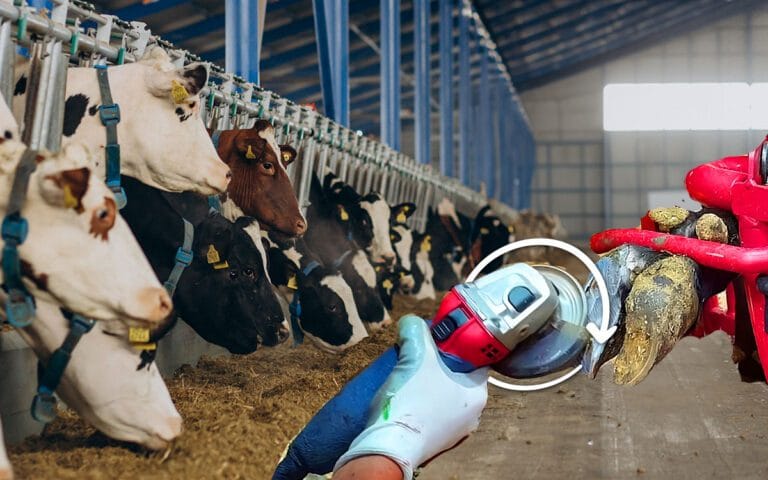

Slippery barn floors can make it quite the challenge to keep your cows on all fours, and dairy barn floor safety comes down to one thing more than any other: what is sitting on the concrete. On hot summer days, manure can dry onto the floor and leave it as slippery as a skating rink. One Quebec dairy found a simple fix: water.
Barn floors turn slippery when manure dries onto the concrete in a thin, smooth skin and fills the grooves, or when the surface is coated with minerals, lime or a greasy film. Keep the floor clean, not dry: scrape often, and in hot, dry weather wet the alleys so manure comes off instead of baking on. If cows still slip on a clean floor, the concrete needs new grooves or texturing.
Why Do Dairy Barn Floors Get Slippery?
Most barn floors get slippery because of what sits on the concrete, not because the concrete is worn out. Manure that dries onto the floor, minerals left behind when liquids evaporate and greasy films all fill the grooves and polish the surface, so the hoof has nothing to grip.
Concrete gives cows little grip to begin with. The University of Wisconsin's Dairyland Initiative puts the friction a cow needs to walk without slipping at 0.4 (0.4 to 0.7 when she starts walking from a standstill), while most concrete floors measure around 0.35. That is why cows slip and hurt themselves on concrete, and why anything that makes the surface smoother tips the balance further.
Tom Woodall of AGRI-TRAC, who has fixed slippery floors in barns across Canada and the U.S., lists these causes:
- Dried manure: when the liquids drain or dry away, the solids get spread thin over the floor and dry into a slippery, leather-like skin that covers the grooves.
- Mineral build-up: fans, sun, wind and low humidity evaporate the water, urine and manure on the floor and leave minerals such as calcium and sodium behind. They bond to the concrete and cannot be scraped off.
- Lime on the stalls: lime kicked into the alleys bonds with the concrete and fills the grooves. Woodall calls it the number one cause of grooves that have gone shallow.
- Greasy films: algae in damp, dark corners and milk solids and fats leave a slippery glaze, most often in the milking parlour and holding area.
- Worn concrete: less common than most people think, but sand-bedded barns and floors scraped by heavy equipment for many years wear down on the high spots.
Hot, dry summer days are often the worst, because everything that dries manure and urine onto the floor happens faster: more air movement, more sun and less humidity.
How Does Water Help on Slippery Barn Floors?
Water helps because it keeps manure loose, so it comes off the floor instead of drying into a slick crust over the grooves. A clean floor gives the hoof the full grip of the concrete; a dry, caked floor does not.
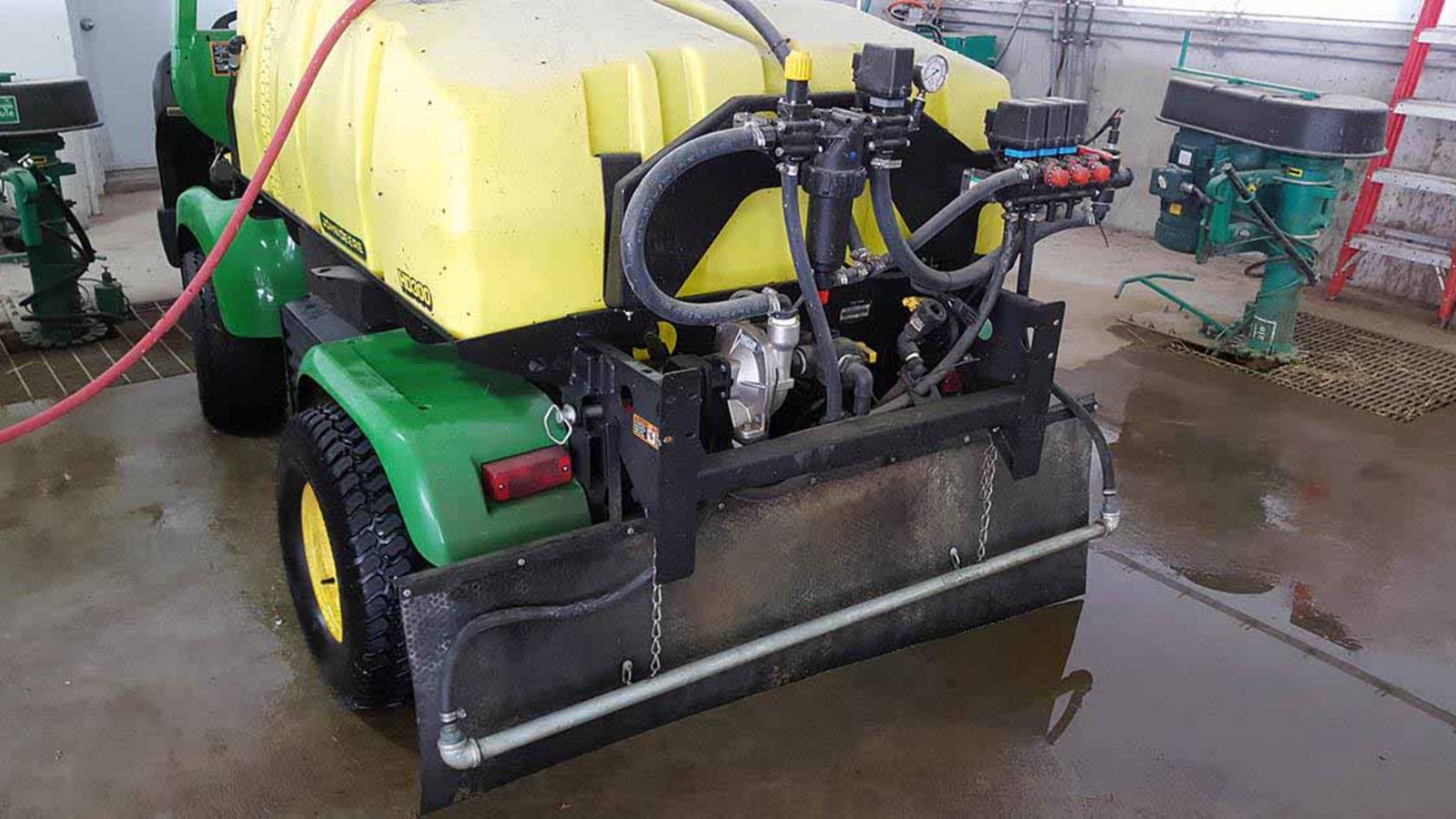
Yannick Blanchette of La Presentation Holsteins in Quebec found this out on his own farm. In summer his team sprays the barn floors every day with a water rig on their John Deere Gator. It cuts the build-up of manure on the floors and keeps the grooves clean and the AGRI-TRAC Traction-Milled surface open, so the cows keep their traction.
“Daily spraying of the floors with our John Deere rig helps our cows to stay mobile and confident.” Yannick Blanchette, La Presentation Holsteins, Quebec
“This John Deere Gator has been a great tool for preventing cows from going down.” Yannick Blanchette

Research backs him up. In a Journal of Dairy Science study, cows walked on concrete that was dry, wetted with water, or covered with 5 cm or 12.5 cm of manure slurry. Wetting the floor did not change how fast the cows walked or stepped. Slurry did: the cows slowed down and changed the way they placed their legs, more so in the deeper slurry. Water on clean concrete is not the problem; manure is. Or as Tom Woodall puts it, the goal is a clean floor, not a dry floor.
It is a balance, though. Every litre you spray ends up in the manure storage, so herd owners walk a fine line between hot weather, good ventilation and sensible water use. Water should help the manure leave the barn, not leave cows standing in it: feet that stay wet and dirty all day are at higher risk of digital dermatitis.

We deliver essential insights, learnings, and observations on hoof care straight from our community of farmers, owners, and trimmers.
Join Hoof ClipsHow Do You Keep Cows From Slipping on Barn Floors?
Keep the floor clean and check it regularly, the same way you look after a tractor. These steps cover most barns:
- Scrape often, above all in the alleys and crossovers where cows walk and turn the most.
- Wet the floors in hot, dry weather so manure does not dry onto the concrete, as Yannick does every summer day. Pay attention to sunny, breezy doorways, where manure crusts first.
- Keep the liquids with the solids. Woodall warns that scrape alleys sloped toward the centre let the urine drain away from the manure, and the solids left behind dry into a crust. Liquid manure scrapes off cleanly.
- Think twice about lime on the stalls. Woodall's advice is to use a bedding product that does not bond to the concrete and fill the grooves.
- Wash the parlour and holding area with a light acid or bleach wash several times a year to remove algae and milk films.
- Wash a small patch of floor and look closely. If you see polished stones, the concrete is worn. If you see no stones, the original surface is still there under a film or build-up.
- Ask your hoof trimmer where the cows slip. Uneven heel wear tells a trimmer which areas of the barn cause trouble.
When Does a Slippery Floor Need Grooving or Texturing?
When the floor is clean and cows still slip, the concrete surface itself needs work. The Dairyland Initiative recommends:
- New floors: grooves parallel to the feed bunk, 1.3 cm (0.5 in) deep and 1.9 cm (0.75 in) wide, spaced 8.3 cm (3.25 in) on centre, with straight sides rather than a V shape.
- Turning areas: where cows make sharp turns, or in cross alleys with waterers that get very wet, an extra oblique groove 10 to 13 cm (4 to 5 in) apart makes a diamond pattern. Not for the whole pen, as it wears hooves too much.
- Old, worn floors: texture the whole surface rather than cutting new grooves. Services such as AGRI-TRAC remove about 3 mm (one eighth of an inch) of the old surface and leave a fine ribbed pattern.
- Rubber: in transfer lanes, holding areas and parlour return lanes, cows slip less on rubber, and lame cows find it easier to walk.
The aim is grip without wear: too smooth and cows slip, too rough and the hooves wear down fast. Tom Woodall explains how Traction-Milling finds that balance in our interview on slippery dairy barn floors and concrete flooring.
Why Is a Lame Cow on a Slippery Floor Double Trouble?
A lame cow already walks with pain, and a slippery floor adds a fall risk to every step. Slipping also wears the hooves unevenly, mostly on the heel, which adds to the problem the floor started.
Trim your cows regularly to keep these troubles at bay, and treat lame cows early. A floor that gives good grip, or rubber where lame cows have to walk, makes moving to the parlour and the feed bunk easier for them. To spot lame cows sooner, use locomotion scoring, and learn the different hoof diseases so you know what you are dealing with. Our cow hoof trimming guide walks through the trim step by step.
Meet Yannick Blanchette
When we wrote this post in 2017, Yannick ran his 200-cow dairy farm together with his wife Eve and their family partners. Their farm, La Presentation Holsteins, is in La Présentation, Quebec (Canada).
Dairy Barn Floor Safety: Common Questions
Why are my barn floors so slippery?
Most often manure has dried onto the concrete in a thin skin, minerals from evaporated urine and water have filled the grooves, or lime from the stalls has bonded to the floor. Worn concrete is less common. Wash a patch of floor: polished stones mean the concrete is worn, no stones mean the surface is covered.
Does a wet floor make cows slip more?
Water on clean concrete did not change how fast cows walked in a Journal of Dairy Science study, while manure slurry slowed them down. The bigger risk is manure that dries into a slick crust, which wetting and scraping help remove.
How often should you wet barn floors?
Yannick Blanchette sprays his floors every day in summer, when heat, sun and air movement dry manure onto the concrete fastest. Balance it against ventilation and the extra water going into your manure storage.
What groove pattern is best for a dairy barn floor?
The Dairyland Initiative recommends grooves parallel to the feed bunk, 1.3 cm deep, 1.9 cm wide and 8.3 cm apart, with straight sides. Add a diamond pattern only where cows turn sharply or around waterers.
- Flooring, The Dairyland Initiative, University of Wisconsin-Madison School of Veterinary Medicine, updated 2025.
- The Locomotion of Dairy Cows on Concrete Floors That are Dry, Wet, or Covered with a Slurry of Excreta, Journal of Dairy Science 83(8): 1767 to 1772 (C.J.C. Phillips and I.D. Morris), 2000.
- Why barn floors are slippery and what to do about it, Progressive Dairy (T. Woodall, AGRI-TRAC), 2018.