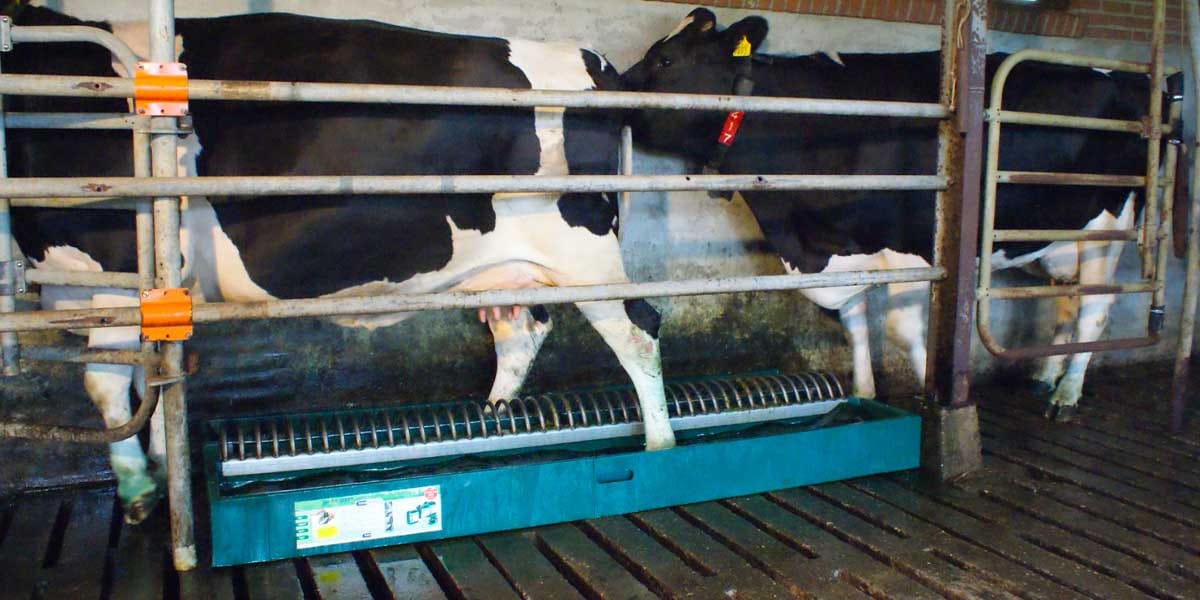

People and animal safety is a must when a dairy farmer chooses a hoof care product for the cow's foot bath. "The farmer feeds the world" is a phrase that is often used, and the consumer's trust in farm products is the farm's ultimate promise.
Important safety information on dairy hoof product labels covers various safety areas to ensure the safe use of the product. The main areas are shown in the pictograms and cover the following hazards: corrosive, toxicity, long-term health hazard, and hazardous to the aquatic environment.
The four things to look for on a foot bath product label are the GHS/WHMIS hazard pictograms: Corrosive, Toxicity (the skull and crossbones), Health Hazard and Environmental Hazard. A product that carries any of them needs gloves, eye protection, locked storage and careful disposal. Then look for a DIN or VHP number, which shows the product went through Health Canada's registration route for animal health products.
Why the Pictograms on a Foot Bath Label Matter
Safe use of a product is essential for everyone: yourself as a farmer, your children that perhaps wander and play around the barn, the farm's employees, and so on. This also ensures the consumer's safety when they purchase the farm's products.
The Globally Harmonized System (GHS), which was incorporated into Canada's Workplace Hazardous Materials Information System (WHMIS), is used to draw attention to specific dangers when using a product. The GHS pictograms are often found on product labels and are recognized everywhere around the globe.
These are the four pictograms you are most likely to meet on a foot bath concentrate. Tap one to jump to what it means.
1. Corrosive
This pictogram indicates that the product is corrosive and therefore has a destructive effect on body tissues such as skin, eyes, esophagus, and lungs. In addition, the substance may cause a chemical burn.
A corrosive product can also damage clothing and will deteriorate anything made of wood and metal.
2. Toxicity
Product labels with this pictogram indicate a higher degree of danger. The skull-and-crossbones pictogram indicates that the product can result in acute, meaning sudden and severe, toxicity. It is essential to know that when you decide to use a product with this warning, it comes with a severe risk, and you ought to take appropriate precautions. Substances and mixtures (even in low quantities) may cause harm or death within a few hours or a day if inhaled, digested, or absorbed via the mouth or skin.
3. Health Hazard
This pictogram indicates that the product poses a health hazard. For instance, the product may be:
- A carcinogen, thereby potentially inducing tumours;
- A mutagen, causing changes in DNA;
- Toxic to the reproductive system or other specific target organs;
- A respiratory or skin sensitizer;
- An aspiration hazard.
These products may give off fumes that, if inhaled, can put you in danger. Therefore, the use and storage of these products is not recommended. Any contact with the skin of the user and the animal could have a destructive effect. For this reason, in another blog post we investigated whether you should use formalin (formaldehyde) in a dairy footbath.
4. Environmental Hazard
This pictogram indicates that the product poses a risk to the environment. Usually, reference is made to acute or chronic fish and aquatic toxicity if this product ends up in waterways and irrigation systems. It is also safe to assume that a product with this warning label should throw red flags if you are using a biodigester for your farm's manure handling.

Hoof-Sol Bath
Hoof-Sol Bath is a formalin-free, copper sulphate-free foot bath concentrate, registered in Canada as a VHP, that promotes and maintains healthy hooves in cows.
Visit StoreBe Aware and Work Safe
Sometimes we do things without thinking or realizing that the outcome might be different than we expected. Perhaps you know a friend, coworker or family member affected by the accidental and unknowing use of a chemical who got hurt.
The GHS/WHMIS pictograms and the descriptive text have a clear message to every user before they touch a product. Incorrect usage or exposure can have a lasting impact on your own health and the environment around you. Make sure you read product labels before using the product!
Our Hoof-Sol Bath is a safe product to use on a dairy farm. Obviously, when using any product you still have to use common sense! We still advise the user to take regular precautions when handling any concentrate to ensure safety for the user (gloves and eye protection). Our hoof products are positively evaluated by the authorities to be safe for the user and the animal.
All legal-to-use hoof products on the Canadian market are registered with Health Canada and marked with a VHP number or a DIN number. This process is used by Health Canada to ensure safety for the user and the food supply.
How to Read Foot Bath Product Labels
Each pictogram represents a specific type of hazard and is clearly posted on a hoof care product. This indicates that the product is not safe to use unless appropriate precautions are taken.
Additionally, each registered hoof product has either a DIN or VHP number from Health Canada. If either of these registration numbers is missing, we advise to stay clear of using them.
Here's an example of a safety label you might encounter on a foot bath product like formaldehyde.

- Product identifier: common or chemical name.
- Pictograms: GHS and WHMIS graphics that clearly show the dangers that are applicable to this product.
- Hazard statements: a brief description of common hazards associated with the chemical or product. These statements should correspond with each and every chemical's safety data sheet.
- Precautionary statements: a brief explanation of how to administer first aid if someone comes into contact with the hazardous chemical.
- Chemical manufacturer, importer or responsible party information: the name, address, and telephone number must be indicated on the label.
- DIN or VHP number: showing registration with Health Canada for the legal and safe use of this product on livestock farms.
To learn more about the requirements for product labels for any product that is used on a farm, visit the website of the Canadian Centre for Occupational Health and Safety.
DIN, VHP or Neither: How Foot Bath Products Are Classified in Canada
The number on the label tells you which route the product took before it reached your barn. There are two routes for animal health products in Canada, and many foot bath chemicals took neither.
Generic chemicals such as formalin and copper sulphate are usually sold as industrial chemicals, not as registered hoof care products. Their labels carry the hazard pictograms above and no DIN or VHP number. That does not make them illegal to buy, but it does mean nobody has reviewed them for use on a cow's foot, and it is the reason their labels read the way they do.
If you are choosing between foot bath products, our guide to choosing the right foot bath for your dairy covers the bath itself, and foot bathing and digital dermatitis explains what a foot bath can and cannot do for hoof health.
Frequently Asked Questions
What do the pictograms on a foot bath product label mean?
They are GHS hazard pictograms, used in Canada under WHMIS. The four most common on foot bath concentrates are Corrosive (burns skin, eyes and airways), Toxicity (can cause severe harm or death in small amounts), Health Hazard (carcinogen, mutagen, sensitizer or organ toxin) and Environmental Hazard (toxic to fish and waterways). Each one means the product is only safe to use with the precautions printed on the label.
Is formalin safe to use in a dairy foot bath?
Formalin (formaldehyde solution) carries the Toxicity and Health Hazard pictograms, and formaldehyde is classified as a carcinogen. It gives off fumes in a closed barn and is harmful on skin, for people and for cows. We looked at the evidence in detail in our post on formalin in dairy hoof care.
What is the difference between a DIN and a VHP number?
A DIN (Drug Identification Number) means the product is a veterinary drug reviewed by Health Canada and may carry a treatment claim. A VHP number (shown as NN followed by digits) means the product is a low-risk veterinary health product made from permitted ingredients, and its label may only claim to maintain or promote health. A foot bath product with neither number has not gone through either route.
Can I use a foot bath product if my farm has a biodigester?
Check the label for the Environmental Hazard pictogram first. Products that carry it are toxic to aquatic life and can harm the bacteria your digester depends on, so spent foot bath solution should not go into the manure stream. Ask the product's supplier for the safety data sheet and your digester's operator for their input rules before you fill the bath.