
Hairy heel warts in cattle are one of the most common causes of lameness I see as a hoof trimmer, and one of the most contagious. They hurt the cow, cost milk, and spread through a herd fast when nobody is watching. Here is how to recognize them, what causes them, how to treat them, and how to keep them from coming back.
Hairy heel warts (digital dermatitis) are a contagious bacterial infection of the skin on a cow's foot, mostly caused by Treponema bacteria. Look for a lame cow that avoids putting weight on the heel and a raw, red, strawberry-like sore above the heel, sometimes with hair-like strands at the edge. Treat each active sore on the cow with a topical treatment such as Hoof-fit Gel, then keep new cases down with clean, dry floors and regular hoof spraying or footbaths.
What Are Hairy Heel Warts in Cattle?
Hairy heel warts in cattle are a bacterial skin infection of the foot, officially called digital dermatitis (DD). You will also hear it called strawberry foot, heel warts or Mortellaro disease. Despite the name, it is not a true wart: the warts you see on a cow’s head and neck are a virus, covered in our guide to bovine warts.
The Merck Veterinary Manual describes digital dermatitis as an infectious skin condition that most often sits in the interdigital cleft, the skin between and just above the heels, and names Treponema bacteria as a necessary part of the group of bacteria that cause it. It spreads from cow to cow, which is why one lame cow is rarely the only one.
What Do Hairy Heel Warts Look Like?
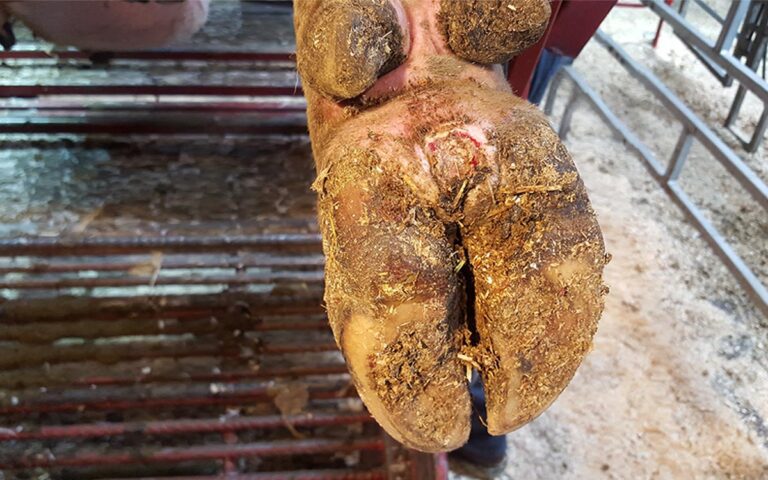
An active hairy heel wart is a round, raw, red sore on the skin above the heel, clearly outlined, often with a white edge or hair-like strands sticking out of it. That strawberry look is where the nickname comes from. Lameness is often the first thing you notice: the cow does not want to put weight on the sore foot, and she may walk on her toes to keep the heel off the ground. The sore is painful to touch, and you can see it in her behaviour.
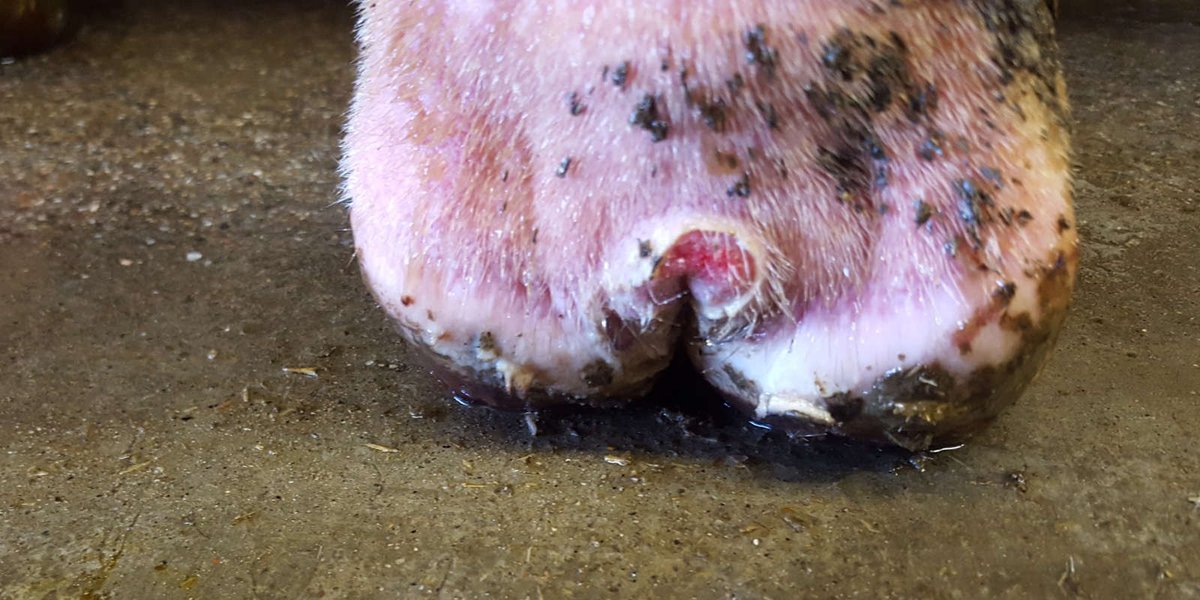
Trimmers and vets score digital dermatitis with the M-stages developed by Dr. Döpfer, the same system used in the clinical trials below:
- M0: normal skin, no lesion.
- M1: an early, small lesion (0 to 2 cm) that is not painful.
- M2: the classic open, ulcerative sore, larger than 2 cm and often painful to touch. This is the stage to treat.
- M3: the healing stage, the lesion covered by a scab.
- M4: the chronic stage: thick, rough or proliferating skin that is usually not painful but can flare up again.
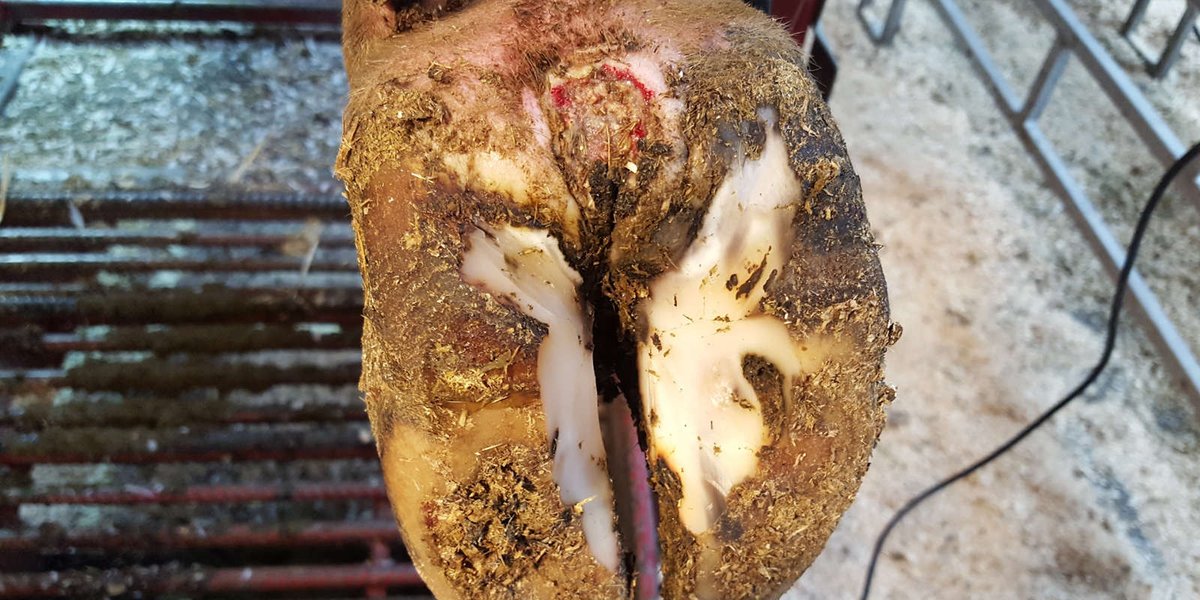
Merck notes that severe lesions can grow into a proliferative mass with filament-like projections, or turn hard and crusty. Those chronic lesions are the ones that keep the infection going in a herd; more on that in chronic hairy heel warts.
What Causes Hairy Heel Warts in Cattle?
Hairy heel warts are caused by Treponema bacteria infecting skin that is wet, dirty or damaged. The bacteria are the cause; the barn decides how much chance they get. The main risk factors I see on farms:
- Poor hygiene. Manure, slurry and mud holes keep feet wet and full of bacteria. Regular cleaning of barns and alleys and good manure management go a long way.
- Crowded, stressful housing. Overcrowding means more competition for feed, water and stalls, more stress and more cows standing in manure. Give cows enough space to move and comfortable places to lie down.
- Other herd health problems. Mastitis, metritis and other diseases weaken a cow and make her more likely to pick up an infection like digital dermatitis. Regular vet checks and good disease protocols help the feet too.
- Contaminated footbaths. A footbath that is not refreshed becomes a bath of manure and bacteria. Think about the lame cow with a hairy wart: she is the last one through the parlour, and the last one through a dirty footbath.
- New animals. Bought-in cattle can bring digital dermatitis into a clean herd.
That being said, as a professional hoof trimmer I have seen nearly perfect herds and still found some hairy heel warts. Good management lowers the number of cases; it rarely brings it to zero.
How Do You Treat Hairy Heel Warts in Cattle?
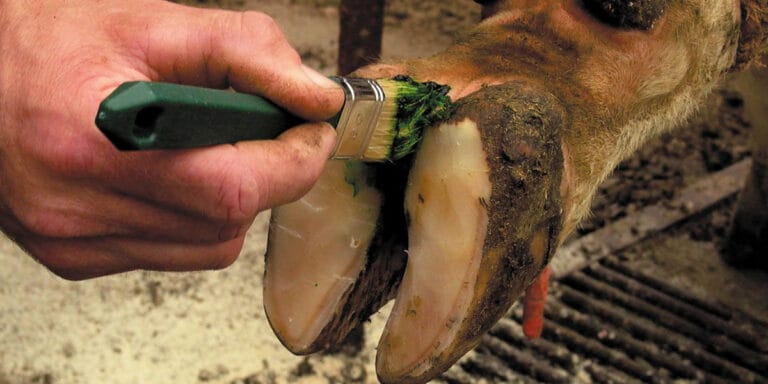
Treat each active (M2) lesion on the cow herself: clean and dry the area, apply a topical treatment straight onto the sore, and check it again a few days later. Footbaths do not replace this step. In my work, the treatment of digital dermatitis starts with Hoof-fit Gel and a wrap. You might say, “But that sounds like work!” Still, if healing is your goal, this is the way to go. Once the problem is under control, the path to prevention is open.

Two trials looked at this gel, a non-antibiotic gel with copper and zinc chelate:
- In the Netherlands, on five dairy farms, 92 percent of painful M2 lesions treated with Intra Hoof-fit Gel were healed or no longer painful 28 days after the first treatment, against 58 percent of lesions treated with a chlortetracycline (antibiotic) spray (Holzhauer et al., Veterinary Record, 2011).
- In Canada, on three Alberta dairy farms, all 25 M2 lesions treated with the gel had moved out of the painful stage by day 7 of the trial: 23 into the healing scab stage and 2 into the chronic stage (Lammers et al., 2016). I was one of the co-authors of this trial.
The protocol in the Canadian trial: gel on the lesion under a cotton wrap on day 0, the wrap removed and gel brushed on again on day 3, and a last brush application on day 7. Merck notes that the common treatment worldwide is a topical tetracycline antibiotic, and that the role of topical treatment is to move an active lesion to the chronic stage and reduce pain. Work with your veterinarian on the treatment plan for your herd.
Surgical removal. As a trimmer, I have seen cases where a hairy wart was surgically removed, but this is the last resort. These warts are usually chronic and have grown large enough to bother the cow, sometimes on a corn between the two claws, where they cause real pain. Explore every other treatment option first, with your vet.
Home remedies. To the best of my knowledge, no studies have been done on homeopathic treatment of digital dermatitis in cattle.

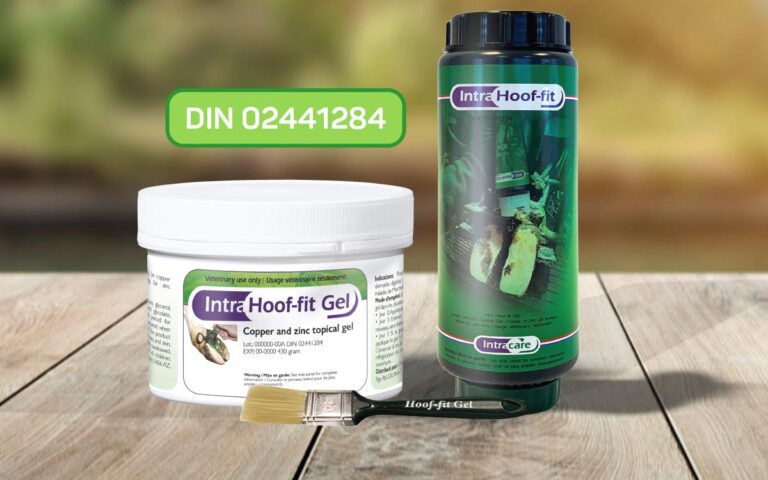
Intra Hoof-fit Gel is a DIN-registered, non-antibiotic topical treatment for digital dermatitis in cattle in Canada (DIN 02441284).
Visit StoreDo Footbaths Treat Hairy Heel Warts?
No. A footbath helps prevent new hairy heel warts and keeps healed lesions from coming back, but it does not treat an active lesion. Merck puts it the same way: topical treatment for active lesions, then the footbath to prevent recurrence. We go deeper in foot bathing and digital dermatitis: prevention, not treatment.
The two old footbath standbys are copper sulfate and formalin. Copper sulfate builds up in manure and ends up on the fields, a pollution problem for the environment. Formalin is a carcinogen and has no place on our dairy farms. Harsh products also make the disease itself worse. Dr. Dörte Döpfer of the School of Veterinary Medicine in Wisconsin writes:
“An increase of chronic proliferative DD lesions under too aggressive footbath and topical treatment approaches is a sign for irritation of the already inflamed and ulcerated skin surfaces, resulting in more inflammation and proliferation of the superficial skin.” (Döpfer, Ag Proud, 2022)
She also points to footbaths used too often, at too high a concentration or at a very acidic pH (below 3.0). Watch the concentration and the frequency, and refresh the solution before it turns into manure.
How Do You Prevent Hairy Heel Warts?
Prevent hairy heel warts with clean, dry feet, a regular spraying or footbath routine, quick treatment of every new lesion, and attention to the cows you see least. Prevention starts once the active lesions are treated and under control.
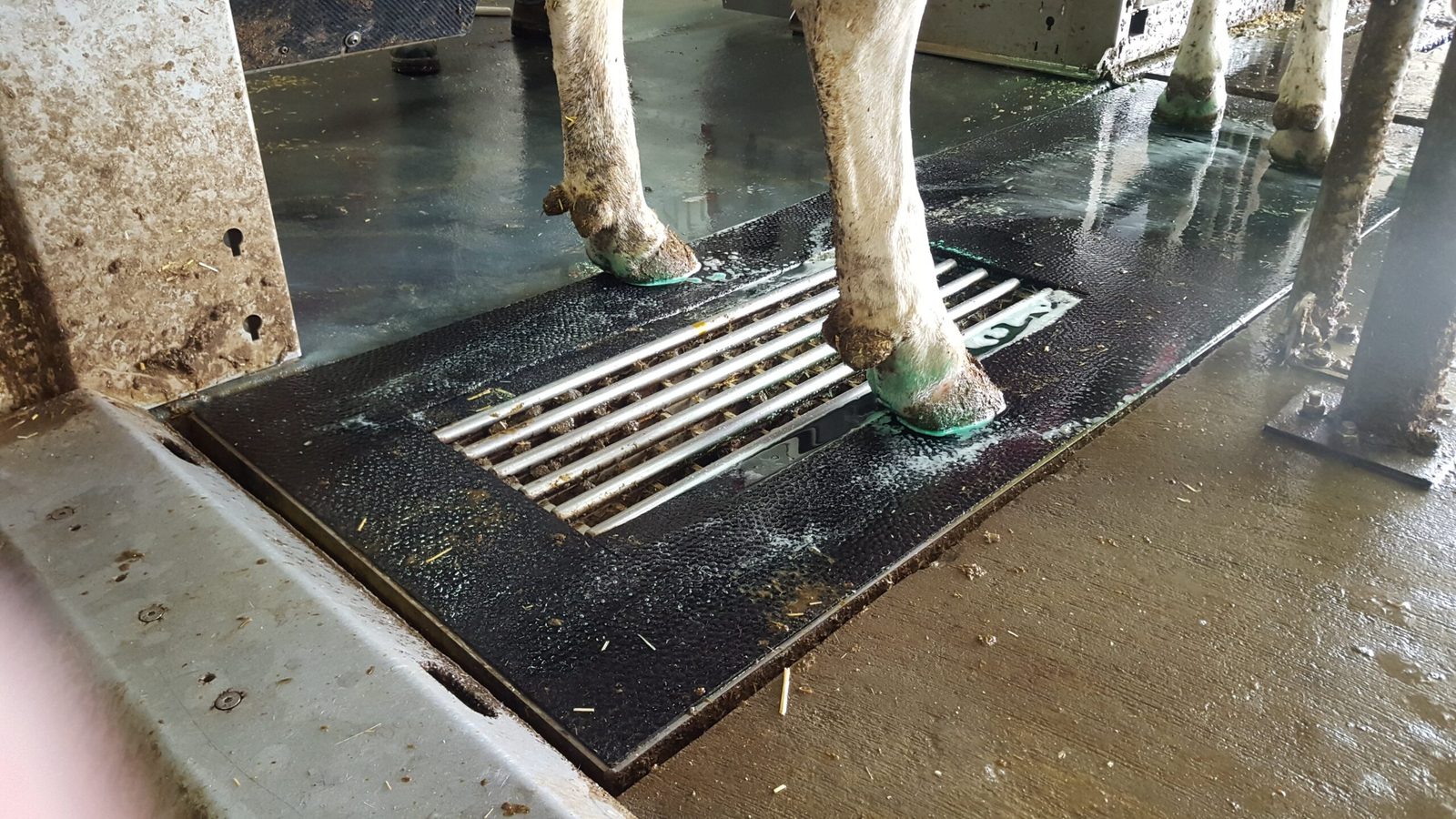
- Hoof spraying. Hoof Sol Spray is a targeted, more environmentally friendly approach: you spray the solution straight onto the feet, where it promotes healthy skin and hooves. It suits herds where a footbath is not practical or not used consistently. In the herds I visit, we see better results from spraying cows once a week than from footbaths.
- Footbaths. Farmers use Hoof Sol Bath to promote and maintain healthy hooves. It is a Veterinary Health Product (VHP) in Canada, used once or twice a week, and it works independent of pH. My overview of cattle footbath methods on dairy farms explains the set-up in detail.
- Hygiene. Clean barns, dry-cow facilities, young stock pens, calf bedding and equipment, manage manure well, and keep barns well ventilated. Moisture is what the bacteria need, so keep everything as dry as you can.
- Quarantine new animals. Keep bought-in cattle apart at first, check their feet, and treat any sign of digital dermatitis before they join the herd.
- Dry cows and young stock. These groups are away from the milking herd and checked less often, so hairy heel warts can build up there and come back into the milking herd at calving. Dr. Döpfer’s advice starts here too: prevent DD in heifers before they calve. Break that cycle.
Vaccines. About 15 years ago, one of my clients tried a vaccine for hairy heel warts. The booster shots were very intense and the results were not satisfactory, so I recommended trimming and treating the cows instead, with a sound prevention protocol. If you are thinking about a vaccine, talk to your professional team, your veterinarian and your hoof trimmer, first. At best, a vaccine helps control digital dermatitis; it does not replace treatment and hygiene.
A healthy herd is a productive herd. By managing and controlling digital dermatitis, you protect the well-being of your animals and the success of your farm.
Hairy Heel Warts: Common Questions
Is there a cure for hairy heel warts in cattle?
Yes, an active lesion can be treated. In a Dutch trial, 92 percent of painful lesions treated with Intra Hoof-fit Gel were healed or no longer painful after 28 days, against 58 percent with an antibiotic spray. Hoof-fit Gel is a DIN-registered, non-antibiotic treatment, so there are no antibiotic residues in the milk. The bacteria can stay in the herd, though, so prevention has to follow.
How can I get rid of hairy heel warts fast?
Start with individual treatment and build the prevention routine after it. Trim the foot, clean it, apply the gel under a wrap, take the wrap off after 3 days and brush the gel on again. In the Canadian trial, every treated lesion had left the painful stage by day 7.
Are hairy heel warts contagious?
Yes. Digital dermatitis is an infectious disease and spreads between cows, mostly through manure, wet floors and dirty footbaths. Chronic lesions in dry cows and heifers keep it going in a herd.
Are hairy heel warts the same as warts on cattle?
No. Hairy heel warts are a bacterial infection of the foot (digital dermatitis). The warts on a cow’s head, neck or teats are caused by a virus and need a different approach.
Can hairy heel warts come back?
Yes. A treated lesion can turn chronic (M4) and flare up again later, and new cases keep coming while the bacteria are in the barn. That is why regular spraying or footbaths, clean and dry floors, and checking feet at every trim matter after treatment.
- Lameness Originating in the Hoof in Cattle: Digital Dermatitis, Cramer G. et al., Merck Veterinary Manual, last updated July 2025.
- Curative effect of topical treatment of digital dermatitis with a gel containing activated copper and zinc chelate, Holzhauer M., Bartels C. J., van Barneveld M., Vulders C. and Lam T., Veterinary Record 169(21): 555, 2011.
- A randomized controlled trial of 50 M2 digital dermatitis lesions with a non-antibiotic gel containing chelated copper and zinc, Lammers G., Sabau E., van Berkel R., van der Vegt H., Vulders C. and Vis K., trial summary, 2016.
- The risk of chronic hairy heel wart reservoirs and how to prevent them, Döpfer D., Ag Proud, October 5, 2022.