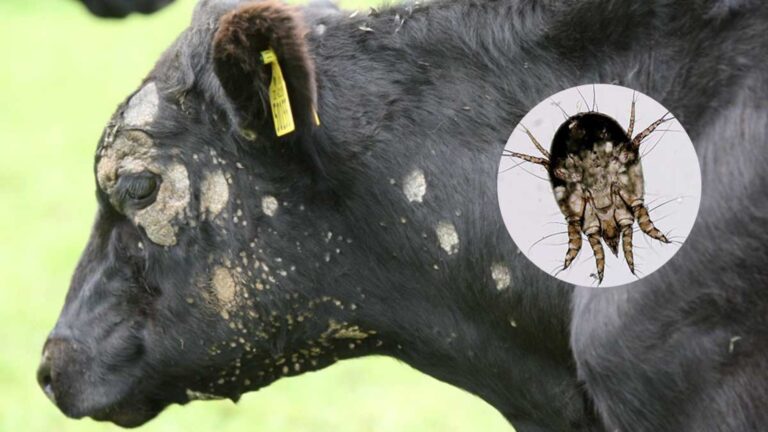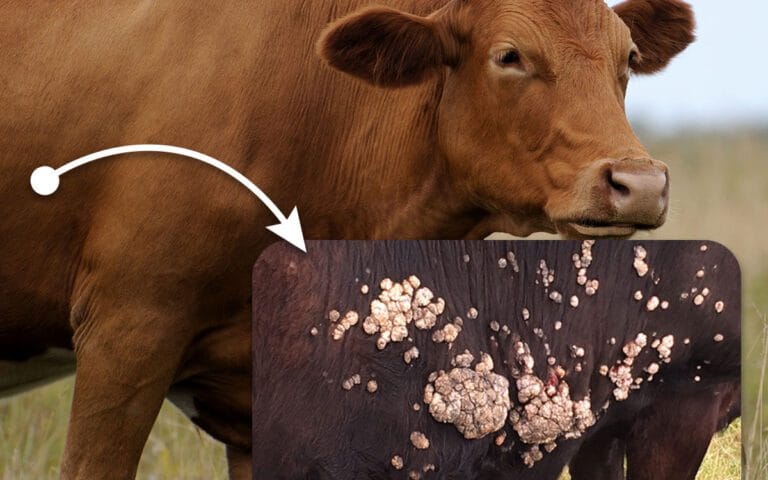


Dry skin on cattle is itchy and uncomfortable, and cattle that rub and scratch can break the skin and let infection in. The good news is that most cases come down to a few causes you can find and fix on the farm. Use the quick check below to match what you see to the right step.
To get rid of dry skin on cattle, find the cause and fix it. Check the ration for zinc and vitamin A, look for lice and treat them in the fall, and use light mineral oil to soothe dry skin, above all in late winter when cattle start to shed. If the skin peels, oozes or the itching will not stop, call your vet.
Quick check: match what you see on your cattle to the step that deals with it.
Feed Enough Zinc and Vitamin A
Both keep skin healthy. When the ration runs short, the coat turns dull and dry.
Dry skin on cattle very often starts in the feed. Zinc is important for skin and hoof health, and cattle can store only a little of it, so the University of Georgia beef mineral guide says zinc supplementation is always needed. The same guide notes that zinc and copper are absorbed together, so the ration should keep them at about 3 parts zinc to 1 part copper.
Vitamin A helps skin stay healthy. Cattle on fresh, green, growing grass usually get enough. Vitamin A breaks down in stored feed, though, so when most of the ration is hay, silage or other stored feed, add vitamin A through the mineral or the grain mix. For beef cattle the Georgia guide gives 15,000 to 30,000 IU per head per day in the grain mix. Dairy cows need different amounts, so let your nutritionist set the level for your herd.
Many feeds already carry these nutrients, so check the tag on your feed and mineral first. My advice is to call your nutritionist, tell them what you see on the skin, and go over the ration together.
A Canadian example shows why this matters. When vets in Alberta looked into herds of itchy cattle after the 2016 drought and a vitamin A shortage, the cattle they tested were low in vitamins A and E, and the itching usually stopped once the cows were on new grass in May.
Protect Cattle From Heat and Strong Sun
Strong sun dries and burns skin, and hot days add heat stress on top.
Strong sun dries out skin and can burn it, and sunburn can happen even in winter when the sunlight is intense. On hot days cattle also face heat stress, which costs milk and leaves a cow less able to look after herself. Agriculture Victoria's advice for livestock in extreme heat comes down to a few steps:
- Plenty of clean, cool water. Cattle can drink twice as much on a hot day, so add water points and flow when many animals share them.
- Shade with good airflow. Plan shaded, well ventilated areas before the hot weather comes.
- Check animals through the day. Look for signs of heat stress, such as panting, and check that every water point still works.
- Handle cattle early or late. Avoid moving or handling cattle in the heat of the day. Moving evening milking an hour later can even lift yield.
- Avoid trucking in the heat. Plan transport for cooler days or cooler hours.
If a cow is panting hard or goes down in the heat, call your vet right away.
Check for Lice and Treat Them on Time
Lice make cattle rub, and the rubbing leaves a dry, scaly coat.
Lice are one of the most common reasons for a dry, flaky coat in winter. UC Davis vets describe lice as a common winter problem, with numbers low in summer because of sunlight and shorter hair. Itchy cattle rub against trees, fences and feed bunks, and the rubbing damages the coat: the hair looks dry and scaly and bare patches appear.
How to stay on top of lice:
- Look in late fall. Part the hair with your fingers on the face, neck, brisket, back and tail head and look for lice or eggs.
- Treat in the fall, before numbers build up over winter. Pour-ons work on both sucking and biting lice; injectable ivermectin works only on sucking lice. Ask your vet which product fits your cattle.
- Treat again. Most insecticides do not kill the eggs, so a second treatment about two weeks later catches the lice that hatched since the first one.
- Check new animals before they join the herd, and isolate and treat them if they carry lice. Lice spread by contact.
- Apply pour-ons properly. In an Alberta investigation, failed treatments were mostly application problems: wrong timing, too little product, rain or snow washing it off, or product not put on the skin along the back line.
Not every itchy cow has lice, though. In that same Alberta work, many of the scratching cattle had no lice at all, which is why steps 5 and 7 below are worth a look before you treat again.
Brush Out Cattle Dandruff
Flaky skin, or scurf, sits on a dry coat. Grooming and the right products help.
Cattle get dandruff too: white flakes, or scurf, on dry, flaky skin. When Alberta vets examined itchy cattle in winter, every one of them had a very dry coat with scurf millimetres deep. For show cattle and any animal you groom, these steps help:
- Brush, comb or blow the flakes out of the coat.
- Use a conditioning spray or conditioner to protect the skin.
- Rinse soap out thoroughly after washing.
- Switch shampoo or other products if the flakes started after you began using them.
Dandruff can also come with lice, so part the hair and check (step 3). Treating the lice clears that kind of dandruff too.
Apply Mineral Oil to Dry Cattle Skin
Light mineral oil soothes dry skin while the winter coat sheds.
A simple fix for dry skin is light mineral oil. It helps most during early shedding: a warm spell in late winter can start cattle shedding their winter coat early, and the itching, dry, scurfy skin comes with it. Genetics and poor nutrition play a part as well.
Mineral oil in an oiler or back rubber lets cattle treat themselves, and you can also apply it by hand on the worst animals. Adding zinc oxide or zinc propionate to the oiler can help cattle whose skin is dried out by cold, dry air, is itching as frostbite heals, or is sunburned. Once the winter hair is shed, the problem usually goes away.
Allergies may play a part too. They are not well understood in cattle, but avoiding old feed and old bedding and keeping dust down helps.


We deliver essential insights, learnings, and observations on hoof care straight from our community of farmers, owners, and trimmers.
Join Hoof ClipsCall the Vet When Dry Skin Is a Sign of Something Else
Some dry skin is a symptom. Your vet finds the cause so the treatment works.
Sometimes dry skin is a symptom of a more serious problem. If your cattle show other signs besides dry skin, have your vet look at them, because the right treatment depends on the right diagnosis. Conditions that can leave skin dry:
- Photosensitisation: white (non-pigmented) skin and the muzzle react to sunlight and may ooze serum; later the skin turns dry and hard like parchment and sloughs off. It follows eating certain plants or comes from liver damage. Move affected cattle off pasture into a dark building and let your vet treat them. More on peeling cow skin.
- Chapped and frostbitten teats: cold, dry air dries out skin, and wet teats in a cold wind chap and can freeze. Frostbite itches as it heals. Dry teats well before cows go out in the cold and ask your vet about a winter teat dip.
- Sunburn: keep cattle with sunburned skin or teats in the shade during sunny spells while it heals.
- Other skin disease: ringworm, warts and other conditions can look like dry, crusty skin at first. See scabs on cows and hair loss in cattle.
Milking cows are the most exposed, because their teats take the weather twice a day. Look after teats at every milking with a good dipping routine.
Rule Out Mites and Ticks
Mites and ticks cause itching and flaky skin that oil and minerals will not fix.
If oil, minerals and lice treatment have not stopped the itching, look for mites. Chorioptic mange mites cause severe itching and are very hard to diagnose, and bulls seem more likely to get them than cows. The product must reach the mites, so the whole animal is sprayed two to three times, three to four weeks apart. Straw mites, which live in straw and hay, bite cattle and cause allergies, and they are worse in wet years.
Ticks can also cause itchy, flaky skin. If you find ticks on your cattle, separate the affected animals and ask your vet which treatment to use, including the withdrawal time for milk and meat.
Dry Skin on Cattle: Common Questions
What causes dry skin on cattle?
The usual causes are too little zinc or vitamin A in the ration, lice, dry winter air, early shedding of the winter coat and strong sun. Less often it is a sign of photosensitisation, mange mites or another skin disease, which need a vet.
Why are my cattle itchy in winter when they have no lice?
Dry, scurfy skin, early shedding, low vitamin A and E, straw mites or mange mites can all make cattle itch without lice. In Alberta the winter itching usually ran from January to April and stopped once the cattle were on new grass in May.
What can I put on cattle with dry skin?
Light mineral oil, by hand or in an oiler or back rubber, soothes dry skin. Zinc oxide or zinc propionate can be added to the oiler. Fix the cause as well: the ration, lice or mites.
Is cow dandruff a sign of lice?
It can be. Flakes often come from dry skin alone, but lice also leave a dry, scaly coat. Part the hair on the neck, back and tail head and look for lice or eggs before you decide.
- Mineral Supplements for Beef Cattle, University of Georgia Cooperative Extension, Bulletin 895 (L. Stewart), reviewed 2017.
- What Makes Cattle Itchy? Causes and Treatment, Canadian Cattlemen (L. Harris), 2022.
- Understanding Lice Infestation in Cattle, UC Davis School of Veterinary Medicine, 2019.
- Caring for animals during extreme heat, Agriculture Victoria.
- Photosensitisation, NADIS (National Animal Disease Information Service).