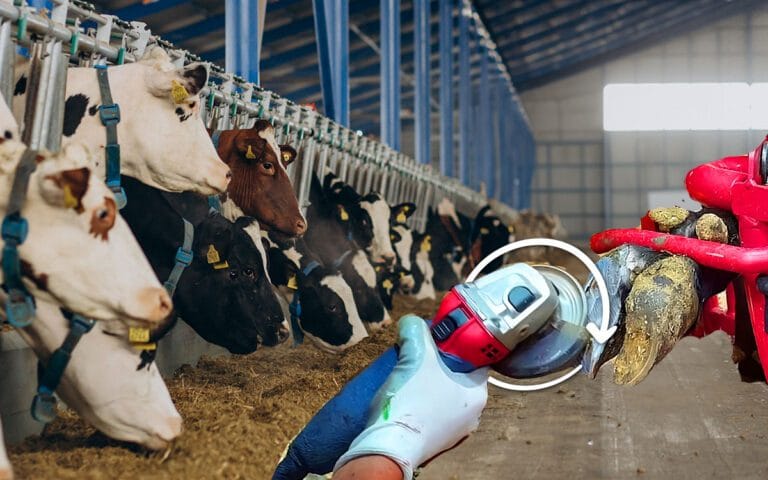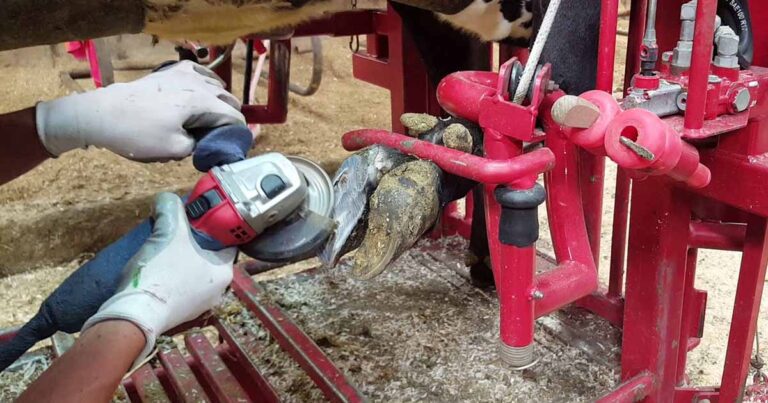
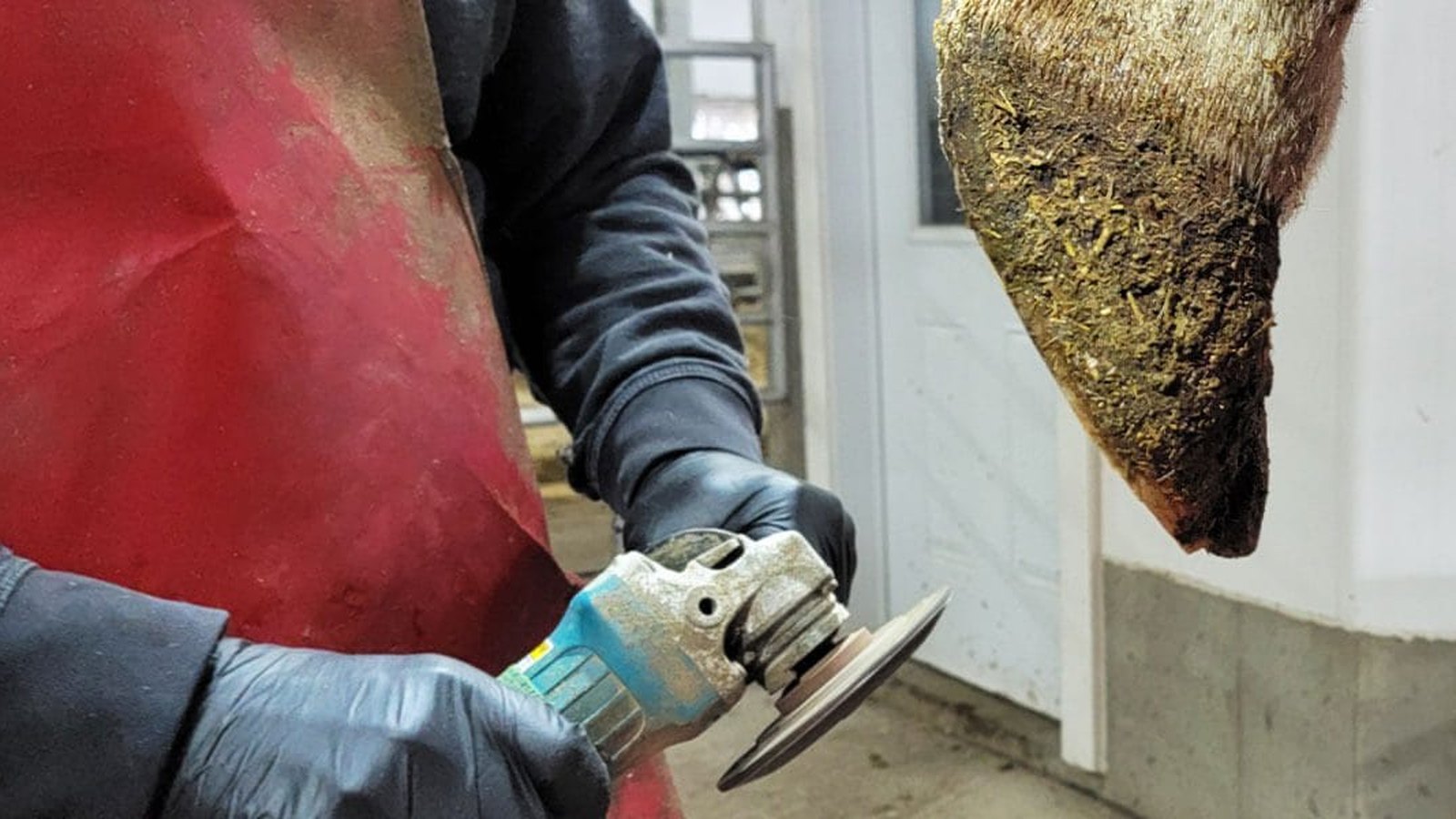

Cow hoof repair, or hoof restoration, brings a damaged or overgrown claw back to a sound, balanced shape so the cow can walk without pain. Healthy hooves are essential for a productive dairy or beef operation: compromised hooves affect a cow’s mobility, feed intake and well-being. Effective restoration combines proper trimming, diligent treatment and maintenance to keep cattle comfortable and productive.
As a professional hoof trimmer with over 30 years of experience working with dairy and beef cattle, I have seen first-hand how proper hoof care improves an animal’s quality of life and a farm’s financial performance. It’s fulfilling to watch a cow that was barely able to walk return to normal mobility after trimming and treatment. In this guide I walk you through the essentials of bovine hoof care and share the approaches that have consistently delivered results on North American farms.
To repair a cow’s hoof, restrain her in a trimming chute, clean the claw, trim it back into balance, then treat what you find: a topical treatment for digital dermatitis, a veterinarian and antibiotics for foot rot, drainage for an abscess, and removal of loose horn plus a block on the healthy claw for a crack. Then fix the cause, whether the ration, wet floors or the trimming schedule, because hoof horn grows only about 5 mm a month and a repaired claw takes months to grow out.
What Causes the Hoof Damage You Need to Repair?
Most hoof damage comes from three causes: poor nutrition, a wet and dirty environment, and infectious hoof disease. Before discussing restoration techniques, it’s important to understand these causes, because a repaired hoof breaks down again if the cause stays in the barn.

Poor nutrition weakens the hoof horn
Nutritional deficiencies affect hoof quality. Minerals such as zinc and copper, together with biotin, support strong horn growth; the Merck Veterinary Manual lists supplemental copper or zinc and biotin in the feed as a way to increase horn strength. High-concentrate, low effective fibre diets lead to rumen acidosis and laminitis, which damage the horn from the inside.
I always encourage farmers to partner with their nutritionist because of the nutritional connection to hoof health. A well-balanced ration supports strong, healthy hoof development and prevents common problems.
Wet, dirty barns breed hoof disease
A hoof trimmer’s nightmare is a wet, muddy environment. In a barn with poor drainage and manure buildup, I know the problems I’ll find before picking up a foot. These conditions breed the bacteria that cause painful hoof diseases.
When cows stand in damp areas for long periods of time, their hooves become susceptible to infection and injury. Regular maintenance of barn flooring, proper drainage and consistent cleaning schedules are valuable investments in hoof health.
I’ve seen significant improvements on farms that maintain a drier environment, including fewer new cases of digital dermatitis, fewer sole ulcers and better herd mobility.
Infectious hoof diseases spread through the herd
Infectious hoof diseases such as digital dermatitis and foot rot are common causes of lameness in cattle, and they can spread quickly through a herd. Digital dermatitis (“hairy heel wart”) responds well to topical treatment. Foot rot typically needs a veterinarian and systemic antibiotics. Prompt treatment with the right product prevents chronic problems and limits the spread to other animals.
How Do You Know a Cow’s Hoof Needs Repair?
A cow’s hoof needs repair when she limps or changes her gait, or when you see cracks, smell a strong odour or find swelling around the claw. Early intervention is essential to successful cow hoof repair: knowing what to look for lets you tackle problems before they worsen.
Lameness and an altered gait
The most apparent sign of hoof problems is an altered gait or limping. A cow that is reluctant to bear weight on a leg or walks with an arched back is in pain. Even subtle changes in movement point to developing issues; locomotion scoring helps you spot them early.
Hoof wall damage and cracks
Vertical or horizontal cracks in the hoof wall can compromise its structural integrity, allowing dirt and bacteria to enter. They start small but can worsen without proper attention, leading to more severe infections or lameness.

A strong hoof odour
A strong, unpleasant smell from a cow’s hoof often indicates infection. Digital dermatitis, foot rot and abscesses produce distinctive odours that signal the need for prompt treatment.
Swelling around the hoof
Swelling around the coronary band (where the hoof meets the hair) or between the claws indicates infection or injury. This swelling is often warm and causes the animal noticeable discomfort.
How Do You Repair a Cow’s Hoof, Step by Step?
Cow hoof repair follows five steps: restrain and assess the cow, clean the hoof, trim it, treat what you find, and take the weight off the damaged claw while it heals. Restoring a damaged hoof needs a systematic approach that deals with the immediate problem and the cause behind it.
1. Assess the hoof in a chute
Begin with a thorough examination of the affected hoof, preferably with the cow restrained in a hoof trimming chute. Identify the specific problem, whether it’s overgrowth, infection, injury or a combination of these. Document your findings to track progress and adjust your approach.
The location and severity of the problem guide your hoof care plan. For example, a minor crack needs different treatment than an active digital dermatitis lesion or a deep abscess.
2. Clean the hoof
Clean the hoof thoroughly with a small scraper or the back edge of your hoof knife to remove all manure and debris. Keep the process dry: the hoof stays cleaner, and treatment products stick better to a dry surface. A properly cleaned hoof shows you the problem area and prevents contamination during treatment. Our guide on how to clean cow hooves covers the method in detail.
3. Trim the hoof back into balance
Proper trimming restores normal weight distribution and removes the excess growth that can trap bacteria or cause abnormal pressure. I trim hooves using the Dutch 5-step method, though many effective techniques exist. Our process is available as a printable cheat sheet for on-farm use.

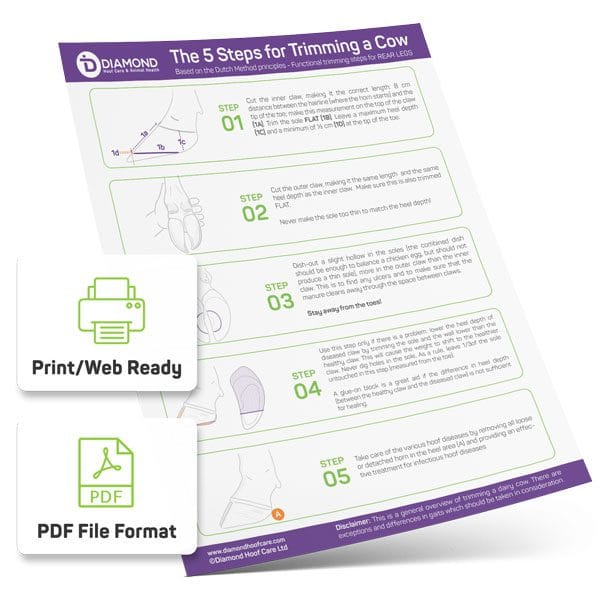
“How to trim” Barn Sheet: Learn how to Trim a Cow in 5 steps. Includes helpful diagrams!
Download4. Treat what you find
After cleaning and trimming, treat the specific condition: a topical treatment for digital dermatitis, a veterinarian for foot rot, drainage for an abscess, and removal of loose horn for a crack. The protocols I follow for each are in the next section.
5. Take the weight off and follow up
A hoof block on the healthy claw takes the weight off the damaged one while it heals, and a recheck shows whether the treatment is working. Hoof horn grows slowly, about 5 mm (3/16 inch) a month according to the University of Wisconsin’s Dairyland Initiative, so a repaired claw needs follow-up for months, not days.
How Do You Treat the Most Common Hoof Problems?
Each hoof problem has its own protocol, and the first step for all of them is a clean, dry, trimmed hoof. These are the protocols I follow after cleaning and trimming.
Digital dermatitis (hairy heel wart)
Digital dermatitis is treated topically on a clean, completely dry lesion. I make sure the lesion is dry before treatment, as this affects the results, then apply Intra Hoof-fit Gel, a DIN-registered copper and zinc gel, directly over the entire lesion. Complete coverage is essential. We follow the Intra Protocol for consistent results. Regular footbathing with Hoof-Sol Bath, or spraying with Hoof-Sol Spray, promotes healthy hooves and skin between trims.
Foot rot
Foot rot needs a veterinarian, because it is a bacterial infection that is treated with systemic antibiotics. I start with a thorough cleaning of the affected area to remove dead tissue, then call the herd veterinarian to assess the condition and prescribe treatment. The Merck Veterinary Manual says treated animals should visibly improve within 2 to 3 days; if they don’t, the University of Tennessee warns the infection may have reached deeper tissues. During recovery I spray Intra Repiderma to help maintain healthy skin. Consistent follow-up is crucial, and your veterinarian may recommend a protocol for the severity of the case.
Hoof abscess
A hoof abscess is repaired by draining it. I remove enough horn to create an exit path for the infection, so all the pus can drain freely. The cow often feels immediate relief once the pressure is released. For deeper or complicated abscesses, call your veterinarian for proper drainage and pain medication (NSAIDs). Our post Why Do Cows Get Hoof Abscesses? explains the causes.
Cracked hooves
A cracked hoof is repaired by removing the loose horn and taking the weight off the claw. I remove loose or damaged horn around the crack and thin its edges, then decide whether the weight needs shifting. For significant cracks I apply a hoof block to the healthy claw, which the Merck Veterinary Manual notes improves healing by decreasing the forces on the wall as it regrows. Proper block application is essential: placing the block too far forward or back can create new problems.
Hoof blocks and soaker boots
In cases of severe lameness, or to reduce pressure on an injured claw, a hoof block on the healthy claw redistributes the weight and promotes healing. These wooden or synthetic blocks raise the injured claw off the ground so it can recover while the cow stays mobile.
For severe defects that need an extra antiseptic soak, use a specially designed soaker boot. Apply it carefully and check it regularly to avoid complications.
Which Tools and Products Do You Need for Cow Hoof Repair?
Cow hoof repair needs a hoof knife, nippers or a grinder, hoof blocks with adhesive, treatment products, bandaging material and a safe chute. The right equipment makes hoof restoration safer and more effective. Our hoof care supplies and tools page lists the equipment we use ourselves.
- Professional-grade hoof knives for precise trimming and lesion treatment.
- Quality hoof nippers for removing overgrown hoof horn.
- Electric grinders for professional use, to remove excess horn efficiently.
- Hoof blocks and adhesive to raise an injured claw. The block attaches to the healthy claw next to the injured one with a strong adhesive.
- Skin care sprays such as Intra Repiderma, which nourishes and protects the skin.
- Specialized treatments such as Intra Hoof-fit Gel for digital dermatitis.
- Bandaging materials for temporary protection, such as Eco-Tape and Intra-Tape.
- A secure, well-designed hoof trimming chute for safe restraint.
For DIY hoof care, the Diamond Hoof Care Hoof Care Starter Kit holds the essential tools for basic maintenance and treatment. Our hoof trimming tool kit post covers every tool a professional carries.
How Do You Keep Repaired Hooves Healthy?
Repaired hooves stay healthy with daily checks, a regular trimming schedule, seasonal footbathing and extra attention for high-risk cows. Successful cow hoof restoration combines proper trimming, prompt treatment and consistent prevention, and the most effective approach stops problems before they start.
Daily hoof health monitoring
Set up a simple daily observation routine during regular chores. Watch for subtle changes in gait, reluctance to bear weight or altered standing positions. Cows that lag behind the herd or spend more time lying down may be developing hoof issues before obvious lameness appears.
Seasonal prevention
Hoof care needs change throughout the year. Spring’s wet conditions increase the bacterial load, making regular footbath protocols essential. Summer heat can make cows stand longer on concrete, which calls for more frequent mobility checks. Winter housing changes call for an adjusted trimming schedule.
Risk-based prevention
Not all cattle need identical care. High-producing cows, older animals and those with previous hoof issues need closer monitoring. Fresh heifers need special attention as they adapt to new surroundings and the demands of lactation.
Why prevention pays
Prevention costs less than repair. Penn State Extension notes that lame cows produce less milk and have poorer reproductive performance, which is an economic loss for the farm. A systematic hoof trimming approach prevents those cascading costs: lower milk production, delayed breeding and early culling.
Timely, knowledgeable intervention makes restoration faster and more successful, but consistent prevention removes most of the need for it.
Frequently Asked Questions
What causes cow hooves to split?
Cow hooves split because of dry, brittle horn, nutritional deficiencies, hard or abrasive surfaces and uneven weight on the claw. Splits often start as small cracks that worsen when left untreated. Regular trimming prevents them by keeping the hoof in shape and removing damaged horn.
Can foot rot be cured in cattle?
Yes, foot rot (also called hoof rot or interdigital phlegmon) usually responds well to treatment, especially when it starts early. A veterinarian treats it with systemic antibiotics after the foot is cleaned and examined, and treated cows should visibly improve within 2 to 3 days. Good sanitation and regular footbathing help prevent new cases, because the bacteria persist in the environment.
How long does a repaired cow hoof take to grow out?
A damaged claw takes months to grow out. Hoof horn grows about 5 mm (3/16 inch) a month, and it takes around 15 months to grow a whole new wall from the coronary band to the toe, according to the Dairyland Initiative. Keep a block on the healthy claw as long as your trimmer or veterinarian advises, and recheck the hoof at the next trim.
What are the best hoof care products for cows?
The best product depends on the condition, so start with a proper diagnosis. For digital dermatitis, a copper and zinc gel such as Intra Hoof-fit Gel treats the lesion. Sprays such as Intra Repiderma care for and protect the skin. A good footbath product is essential for prevention, and quality blocks support injured claws. Supplemental zinc, copper and biotin in the ration support horn quality.
- Lameness Originating in the Hoof in Cattle, Merck Veterinary Manual, reviewed 2023, updated 2025.
- Livestock Health: Foot Rot, Prevention and Treatment, Dr. Lew Strickland, University of Tennessee, 2021.
- Hoof Trimming Assessment, The Dairyland Initiative, University of Wisconsin-Madison School of Veterinary Medicine, updated 2026.
- Impacts of Lameness, Part 1: Preventing Lame Cows, Penn State Extension.